
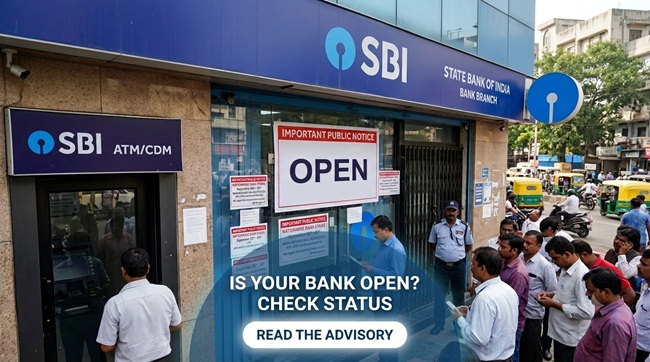
Bank Strike September 28-30: SBI Advisory on UPI, Internet Banking, ATM Services — What You Should Know

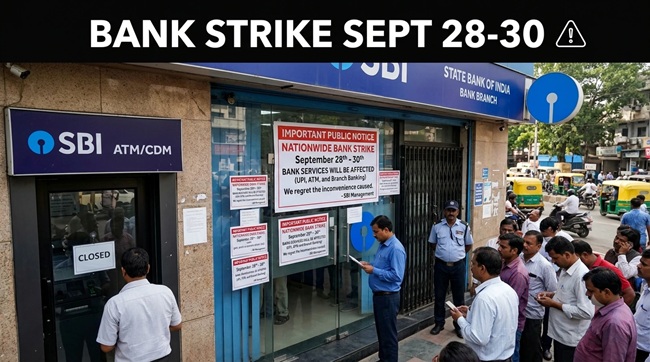
State Bank of India has asked customers to wrap up any branch-dependent banking work before September 28, as a three-day nationwide strike called by the United Forum of Bank Unions threatens to disrupt physical banking services across the country for the better part of a week.
Bank Strike: What’s Actually Happening
The UFBU, which represents seven major bank employee and officer unions, has called a three-day strike running from September 28 to September 30, 2026. This follows an earlier one-day strike the unions held on September 11, and it’s set to be followed by an open-ended, indefinite strike from October 26 if the dispute remains unresolved by then.
The timing compounds the disruption in a way that’s easy to miss at first glance. September 26 and 27 fall on a weekend, meaning the strike window effectively creates a five-day stretch, Saturday through the following Wednesday, during which branch access could be limited or unavailable across large parts of the country.
What SBI Is Telling Customers
SBI’s advisory is built around a simple message: get anything that needs a branch done now, and lean on digital channels for everything else during the strike period.
The bank has asked customers to complete important banking transactions in advance of September 28, particularly anything involving physical documentation, cheque-related processes, or other services that genuinely require a teller or branch staff. SBI has flagged that these specific services could see delays if branch operations are disrupted.
For routine transactions, SBI says its digital and self-service channels are expected to keep functioning normally through the strike. That list includes internet banking, the YONO app, mobile banking, and UPI for transfers, payments, and everyday transactions. ATMs and automated deposit and withdrawal machines are expected to remain operational for cash needs, and Customer Service Points will stay open to help with select basic retail banking services, the kind of assisted-banking counters that operate somewhat independently of full branch staffing.
Why Bank Employees Are Striking
The dispute traces back to a demand that’s been on the table in some form since 2015: a full five-day banking week, with all Saturdays declared holidays rather than just the second and fourth.
Under an agreement signed in May 2015, banks made the second and fourth Saturdays of each month holidays while keeping the rest as regular working days, with an understanding that a move to all-Saturday holidays would be considered later. The issue resurfaced in 2020, and it was formally built into the wage settlement signed on March 8, 2024, under which employees agreed to work an additional 40 minutes each day from Monday to Friday in exchange for every Saturday becoming a holiday. Unions say that proposal was sent to the Ministry of Finance for approval and is still awaiting a decision, which is what’s driving the current escalation.
A second flashpoint is a revised Performance Linked Incentive scheme the Department of Financial Services introduced in November 2024 for public sector bank employees, covering 2025-26. The revised structure weighted incentives more heavily toward the individual performance of senior officers, with Scale IV officers and above potentially eligible for incentives worth as much as a full year’s basic pay depending on performance. Unions argued this created unequal treatment across the workforce and pushed for its withdrawal. The government has since agreed to put the scheme on hold and bring it back into bipartite settlement talks, though that concession alone wasn’t enough to call off the broader strike action.
Beyond these two headline issues, UFBU has listed a longer set of what it calls residual demands left over from the 2024 wage settlement: adequate recruitment of clerical and sub-staff employees, converting the National Pension System back to the Old Pension Scheme, income tax exemption on the additional 4% contribution banks make to NPS, a higher gratuity ceiling, pension updation, uniform dearness allowance for pensioners, and extending ex-gratia payments to pensioners across private banks as well.
Bank Strike:: What This Means If You Bank With SBI or Any Other Major Bank
If you have work that genuinely needs a branch, updating KYC documents, resolving a specific account issue, submitting physical paperwork, handling a cheque-related matter, the advisory’s core message is to get it done before September 28 rather than risk a delay stretching across the strike window.
For everything else, the expectation across SBI’s advisory and similar guidance is that digital channels should hold up. UPI transfers, mobile and internet banking payments, and ATM cash withdrawals aren’t dependent on branch staffing in the same way, so routine day-to-day banking is expected to continue largely as normal, even if in-person services slow down or pause.
It’s worth noting that the strike is currently described as “proposed,” meaning its scale and actual impact will depend on how many employees across how many banks participate, and whether any last-minute resolution is reached before September 28. Coverage so far notes that less than a third of a typical bank’s workforce tends to be affiliated with unions in some cases, which historically has kept alternative channels functioning even during strike days, though branch-based services still tend to slow down noticeably.
Bank Strike: Frequently Asked Questions
When is the bank strike happening? The UFBU has called a three-day nationwide strike from September 28 to September 30, 2026, following an earlier one-day strike on September 11.
Will ATMs work during the strike? Yes. SBI’s advisory states that ATMs and automated deposit and withdrawal machines are expected to remain operational for cash withdrawals and deposits throughout the strike period.
Will UPI and internet banking work during the strike? Yes. SBI has said internet banking, YONO, mobile banking, and UPI should continue functioning for routine transfers and payments, since these don’t depend on branch staffing.
What banking services could be affected? Branch-dependent services are most at risk, including cash deposits and withdrawals handled over the counter, cheque-related processing, and transactions requiring physical documentation submitted at a branch.
Why are bank unions striking? The central demand is a full five-day banking week with all Saturdays as holidays, an issue dating back to 2015 and formally included in the March 2024 wage settlement but still awaiting government approval. A second major issue was a revised performance-linked incentive scheme for senior officers, along with a broader list of pending demands from the 2024 wage settlement.
Is this the only strike planned, or are there more? UFBU has announced a three-phase escalation: the September 11 one-day strike, this September 28-30 three-day strike, and a proposed indefinite, continuous strike starting October 26, 2026, if the dispute remains unresolved.
What should I do if I have urgent banking work? Complete any branch-dependent transactions before September 28. For routine banking, digital channels, UPI, mobile banking, internet banking, and ATMs are expected to remain functional throughout the strike period.
This article is based on SBI’s customer advisory and media reporting as of September 20, 2026. The strike is currently described as proposed, and its actual scale, participation, and impact may change before or during the September 28-30 window.

Shuchi founded Finance Checks after spending 16+ years working in corporate, managing operations and distribution. She managed her own finances, learned and read regularly and helped people make sense of their savings, loans, insurance, and investments.
She started this site to offer the kind of clear, honest financial guidance she wished was more available when she was learning to manage her own money. Every article is researched personally, checked against official sources such as the Reserve Bank of India, SEBI, or the Income Tax Department, and revisited whenever regulations or figures change. She is upfront about how the site earns money through ads and select affiliate partnerships, and she does not let either influence what she actually recommends to readers.