

Kiddo Raises Rs 12.5 Crore From Campus Fund: Betting Parents Deserve Their Own Quick Commerce App

A parent in Gurugram runs out of the right size diaper at eleven at night. A general quick commerce app might have diapers listed, but not necessarily the correct size, the correct brand, or any confidence that what shows up at the door is actually right for a six month old rather than a generic assumption of what a baby needs. Regular ecommerce could take a day or two to sort it out. Neither option was really built with that specific late night parental panic in mind.
Kiddo, a Bangalore founded quick commerce startup focused entirely on baby and children’s products, has raised twelve point five crore rupees in a pre seed funding round led by Campus Fund, with a group of strategic angel investors also participating. The bet underlying this round is a fairly simple one to state and a genuinely hard one to execute. India’s parents do not need faster chips and soda delivery. They need a shopping experience actually built around a child’s age, size and stage, delivered with the same urgency general quick commerce has already trained an entire generation of urban Indian shoppers to expect.
Here is what the company is building, who is behind it, and where it sits in an increasingly crowded race to become the go to app for Indian parents.
Quick Answer
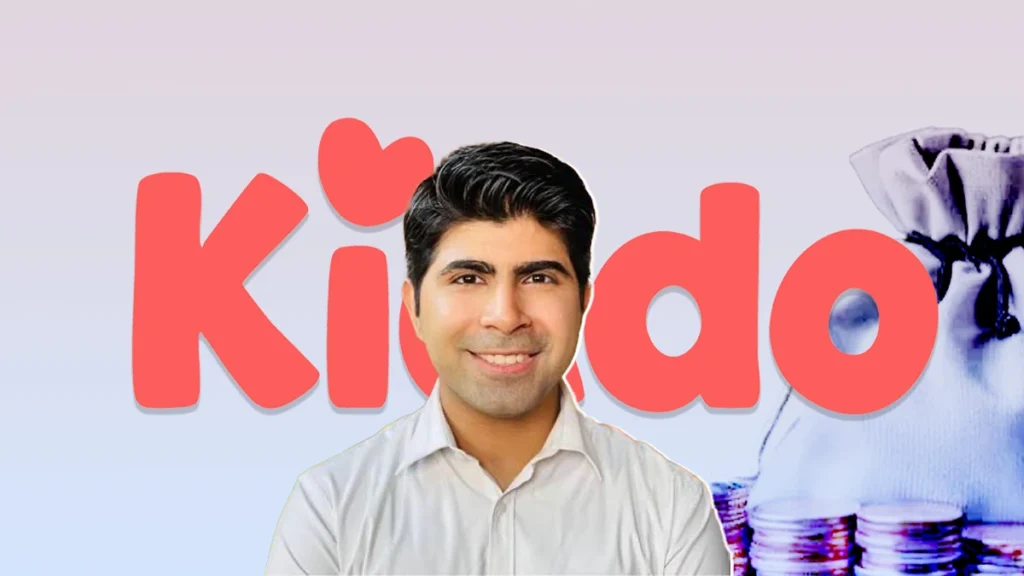
Kiddo, a Bangalore based baby care quick commerce startup founded in 2025 by Ankit Kawatra, has raised twelve point five crore rupees in a pre seed funding round led by Campus Fund, with participation from several strategic angel investors. The platform combines rapid delivery, currently around thirty minutes, with product recommendations based on a child’s specific age and life stage, rather than treating baby products as a single generic category the way most horizontal quick commerce apps do. Kiddo says it has curated more than thirty thousand products across baby essentials, fashion and related categories since launch, and currently operates across Delhi NCR, targeting higher income households. The fresh capital will fund customer acquisition, dark store expansion across Delhi NCR, technology and product development, and team building.
About This Article
This article has been researched and written by the FinanceChecks editorial team, based on publicly available funding disclosures, official company statements from Kiddo, and reporting from multiple Indian business and startup news outlets covering the round.
FinanceChecks holds no commercial relationship with Kiddo, Campus Fund, or any individual named in this article. This piece is intended purely as business and market reporting, not investment advice or a promotional endorsement of the company or its platform.
Last reviewed September twenty twenty six.
The Problem Kiddo Says It Is Solving
Founder Ankit Kawatra has framed the gap Kiddo is trying to close in fairly stark terms, pointing out that Indian consumers can now get hundreds of varieties of chips and soft drinks delivered within minutes, while sleep deprived parents across the country’s largest cities still end up relying on multiple different platforms that can take days to reliably serve them with the right baby product. His argument is that this category was simply never built with parents specifically in mind, treated instead as a minor subcategory bolted onto general grocery and household quick commerce rather than a distinct shopping experience with its own urgency and its own decision making complexity.
That complexity is real and specific. A parent buying diapers, wipes, feeding bottles, rash cream or age appropriate food is not making a generic purchase decision. Size, brand, ingredient safety and age suitability all matter in ways that a general quick commerce catalogue, optimised mainly for speed and breadth across thousands of unrelated categories, is not necessarily built to get right every time. Kiddo’s stated bet is that solving this properly, through curation and age based product recommendations rather than just faster delivery, is the actual differentiator that will earn parental trust and repeat purchases.
What the Kiddo Has Actually Built So Far
Since launching, Kiddo says it has curated more than thirty thousand stock keeping units spanning baby essentials, children’s fashion, and other related categories, a meaningful catalogue depth for a company still operating at the pre seed stage. The platform layers life stage intelligence directly into the shopping experience, meaning product recommendations are shaped by a child’s specific age and changing needs rather than presenting parents with an undifferentiated, one size fits all baby care aisle.
The company currently operates through dark stores, small local fulfilment warehouses built specifically for fast delivery rather than customer facing retail, across Delhi NCR, and says it can deliver baby and children’s products in around thirty minutes. It is deliberately targeting higher income urban households in its initial phase, a sensible early focus given that premium positioning around curation and product safety tends to resonate most strongly, and command the highest willingness to pay, among exactly that customer segment.
One detail worth noting from the company’s own disclosures is that its blended gross margins are said to be meaningfully higher than what is typical for horizontal grocery focused quick commerce platforms. Category specialisation often does carry better margin economics than broad grocery delivery, since curated, higher consideration purchases in categories like baby care and fashion typically support healthier markups than commodity grocery items delivered at high volume and thin margin.
You May Also Like To Read About:
Who Is Behind Kiddo
Ankit Kawatra founded Kiddo in 2025, bringing a background that is somewhat unusual for a quick commerce founder. Before pursuing an MBA at Stanford’s Graduate School of Business, completed in 2023, Kawatra founded Feeding India, described as the country’s first organised food recovery network for children, a social impact venture rather than a conventional commercial startup.
That trajectory, from building a large scale food recovery nonprofit to a Stanford MBA to now building a premium quick commerce platform for parents, suggests a founder whose starting point is a genuine, long standing focus on children’s wellbeing rather than someone who identified quick commerce as a hot category and picked baby products as a convenient vertical to enter it through. Whether that background translates into a durable competitive advantage in a tough, capital intensive quick commerce market remains to be seen, but it does shape the framing and mission language the company has used publicly around its launch.
Why Campus Fund Backing This Matters
Campus Fund, the lead investor in this round, has described its portfolio strategy as backing young, exceptional founders building category defining platforms that address genuine gaps in how urban India shops, parents and lives. Kiddo fits squarely within that stated thesis, a narrowly focused, category specific platform rather than another broad horizontal quick commerce entrant competing purely on delivery speed.
For a pre seed round, the involvement of a group of strategic angel investors alongside the lead fund is also worth noting. Strategic angels in a consumer category like this one often bring operating relationships, category expertise or distribution advantages beyond pure capital, which can matter considerably more at the pre seed stage than the money itself, especially in a business where dark store operations, supply chain relationships and product sourcing credibility all need to be built essentially from scratch.
The Market Kiddo Is Stepping Into
India’s baby care market is not a niche opportunity by any reasonable measure. Industry estimates place its value at around thirty one billion dollars in 2022, with projections suggesting it could reach fifty six billion dollars by 2029, growing at a compound annual rate somewhere between thirteen and fourteen percent over that period. That scale of projected growth is precisely the kind of backdrop that makes category specialists in this space an attractive bet for early stage investors, even at a moment when broader quick commerce economics across India remain intensely competitive and capital hungry.
Kiddo is not entering an empty field. The baby and kids commerce space already includes established players like FirstCry, along with newer entrants such as AllThingsBaby and OZi. The competitive intensity here is real. Gurugram based OZi, for instance, raised three point three million dollars in seed funding from Blume Ventures last October, before going on to raise a further six point two million dollars in a Series A round led by RTP Global just this past March, a fast funding cadence that signals investors see real urgency and real opportunity in this specific category right now.
What Happens Next
With its fresh capital, Kiddo plans to expand its dark store network across Delhi NCR by the end of the year, continue building out its technology and product development, invest further in customer acquisition, and grow its team. The company’s stated ambition is to become the default platform Indian parents turn to for baby care purchases, a considerably bigger goal than simply operating a successful regional quick commerce app, and one that will require expanding well beyond its current Delhi NCR base and premium household focus if it is to be taken at face value.
My Take
What I find most interesting about this round is not the funding amount itself, twelve point five crore rupees is a fairly standard pre seed sized cheque, but the specificity of the wedge Kiddo has chosen. Quick commerce as a broad category in India has already been through several waves of intense, capital burning competition among horizontal players competing almost entirely on delivery speed and catalogue breadth. Carving out a vertical specifically around life stage based curation for parents is a genuinely different kind of bet, one that competes on trust and relevance rather than pure logistics speed, which tend to be harder for a well funded horizontal competitor to simply replicate by throwing more capital at faster delivery times.
I would want to see real evidence of repeat purchase behaviour before drawing firm conclusions about whether this wedge actually holds up commercially. Parenting products have a genuinely useful characteristic for a subscription minded business, needs are recurring and somewhat predictable, diapers run out, children grow into new clothing sizes, feeding needs change on a fairly known schedule. If Kiddo can convert that predictability into consistent repeat ordering rather than one off, curiosity driven trial purchases, the higher margin economics the company has already pointed to could compound meaningfully over time. If it cannot, the premium positioning and curation focus may end up being a pleasant differentiator that fails to overcome the sheer convenience gravity of a parent simply reordering diapers through whichever general quick commerce app they already have installed for everything else.
The founder’s own background is also worth sitting with a little longer than a typical funding announcement invites. Building Feeding India before this venture suggests a founder who has already spent years thinking seriously about children’s wellbeing at a systemic level, which is a different starting point than most consumer startup founders bring to a pitch deck. Whether that translates into genuine product intuition that outcompetes rivals with more conventional ecommerce backgrounds is exactly the kind of thing that will only become clear over the next year or two of actual execution, not from a funding announcement alone.
Frequently Asked Questions
How much funding did Kiddo raise?
Kiddo raised twelve point five crore rupees in a pre seed funding round led by Campus Fund, with participation from several strategic angel investors.
Who founded Kiddo?
Kiddo was founded in 2025 by Ankit Kawatra, who previously founded Feeding India, described as the country’s first organised food recovery network for children, and holds an MBA from Stanford’s Graduate School of Business completed in 2023.
What does Kiddo actually sell?
Kiddo is a quick commerce platform focused entirely on baby and children’s products, combining rapid delivery with product recommendations based on a child’s specific age and life stage, and has curated more than thirty thousand products across essentials, fashion and related categories.
Where does Kiddo currently operate?
Kiddo currently operates across Delhi NCR, targeting higher income households, with plans to expand its dark store network further by the end of the year.
How fast does Kiddo deliver?
The company says it can deliver baby and children’s products in around thirty minutes through its dark store network.
What will Kiddo do with the new funding?
The capital will go toward customer acquisition, expanding its dark store network across Delhi NCR, technology and product development, and building out its team.
Who led Kiddo’s funding round?
The round was led by Campus Fund, alongside a group of strategic angel investors.
How big is India’s baby care market?
Industry estimates value India’s baby care market at around thirty one billion dollars in 2022, with projections suggesting it could reach fifty six billion dollars by 2029, growing at a compound annual rate of around thirteen to fourteen percent.
Who are Kiddo’s competitors?
Kiddo operates in a competitive baby and kids commerce space that includes established player FirstCry, along with other newer entrants such as AllThingsBaby and OZi, the latter having raised both seed and Series A funding within the past year.
Is Kiddo profitable?
The company has not disclosed profitability figures. It has stated that its blended gross margins are higher than typical horizontal grocery quick commerce platforms, though this relates to margin structure rather than overall company profitability.
Disclaimer
This article is intended purely for general informational and business news purposes. It is based on publicly available funding announcements and media reporting available at the time of writing and does not constitute investment advice, financial advice, or an endorsement of Kiddo, Campus Fund, or any individual or product mentioned.
FinanceChecks is an independent publication with no financial or commercial relationship with any party discussed in this article. Figures such as catalogue size, delivery times, margin comparisons and market size estimates are based on the company’s own public statements and third party industry estimates, and have not been independently verified by FinanceChecks.
Readers should not treat any information in this article as a recommendation to invest in Kiddo, Campus Fund, or any related entity. Startup investments carry significant risk, and early stage companies frequently do not achieve the growth trajectories suggested by early positioning or catalogue metrics. Please conduct independent research and consult a qualified financial adviser before making any investment decisions.

Shuchi founded Finance Checks after spending 16+ years working in corporate, managing operations and distribution. She managed her own finances, learned and read regularly and helped people make sense of their savings, loans, insurance, and investments.
She started this site to offer the kind of clear, honest financial guidance she wished was more available when she was learning to manage her own money. Every article is researched personally, checked against official sources such as the Reserve Bank of India, SEBI, or the Income Tax Department, and revisited whenever regulations or figures change. She is upfront about how the site earns money through ads and select affiliate partnerships, and she does not let either influence what she actually recommends to readers.



[…] Kiddo Raises Rs 12.5 Crore From Campus Fund: Betting Parents Deserve Their Own Quick Commerce App […]
[…] Kiddo Raises Rs 12.5 Crore From Campus Fund: Betting Parents Deserve Their Own Quick Commerce App […]