
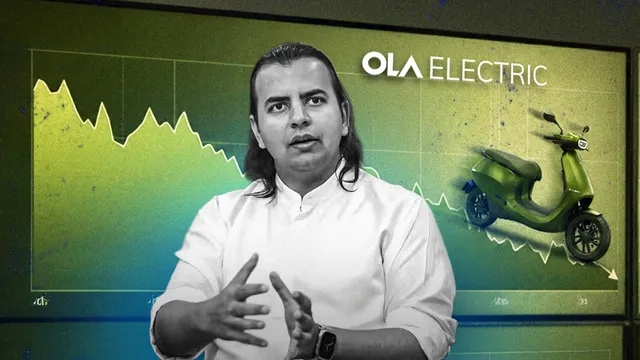
Ola Electric’s ₹1,000 Crore Rights Issue: What It Means After a 56% Rally in Six Months

Ola Electric Mobility’s board approved a rights issue of partly paid-up equity shares to raise up to ₹1,000 crore on September 28, 2026, a move that comes just three months after the company raised ₹780 crore through a qualified institutional placement in June, and weeks after its board cleared a broader plan to raise up to ₹1,500 crore. The announcement also lands at a notable point in the stock’s recent trajectory. Ola Electric shares have gained roughly 56% over the past six months, climbing from a record low of around ₹21 to ₹22 in early March 2026 to the high-₹30s range by early September, even though the stock remains down sharply from its 2024 listing price and its all-time high.
This guide breaks down what a rights issue of partly paid shares actually means, why Ola Electric is raising capital again so soon after its last fundraise, what is known and not yet known about the terms, and how the recent rally fits into the stock’s longer-term picture.

Quick Answer
Ola Electric’s board approved a rights issue of partly paid-up equity shares, with a face value of ₹10 each, to raise up to ₹1,000 crore out of a previously approved ₹1,500 crore fundraising plan. The issue will be offered to eligible shareholders as on a record date that has not yet been announced, and the company has not yet disclosed the issue price, entitlement ratio, or payment schedule for the partly paid shares. This is Ola Electric’s second major fundraise in recent months, following a ₹780 crore QIP completed in June 2026. The stock has risen about 56% over the past six months as of early September 2026, though it remains down significantly on a one-year and three-year basis, and shareholders should wait for the finalised terms before assessing the actual dilution and cost impact.
About This Guide
This guide was compiled by the FinanceChecks.com editorial team using Ola Electric’s regulatory filings on the BSE and NSE, and reporting from established business and financial publications, to give an accurate picture of the fundraise and the stock’s recent performance. Rights issue announcements often generate excitement before the actual terms are known, so we have separated confirmed facts from details that are still pending disclosure. We will update this guide once the company announces the record date, issue price and entitlement ratio.
What Ola Electric Actually Announced
On September 28, 2026, Ola Electric’s board approved a rights issue of partly paid-up equity shares, each with a face value of ₹10, to raise an aggregate amount of up to ₹1,000 crore. In a rights issue, existing shareholders are offered new shares in proportion to their current holding, typically at a price lower than the prevailing market price, and they can choose to subscribe, partially subscribe, or let their entitlement lapse.
The “partly paid-up” structure is the detail worth understanding closely. Instead of paying the full issue price upfront, investors pay only a portion at the time of application, with the company calling up the remaining amount in instalments on specified future dates. This effectively lets Ola Electric secure a shareholder commitment to a larger capital base now while giving investors, including the company’s own promoter group, more flexibility on when the full cash outflow is required.
The company has not yet disclosed the total number of shares, the issue price, the rights entitlement ratio, or the exact payment or call-up schedule. These details, along with the record date that determines which shareholders are eligible, will be finalised and announced by the board in subsequent disclosures.
Why Is Ola Electric Raising Capital Again So Soon?
This is not Ola Electric’s first fundraise this year. The company’s board had earlier approved a broader plan to raise up to ₹1,500 crore through a mix of equity and convertible securities, routes that could include a further public offer, rights issue, qualified institutional placement, private placement, or another permissible mode. In June 2026, it raised ₹780 crore through a qualified institutional placement, having initially targeted ₹500 crore for that round. Separately, in May 2025, the board had approved raising up to ₹1,700 crore through non-convertible debentures or other debt instruments. The current ₹1,000 crore rights issue is being carried out under the earlier ₹1,500 crore umbrella approval, which suggests the company may look to raise the remaining approximately ₹500 crore through another route later.
Ola Electric’s Fundraising Timeline
| Date | Fundraise | Amount | Instrument |
|---|---|---|---|
| May 2025 | Debt fundraise | Up to ₹1,700 crore | Non-convertible debentures and other debt instruments |
| Mid-2026 (board approval) | Equity/convertible fundraise umbrella | Up to ₹1,500 crore | Equity shares, warrants, ADRs, GDRs via rights issue, QIP, private placement or other modes |
| June 2026 | Qualified Institutional Placement | ₹780 crore | Equity shares to institutional investors |
| September 28, 2026 | Rights issue | Up to ₹1,000 crore | Partly paid-up equity shares to existing shareholders |
Behind these repeated fundraises sits a business still working through financial pressure. Ola Electric’s consolidated net loss narrowed 22% year-on-year to ₹336 crore in the June 2026 quarter, an improvement, but the company also reported negative operating cash flow of ₹215 crore for that quarter, meaning its core operations are still consuming cash rather than generating it. Monthly sales volumes, which had declined sharply, have reportedly started recovering to around 13,000 to 15,000 units, with the company targeting roughly 20,000 units over the next few quarters.
The Stock’s 56% Rally: Context Matters
A 56% six-month return sounds dramatic in isolation, and the headline is accurate, but the fuller picture changes how it should be read.
| Period | Approximate Ola Electric Return |
|---|---|
| 6 months (roughly March to September 2026) | Around +56% |
| 1 year | Down roughly 25% to 41%, depending on the exact dates measured |
| 3 years / since listing | Down sharply from the August 2024 IPO and listing levels |
| From all-time high (₹157.53, August 2024) | Down more than 70% even after the rally |
The rally largely reflects a recovery from a record low near ₹21 to ₹22 hit in early March 2026, when the stock fell as much as 16% in a single session on concerns over slowing EV sales and falling market share, with February 2026 registrations having dropped 47% month-on-month. A sharp bounce off a multi-year low, while genuinely a 56% gain in percentage terms, is a very different story from a stock making fresh highs, and investors should be careful not to read the headline return as a signal that the company’s underlying challenges have been resolved.
There are some genuinely positive signals alongside the rally. Mutual fund holdings in the stock increased from about 5.14% to 8.52% in the June 2026 quarter, and foreign institutional holdings also edged up, while retail and promoter holdings both declined over the same period. That shift suggests some institutional investors see value at these levels, even as retail participation has cooled.
What Existing Shareholders Should Watch For
If you already hold Ola Electric shares, the announcement itself does not require immediate action. The details that will actually determine the financial impact are still pending, and existing shareholders should specifically track the record date, which determines eligibility; the issue price, since this and the current market price together determine any effective discount; the rights entitlement ratio, which tells you how many new shares you can subscribe to per share you currently hold; and the payment or call-up schedule for the partly paid structure, since this affects how much cash you need to set aside and when.
A rights issue dilutes ownership for shareholders who do not participate, since new shares are issued to those who do subscribe. Shareholders who do not wish to invest further can typically renounce or sell their rights entitlement on the exchange during the subscription window, rather than losing value outright, though this depends on the final structure once announced.
Common Mistakes Investors Make With Rights Issue News
A frequent mistake is reacting to the headline fundraise amount without checking whether the terms, price, ratio and record date, have actually been announced yet, since a board approval to raise capital is only the first of several steps before the issue actually opens. Another common mistake is treating a percentage return calculated from a stock’s own low point as proof of a turnaround, when a large bounce off a record low can still leave a stock well below its listing price or long-term average. Investors also sometimes assume a rights issue is automatically a bad sign, when the appropriate reading depends on what the capital is being used for and the company’s ability to execute, information that is often disclosed only in stages. Finally, people frequently confuse a partly paid rights issue with a standard fully paid one, missing that a partly paid structure creates a future payment obligation, not just an upfront one.
My Take
The size and repetition of Ola Electric’s fundraising this year says as much as any single announcement. Three separate capital-raising moves within about sixteen months, a debt raise, a QIP, and now a partly paid rights issue drawn from the same board-approved umbrella, points to a company that needs continued external capital to fund its operations while it works to turn around unit economics. The narrowing loss and recovering monthly volumes are genuine positives, but negative operating cash flow means the business is still not self-funding.
The rally itself deserves a similarly measured read. A 56% six-month gain from a record low is real money for anyone who bought near the bottom, but it says more about how beaten down the stock had become than about a fundamental turnaround being complete. The partly paid structure of this rights issue is a genuinely useful detail to understand, since it changes the near-term cash commitment for participating shareholders compared to a standard rights issue, and it is worth reading the finalised term sheet carefully once it is published rather than acting on the headline number alone.
Frequently Asked Questions
1. How much is Ola Electric raising through the rights issue? Up to ₹1,000 crore, through a rights issue of partly paid-up equity shares with a face value of ₹10 each.
2. What does “partly paid-up” mean in this rights issue? Investors pay only a portion of the issue price upfront when applying, with the remaining amount called up by the company in instalments on specified future dates.
3. When is the record date for the rights issue? It has not yet been announced. The company said the record date will be determined and notified in a subsequent disclosure.
4. What is the issue price and entitlement ratio? These have not yet been finalised. The board will announce the issue price, entitlement ratio and other terms in later filings.
5. Is this Ola Electric’s first fundraise this year? No. The company raised ₹780 crore through a qualified institutional placement in June 2026, and this rights issue draws from an earlier board-approved plan to raise up to ₹1,500 crore.
6. How much has Ola Electric’s stock risen in the last six months? Around 56% as of early September 2026, largely reflecting a recovery from a record low of about ₹21 to ₹22 hit in early March 2026.
7. Is Ola Electric’s stock still down from its listing price? Yes. Despite the recent rally, the stock remains well below its August 2024 IPO and listing price and more than 70% below its all-time high.
8. Why does Ola Electric need to keep raising capital? The company reported negative operating cash flow of ₹215 crore in the June 2026 quarter, alongside a narrowing but still significant net loss, indicating its operations are not yet self-funding.
9. What should existing shareholders do about the rights issue? Wait for the finalised issue price, entitlement ratio, record date and payment schedule before deciding whether to subscribe, and consider that entitlements not exercised may typically be sold or renounced during the subscription window.
10. Does mutual fund and FII interest in the stock indicate it is a good investment? Increased institutional holding is a data point worth noting, but it is not a guarantee of future performance. Investors should evaluate the company’s fundamentals and their own risk tolerance rather than relying on any single signal.
Disclaimer
This article is for general informational purposes only and does not constitute investment advice or a recommendation to buy, sell or hold any security. Share price figures and returns cited are approximate and based on publicly available data at the time of writing; actual figures may vary depending on the exact dates and sources used. Rights issue terms including price, ratio and record date were not finalised at the time of writing and are subject to change. Readers should conduct their own research or consult a SEBI registered investment adviser before making investment decisions. FinanceChecks.com is not a SEBI registered investment adviser and is not affiliated with Ola Electric Mobility Limited.

Shuchi founded Finance Checks after spending 16+ years working in corporate, managing operations and distribution. She managed her own finances, learned and read regularly and helped people make sense of their savings, loans, insurance, and investments.
She started this site to offer the kind of clear, honest financial guidance she wished was more available when she was learning to manage her own money. Every article is researched personally, checked against official sources such as the Reserve Bank of India, SEBI, or the Income Tax Department, and revisited whenever regulations or figures change. She is upfront about how the site earns money through ads and select affiliate partnerships, and she does not let either influence what she actually recommends to readers.



[…] Ola Electric’s ₹1,000 Crore Rights Issue: What It Means After a 56% Rally in Six Months […]