
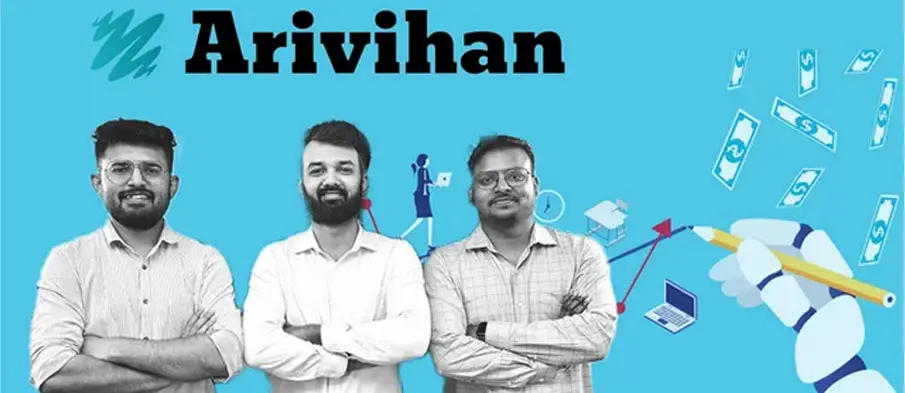
Arivihan Raises $10M as AI-Led Edtech Targets India’s Smaller Cities

Indore-based edtech startup Arivihan has raised $10 million in a Series A round, co-led by existing investors Accel and Prosus Ventures, with an additional $200,000 coming in from angel investors linked to the GSF accelerator. Including this round, Arivihan has now raised more than $15 million since it was founded in 2022. The new funding pushes the company’s valuation to around ₹570 crore (roughly $60 million), about 3.3 times its previous round.
What Arivihan Actually Does
Arivihan runs a fully AI-driven learning platform built for school students preparing for State Boards, CBSE and NEET, with a particular focus on Class 12 learners. The platform combines interactive video lectures, instant doubt-solving and study plans that adjust to how a student is actually performing, all without any live teachers involved. The company describes its product as putting a personal tutor in every student’s pocket, with its AI handling everything from answering questions during a lecture to generating personalised notes and practice problems.
What sets Arivihan apart from much of India’s edtech pack is where its users actually live. The company says around 80% of its subscribers come from Tier 3 cities and rural India, a segment that has historically been underserved by both traditional coaching institutes and most online learning platforms, which tend to concentrate on metro and Tier 1 markets. Founder and CEO Ritesh Singh Chandel framed this directly, saying that while edtech so far has made content cheaper, Arivihan is trying to make the entire personalised learning system affordable and effective for what he called “real Bharat students,” regardless of location or language.
- Dating Startup Rivet Raises $10.5 Mn From Peak XV And Others
- Dextr AI Raises $6.7 Mn To Build AI Agents For Hospitality Industry
- Rio Health Raises $4.5 Mn To Scale Its Quick Pharmacy Network
- Slayd Funding: Fashion Discovery Startup Raises ₹1.5 Crore Pre-Seed From AJVC
- Kiddo Raises Rs 12.5 Crore From Campus Fund: Betting Parents Deserve Their Own Quick Commerce App
- Factrika Raises Rs 8.9 Crore From Info Edge: Solving India’s Hidden Factory Floor Problem
Where the Money Is Going
Arivihan plans to use the fresh capital to expand into new states and add CBSE board coverage, strengthen its AI research and vernacular, or local-language, capabilities, and scale up both digital marketing and on-ground distribution. Some reports specifically point to an expansion push into Tier 2 and Tier 3 cities in northern India as part of this plan.
The company’s financials show the kind of early-stage growth that tends to attract this level of investor confidence. In FY25, Arivihan’s revenue jumped nearly 14.8 times year-on-year, climbing from roughly $28,900 to about $426,400, though it also posted a loss of around $604,300 for the same year. Its FY26 numbers have not yet been filed.
Why This Round Matters for Indian Edtech
Context matters here. Indian edtech has been through a rough few years since the pandemic-era funding boom collapsed. Sector-wide equity funding fell from about $4.3 billion in 2021 to just $214 million in the first eight months of 2026, and homegrown edtech ventures pulled in only $249 million in all of 2025, a 56% year-on-year decline, with deal count down 35%. Investors who once wrote checks based on user growth and downloads are now asking harder questions about revenue quality and retention.
Against that backdrop, a $10 million round is a meaningful vote of confidence, and Arivihan isn’t the only one seeing renewed interest. Elevate Education, formerly known as Sunstone, raised ₹170 crore from WestBridge Capital in July to strengthen its own technology and AI capabilities, and Bengaluru-based Lytmus AI raised close to ₹5 crore in June to expand its AI-powered NEET preparation tools. Taken together, these deals suggest investors see AI specifically, rather than digital content generally, as the next real differentiator in Indian edtech.
Prosus investor Dhruv Gupta pointed to this directly, saying the firm backs companies using AI to bring critical digital services to India’s next several hundred million users, a framing that fits squarely with Arivihan’s bet on smaller cities and rural markets.
The Real Challenge Ahead
None of this means the path forward is simple. Convincing families in smaller towns to trust a fully automated, AI-driven platform over the coaching institutes many still rely on is a genuine hurdle, not just a marketing exercise. Offline coaching networks remain deeply established in exactly the markets Arivihan is targeting, and free AI tools now available directly on smartphones add another layer of pricing pressure that wasn’t part of the equation even two years ago.
Arivihan’s bet is essentially that automated, low-cost tutoring can out-compete both of those alternatives on affordability and personalisation at once. Its revenue growth so far suggests the model is finding real traction, but the company is still operating at a loss, and scaling into new states and languages typically brings costs that don’t show up cleanly in a Series A press release. How Arivihan performs over its next couple of fundraising cycles will say a lot about whether AI-first tutoring can genuinely work at the price points smaller-city and rural Indian families are willing to pay, or whether this remains a promising idea still searching for a sustainable path to profitability.
Disclaimer
This article is for general informational purposes only and does not constitute investment advice. Details are based on publicly available funding announcements and news reporting at the time of writing. FinanceChecks.com is not affiliated with Arivihan, Accel, Prosus Ventures, or any company mentioned in this article.

Shuchi founded Finance Checks after spending 16+ years working in corporate, managing operations and distribution. She managed her own finances, learned and read regularly and helped people make sense of their savings, loans, insurance, and investments.
She started this site to offer the kind of clear, honest financial guidance she wished was more available when she was learning to manage her own money. Every article is researched personally, checked against official sources such as the Reserve Bank of India, SEBI, or the Income Tax Department, and revisited whenever regulations or figures change. She is upfront about how the site earns money through ads and select affiliate partnerships, and she does not let either influence what she actually recommends to readers.