
EloElo Raises $80 Million (About ₹760 Crore) at a $500 Million Valuation: How NBCUniversal-Backed Story TV Plans to Take Indian Microdramas Global

By Shuchi, FinanceChecks.com | Published 4 November 2026 | Category: Business Finance (Startup & Funding) | Reading time: about 6 minutes
Bengaluru-based EloElo Group, the parent of the microdrama platform Story TV, has raised $80 million in a Series C round led by Hornbill Capital and NBCUniversal. The round values the company at about $500 million, according to reports, and the money is meant to fund premium original shows, AI development and a launch outside India, including in the United States. This article explains the deal, what EloElo does, why microdramas are attracting investors, and the risks that remain.
Quick Answer
EloElo Group raised $80 million (about ₹760 crore at roughly ₹95 per dollar) in a Series C round co-led by Hornbill Capital and NBCUniversal, with participation from MIT Investment Co. and existing investors. Reports put its valuation at $500 million, nearly five times its valuation at its previous round in April 2025, and its total funding at $130 million. The company says it has over 40 million monthly active users and 300 million installs across its apps. It plans to spend on original content in local languages, AI platforms and an international launch of its microdrama business. The main risk is monetisation, because many Indian viewers watch microdramas for free.
About This Guide
This article is written by the editorial desk of FinanceChecks.com, an independent Indian personal finance and business publication. It is based on reports published on 3 and 4 November 2026 by Entrackr, YourStory, TechCrunch and Variety, plus market research figures from Redseer and Ormax Media as cited by TechCrunch. The valuation is reported by sources and was not stated in the company’s own announcement as far as I could find. EloElo is a private company, and its shares are not available to retail investors. This is educational content and not investment advice.
The Deal at a Glance
| Item | Details |
|---|---|
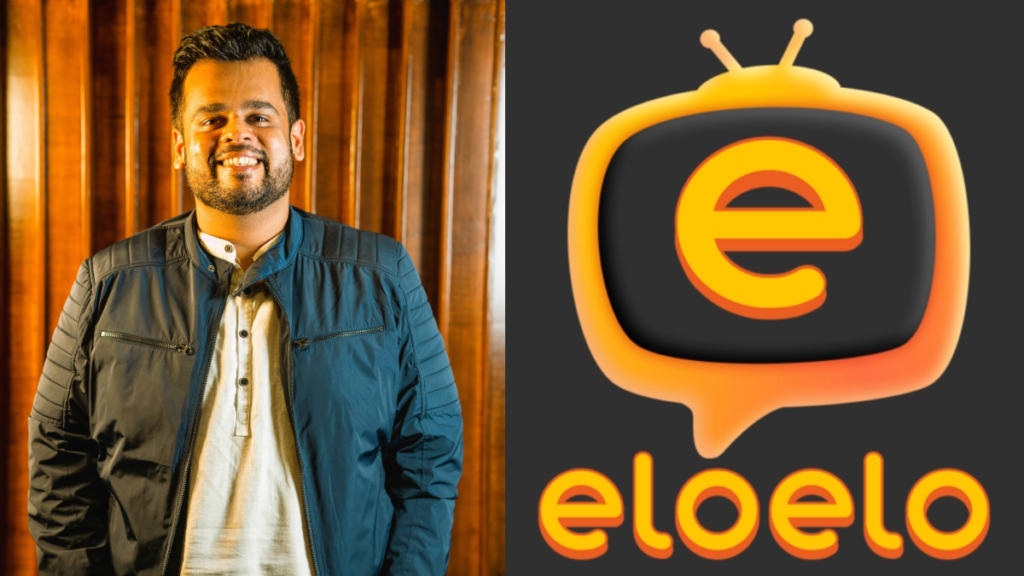
| Company | EloElo Group, Bengaluru, founded in 2020 by former Flipkart executive Saurabh Pandey |
| Round | Series C |
| Amount | $80 million, about ₹760 crore at ₹95 per dollar |
| Led by | Hornbill Capital and NBCUniversal |
| Other investors | MIT Investment Co., Play Ventures, Kalaari Capital, Waterbridge Ventures, Griffin Gaming Partners and others |
| Valuation | About $500 million, reported by sources, almost five times the previous round |
| Total raised | $130 million, including a $13.5 million Series B in April 2025 |
| Team | About 240 people |
What Does EloElo Do?
EloElo describes itself as a consumer AI and entertainment company. It started as a live-streaming social app and now runs several products:
- Story TV, its microdrama platform, which offers short serialised episodes watched on a phone.
- Master, a micro-learning app with short videos, competing with apps such as Seekho and Kuku’s Guru.
- Dolphin AI and Voxy AI, its AI products, including an AI companion agent.
The company says its apps have more than 40 million monthly active users and have crossed 300 million installs. Reports do not give a breakdown by app, and one aggregator quotes a lower figure of 33 million users for Story TV alone, so treat the numbers as company claims.
You May Also Like To Read About:
- GIVA Raises ₹975 Crore Funding: Multiples Leads Investment as Jewellery Brand Plans 160 New Stores
- Ace Blend Secures $9.9 Million Funding to Strengthen Nutrition Research and Product Innovation
- Simplismart Raises $14 Million in Series B Funding to Expand AI Inference Platform
- Troovy Raises ₹100 Crore in Series B Funding to Launch New Snacks and Expand Retail Reach
Why Microdramas Are Attracting Investors
Microdramas are serials of very short episodes, often a minute or so each, made for the phone and watched in quick sessions. They became popular in China and have spread to India and other markets. For investors, the appeal is a cheap-to-produce format, a large mobile audience and a pay-per-episode or subscription model.
There is a catch. TechCrunch cites an analyst firm, Redseer, which estimates that more than 40 million people in India have paid for microdramas at least once, but only about 15 to 17 million pay every month. A separate survey by Ormax Media suggested that 72 percent of people have never paid for the format. In other words, India has audience, but turning viewers into paying customers is the hard part.
How Will the Money Be Used?
According to the company and the reports, the funds will go towards:
- Original content. More premium originals, in local languages.
- A mix of production styles. Live-action shows, hybrid shows that use AI, and fully AI-made shows, as the founder described in an interview.
- AI and technology. Developing Dolphin AI and hiring more AI and machine learning researchers.
- International expansion. Taking the microdrama business to overseas markets, including the US.
Why NBCUniversal?
NBCUniversal is one of the world’s large media companies. A co-lead investment from a media group suggests interest in the format and in access to a growing audience, and it can bring distribution and production experience as EloElo goes abroad. Hornbill Capital is an India-focused investment firm. In its comments, Hornbill said it is excited to bring NBCUniversal’s global capabilities into the partnership as EloElo expands outside India.
The Risks
- Monetisation. Many viewers stay on free content, so turning audience into revenue is not guaranteed.
- Competition. Indian platforms such as Kuku and Pocket also invest in microdramas and AI tools for creators, and global apps are watching the space.
- Content cost and quality. Premium originals cost more than low-budget shows, and audiences can tire of repetitive stories.
- AI content. Using AI to make shows can speed up production, but audience acceptance and rights questions are still developing.
- A rich valuation. A reported $500 million valuation, nearly five times the previous round, will need strong revenue growth to justify.
- Overseas launch. Winning viewers in the US means competing with established entertainment brands.
What It Means for Founders, Investors and Viewers
For founders. The round shows that investors will back pivots when user metrics are strong, which is a useful signal in a cautious funding market. It also shows how a strategic investor such as a media company can add more than money. If you are raising funds, our guides to funding without giving up equity and to state startup grants cover other routes.
For investors. EloElo is private, so ordinary investors cannot buy its shares. The deal is a data point about the microdrama and consumer AI sector. If listed companies in media or digital entertainment start to mention microdramas, treat that as a theme to research, not a reason to buy.
For viewers. Expect more original shows in regional languages, and more paywalls. Check what you are paying for before you subscribe, and be careful of unofficial apps that promise free access.
What Is a Series C Round?
Startups raise money in stages. A seed round funds the first product, Series A and B fund growth, and Series C usually backs a company that has found its market and wants to scale or expand into new regions. By Series C, investors usually look at revenue, user growth and a path to profit, and valuations are higher than in earlier rounds.
My Take
I find the strategic angle more interesting than the headline number. A media major like NBCUniversal backing an Indian app tells us the format is being taken seriously as a business, not just a trend. But the numbers also say something sobering: tens of millions of paid-once users and a much smaller group paying monthly.
If EloElo can turn its audience into regular paying subscribers, and make its originals work abroad, the valuation could look reasonable in hindsight. If not, the same valuation will look stretched. Watch the next set of numbers: paying users, retention and revenue per user.
Frequently Asked Questions
1. How much did EloElo raise? EloElo Group raised $80 million in a Series C round, which is about ₹760 crore at roughly ₹95 per dollar, bringing its total funding to $130 million.
2. Who invested in EloElo’s Series C? Hornbill Capital and NBCUniversal co-led the round. MIT Investment Co. and existing investors Play Ventures, Kalaari Capital, Waterbridge Ventures and Griffin Gaming Partners also took part.
3. What is EloElo’s valuation? Reports citing sources put it at about $500 million, nearly five times its valuation in April 2025. The company’s announcement did not state a valuation in the reports I reviewed.
4. What is Story TV? Story TV is EloElo’s microdrama platform, which offers short serialised shows for phones. EloElo also runs the learning app Master and AI products such as Dolphin AI and Voxy AI.
5. Can I invest in EloElo? EloElo is a private company, so its shares are not available to retail investors on the stock exchanges.
Disclaimer
This article is for general information and education only. It is not investment, tax or legal advice and does not recommend investing in any company. Valuation and user figures are as reported by media or the company and may change. The rupee conversion is approximate. Consult a SEBI-registered investment adviser before making investment decisions.
Sources Consulted
Entrackr, “EloElo Group raises $80 Mn in Series C led by Hornbill Capital, NBCUniversal” (4 November 2026). YourStory, “EloElo Group raises $80M in Series C led by Hornbill Capital and NBCUniversal” (4 November 2026). TechCrunch, “India’s EloElo nabs $80M from NBCUniversal to bet on the country’s rising microdrama market” (3 November 2026). Variety Middle East report on the round (4 November 2026). Market research figures from Redseer and Ormax Media as cited by TechCrunch.

Shuchi founded Finance Checks after spending 16+ years working in corporate, managing operations and distribution. She managed her own finances, learned and read regularly and helped people make sense of their savings, loans, insurance, and investments.
She started this site to offer the kind of clear, honest financial guidance she wished was more available when she was learning to manage her own money. Every article is researched personally, checked against official sources such as the Reserve Bank of India, SEBI, or the Income Tax Department, and revisited whenever regulations or figures change. She is upfront about how the site earns money through ads and select affiliate partnerships, and she does not let either influence what she actually recommends to readers.