
Boldfit Raises ₹400 Crore From Bharat Value Fund to Take Its D2C Fitness Brand Into Retail

By the FinanceChecks.com Editorial Team | Published October 12, 2026 | Last reviewed October 12, 2026 | 7-minute read
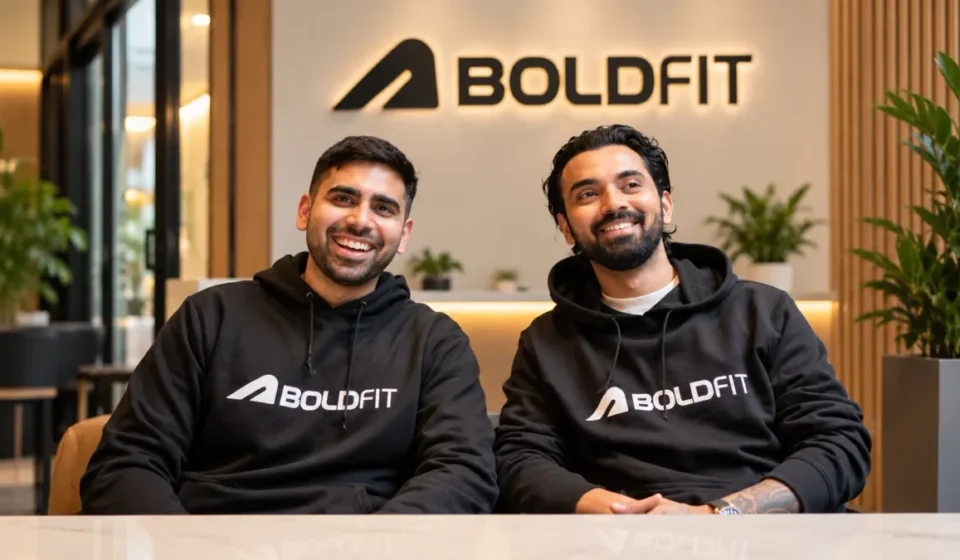
A fitness brand that grew up selling through apps and websites is about to open its doors to people who like to touch the product before they buy it. Boldfit, the Bengaluru-based direct-to-consumer sportswear and fitness brand, has raised about ₹400 crore (around $41.8 million) in a Series B round from The Wealth Company’s Bharat Value Fund. The money is meant mainly for nationwide retail expansion, manufacturing and product innovation, with selective acquisitions also on the list.
The round is nearly four times the ₹110 crore Series A the company raised in 2024, and it reflects a trend worth understanding: online-first brands are now spending big to go offline. Here is what was announced, what the numbers do and do not tell us, and the risks that come with the move.
Quick Answer
Boldfit, founded in 2018 by Pallav Bihani, raised about ₹400 crore in a Series B round led by Bharat Value Fund, a Category II alternative investment fund (AIF) managed by The Wealth Company, part of the Pantomath Group. It will use the capital for nationwide retail expansion, manufacturing and product innovation, and may make selective acquisitions. The company says it serves over two crore customers a year and has grown at more than 80% annually over the last three years, though these are company claims and it has not published audited financials in the sources we reviewed. The valuation and the stake sold have not been disclosed. Boldfit is a private company, so retail investors cannot buy its shares.
About This Guide
This guide was compiled by the FinanceChecks.com editorial team using reports from Inc42, YourStory, Whalesbook and the retail trade site RetailIntel, which carried the investor and company statements and the Hindu BusinessLine report of October 12, 2026. Growth figures come from the company’s own statement, and revenue estimates from third-party data trackers are labelled as estimates. This is for information and is not investment advice.
The Round at a Glance
| Detail | Information |
|---|---|
| Company | Boldfit, a Bengaluru-based D2C sports and fitness brand |
| Founder and CEO | Pallav Bihani, who founded the company in 2018 |
| Amount raised | About ₹400 crore (about $41.8 million) |
| Round | Series B |
| Lead investor | Bharat Value Fund, a Category II AIF managed by The Wealth Company (Pantomath Group) |
| Earlier funding | ₹110 crore Series A led by Bessemer Venture Partners in 2024 |
| Combined funding | About ₹510 crore across the two rounds |
| Valuation and stake | Not disclosed |
| Uses | Retail expansion, manufacturing, product innovation, selective acquisitions |
What the Money Is For
The company has named three main priorities. The first is nationwide retail, which means moving from selling mostly online to being available in physical stores. The second is manufacturing, where Boldfit plans to deepen its capabilities, a notable step for a brand that began as an asset-light online seller. The third is product innovation, as the company widens its range across apparel, footwear and fitness gear. Inorganic opportunities, in plain language buying smaller brands, were also mentioned, and trade coverage reads that as likely to come after retail and manufacturing.
Pallav Bihani described the plan as building a deeply integrated sports business that combines product innovation, manufacturing excellence and nationwide retail. That phrase is the real story: Boldfit wants to own more of the chain from factory to shelf instead of leaning on marketplaces and ad platforms.
Why a D2C Brand Is Going Offline
Direct-to-consumer, or D2C, means a brand sells straight to customers through its own website, app or marketplaces, with no distributor or retailer in between. It was a powerful model for new brands because it kept margins and customer data in-house. But it has a growing weakness: online customer acquisition costs have risen, and a large share of Indian shoppers, particularly in smaller cities, still prefer to try apparel and footwear in person before buying.
Stores solve several of those problems at once. They make the brand visible, build trust through touch and fit, and reduce returns, which are expensive in apparel. That is why several D2C brands are making the same move, and we saw a similar plan from smart kitchen startup Beyond Appliances, which is also taking its online-first products into offline retail.
You May Also Like To Read About:
- NeoGrowth Raises ₹85 Crore from FMO and LeapFrog to Expand Digital Lending for MSMEs
- NABVENTURES Raises ₹450 Crore at First Close of ₹1,500 Crore Fund II: What It Means for Agritech Startups in India
- DailyObjects Raises ₹332 Crore at ₹1,050 Crore Valuation: D2C Brand Plans 150 Stores Across India
- Sunfox Technologies Raises $7 Million to Scale Its Spandan Portable ECG Platform
- Desible.ai Raises ₹32 Crore to Build an AI Operating Layer for Banks, NBFCs and Insurers
What the Numbers Say, and What They Do Not
| Claim or data point | Source | Caution |
|---|---|---|
| More than two crore customers served a year | Company statement | Not independently audited |
| More than 80% growth a year for three years | Company statement | The base year and revenue figures were not published |
| Revenue of about $16 million in 2024 | Third-party data tracker estimate | An estimate and now dated |
| Bharat Value Fund’s fourth investment in 12 months, with tickets averaging about ₹400 crore | Investor statement | Describes the investor, not Boldfit’s performance |
The point to take from this table is that a big cheque does not prove a healthy business. A ₹400 crore round compared with an estimated revenue of about $16 million in 2024 is large relative to the company’s size at that time, and the growth since then has not been verified. The bigger round shows investor confidence in the plan, not proof that the plan will work.
Who Is Bharat Value Fund?
Bharat Value Fund is a Category II alternative investment fund. In SEBI’s classification, Category II AIFs generally invest in the equity or debt of private companies and do not use borrowed money for investing beyond day-to-day needs, and AIFs are open to investors who commit large minimum amounts, typically ₹1 crore or more. It is managed by The Wealth Company Alternates, part of the Pantomath Group. Writing a cheque of this size is a sign of how much capital is available for growth-stage consumer brands outside the traditional venture capital firms.
The Risks of the Move
Going from online to offline is harder than it looks, and it is where many D2C brands stumble.
| Risk | Why it matters |
|---|---|
| Retail execution | Stores bring rent, staff, inventory and logistics costs that an online model avoids |
| Competition | Global and domestic sportswear brands and specialist retailers already have strong shelf presence |
| Manufacturing | Owning production adds fixed costs and quality responsibility |
| Acquisitions | Buying smaller brands can add complexity and dilute focus if integration is poor |
| Brand control | Moving into retail partners can mean discounting and less control over how products are sold |
Boldfit’s celebrity-backed visibility, which includes cricketer KL Rahul among its backers according to one report, helps awareness, but awareness alone does not pay for stores.
What This Means If You Follow Startups or Invest in Consumer Brands
A funding announcement is a signal, not a verdict. For ordinary investors the practical points are narrow. Boldfit is private, so you cannot buy the shares, and the sources we reviewed say nothing about a public listing. If a brand like this does eventually list, the useful things to look at will be audited revenue and profit, the cost of running stores, return rates and how much of the growth came from discounting. For now, the story mainly shows where private capital is flowing: into consumer brands that want to own their manufacturing and their stores.
Common Mistakes When Reading a Funding Headline
A frequent mistake is assuming a large round means a profitable company, when funding is money coming in and says nothing about earnings. Another is repeating growth claims, such as 80% a year, without noting that they are the company’s own and unaudited. People also treat the round size as a valuation, when the valuation here has not been disclosed. Some confuse a Category II AIF with a retail mutual fund, although AIFs are meant for large, sophisticated investors. And many assume an online brand will succeed offline automatically, which is where much of the risk lies.
My Take
What I find most interesting is not the amount but the direction. A few years ago, the standard advice for a D2C brand was to stay asset-light and spend on performance marketing. Boldfit is spending on factories, shops and acquisitions, which is the opposite. That is a bet that owning the product and the shelf creates a stronger business than renting attention online.
It may well be right, but it raises the bar. A retail and manufacturing business has to be run on discipline in inventory, costs and quality, and those are different skills from running ads. The next thing to watch is whether Boldfit publishes audited numbers and how its first stores perform, since those will say far more than the size of this round.
Frequently Asked Questions
1. How much did Boldfit raise and from whom? About ₹400 crore (about $41.8 million) in a Series B round led by Bharat Value Fund, a Category II AIF managed by The Wealth Company, part of the Pantomath Group.
2. What will Boldfit do with the money? Expand into nationwide retail, invest in manufacturing and product innovation, and pursue selective acquisitions.
3. Who founded Boldfit? Pallav Bihani founded the Bengaluru-based brand in 2018 and is its CEO.
4. How much had Boldfit raised before? A ₹110 crore Series A led by Bessemer Venture Partners in 2024, so about ₹510 crore across the two rounds.
5. What is a D2C brand? A direct-to-consumer brand sells straight to customers through its own channels instead of through distributors and traditional retailers.
6. What is a Category II AIF? A SEBI-regulated pooled investment vehicle that generally invests in the equity or debt of private companies without borrowing for investment. Investors usually need to commit large minimum amounts.
7. What is Boldfit’s valuation? It has not been disclosed in the reports we reviewed.
8. Can I buy Boldfit shares? No. Boldfit is a private company, and no public listing has been announced in the sources we reviewed.
How We Verified This Information
This guide was researched using Inc42, YourStory, Whalesbook and RetailIntel reports of the funding, which carry the investor’s and the company’s statements. Growth and customer figures come from the company’s own statement and are not audited. The revenue figure for 2024 is a third-party estimate and is labelled as such. Valuation and the stake sold were not available.
Disclaimer
This article is for general informational purposes only and does not constitute investment advice. Details are based on company and investor statements and media reports at the time of writing, and company figures have not been independently verified. FinanceChecks.com is not a SEBI registered investment adviser and is not affiliated with Boldfit, The Wealth Company, Pantomath Group or Bessemer Venture Partners.
Last reviewed and fact-checked on October 12, 2026 by the FinanceChecks.com Editorial Team.

Shuchi founded Finance Checks after spending 16+ years working in corporate, managing operations and distribution. She managed her own finances, learned and read regularly and helped people make sense of their savings, loans, insurance, and investments.
She started this site to offer the kind of clear, honest financial guidance she wished was more available when she was learning to manage her own money. Every article is researched personally, checked against official sources such as the Reserve Bank of India, SEBI, or the Income Tax Department, and revisited whenever regulations or figures change. She is upfront about how the site earns money through ads and select affiliate partnerships, and she does not let either influence what she actually recommends to readers.



[…] Boldfit Raises ₹400 Crore From Bharat Value Fund to Take Its D2C Fitness Brand Into Retail […]