
Bank Locker Rules in India: What to Know Before Renting One

Meena’s grandmother kept her wedding jewellery in a bank locker for over twenty years, paying the rent faithfully every year without ever really reading the agreement she’d signed back in the 1990s. When she passed away, the family assumed accessing the locker would be a formality, just show up with the death certificate. Instead, it took nearly three months of back and forth with the bank, because no nominee had ever been added to the account. It wasn’t the bank being difficult exactly, it was simply following a process that older locker agreements never made easy.
This is exactly the kind of gap that newer bank locker rules in India were designed to close, though most people still rent a locker the same way Meena’s grandmother did decades ago, without actually reading what they’re signing. Here’s what the current rules actually say, and what’s worth checking before you rent one.
The Legal Relationship Has Changed, and It Matters
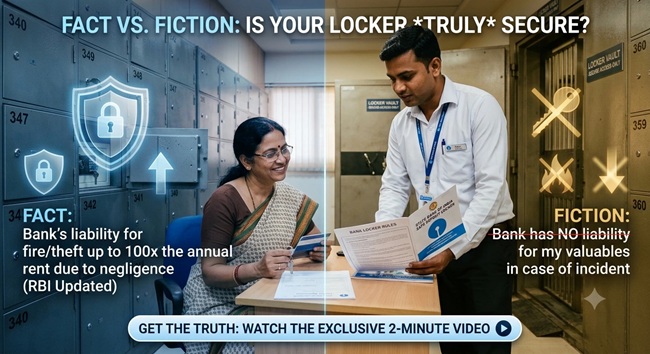
For a long time, many customers assumed a bank locker worked like a safety net, if something went wrong, the bank was fully responsible, the way a hotel is responsible for items in a guest safe. That’s not how it legally works. Under the RBI‘s revised framework, first issued in August 2021 and now fully operational and enforced across banks, the relationship between you and the bank is a lessor-lessee one, the bank is renting you space, not acting as a custodian of your specific belongings.
This means the bank isn’t automatically liable if something happens to your locker’s contents. It’s liable only when negligence can be proven, things like a security lapse, a fire caused by the bank’s own equipment failure, or staff misconduct. If a locker is compromised due to an event genuinely outside the bank’s control, the compensation picture looks very different than most people assume.
What You’re Actually Covered For, and the 100x Rule
When a bank is found negligent, its liability is capped at 100 times the annual locker rent. So if you’re paying 5,000 rupees a year for your locker, the maximum compensation for a proven negligence-related loss would be 5 lakh rupees, regardless of what the actual contents were worth. This same 100x formula also applies if the bank denies you access to your locker for more than 7 days without a valid reason.
Here’s the detail that catches people off guard: banks generally cannot inspect what you store inside your locker, access happens only in your presence or an authorised person’s presence, which means the bank genuinely doesn’t know what’s inside. This is precisely why compensation is tied to your rent tier rather than the actual value of your belongings. If you’re storing jewellery or documents worth significantly more than 100 times your annual rent, that gap isn’t covered, and it’s a real gap worth thinking about before you assume a locker functions as insurance.
What You Can and Can’t Store
Lockers are meant for jewellery, important documents, property papers, wills, and similar valuables. The rules explicitly prohibit cash, firearms or weapons, explosives, hazardous chemicals, perishable goods, and anything illegal under Indian law. If a bank discovers prohibited items during any authorised inspection process, it can terminate your locker agreement immediately, and in serious cases, pursue legal action. This isn’t just bureaucratic caution, it protects every other locker holder sharing that same secure facility.
The Nomination Process Actually Matters Now
This is the part that would have saved Meena’s family months of delay. The current rules strongly encourage adding a nominee to your locker account, and allow at least one free nominee change per year if your circumstances change. If the locker holder passes away, the nominee can access the locker after submitting a death certificate and identity proof, and banks are instructed not to create unnecessary delays in this process.
If you already have a locker and never got around to adding or updating a nominee, this is genuinely worth fixing sooner rather than later. It’s a five-minute form at your branch that can spare your family months of avoidable friction during an already difficult time.
The Fixed Deposit Requirement You Might Encounter
Many banks, particularly for new locker allotments, ask customers to place a fixed deposit covering roughly one to three years of rent plus potential breaking-open charges. This isn’t an arbitrary upsell, the RBI specifically permits this as a safeguard against situations where a locker holder stops paying rent or becomes unreachable, leaving the bank with an occupied locker and no way to recover costs. Existing customers with an established banking relationship and satisfactory account history are sometimes exempted from this requirement, so it’s worth asking your specific branch rather than assuming it applies uniformly.
What Happens If You Stop Paying or Stop Visiting
If locker rent goes unpaid, or a locker appears to go unused for an extended period, banks are required to first attempt contact, reaching out to confirm whether the locker is still needed and address any pending dues. Only if there’s no response after repeated notices can the bank proceed with a controlled break-open, and this must happen with a minimum of 15 days written notice, in the presence of authorised bank officials and independent witnesses, to keep the process transparent and protect your interests even in your absence.
Current Locker Rental Charges Across Major Banks
Locker rent varies significantly by bank, locker size, and branch category, urban, metro, semi-urban, or rural. As a general sense of the range in 2026:
| Bank | Approximate Annual Rent Range | Notes |
|---|---|---|
| SBI | ₹1,000 – ₹12,000 | Generally the most budget-friendly across most sizes; 12 free visits/year, then ₹100+GST per visit; rent concessions for premium salary account holders |
| HDFC Bank | ₹3,000 – ₹20,000+ | Introduced a new “Metro Plus” category with higher rents from April 2026 |
| ICICI Bank | ₹1,200 – ₹22,000 | Competitive for small lockers, especially in rural/semi-urban branches |
| Axis Bank | ₹1,500 – ₹20,000 | Registration fee of ₹1,000+GST; 3 free visits/month, then ₹100+GST per visit |
All rental charges attract 18 percent GST on top of the base rent, and additional charges typically apply for late payment, breaking-open procedures if you lose your key, and visits beyond your bank’s free allowance.
About This Guide
This article reflects the RBI’s revised locker guidelines, originally issued under circular RBI/2021-22/125 in August 2021 and effective from January 1, 2022, now fully operational and enforced across Indian banks as of 2026. Locker rental charges shown are approximate ranges based on publicly available bank pricing as of 2026 and can vary by branch, so please confirm current charges, FD requirements, and locker availability directly with your specific bank branch.
Common Mistakes People Make With Bank Lockers
Assuming the bank is automatically responsible for anything that happens to locker contents is probably the most widespread misunderstanding. As covered above, liability only kicks in for proven negligence, and even then, it’s capped at 100 times your annual rent, not the actual value of what you’ve stored.
Not adding or updating a nominee is another common and entirely avoidable mistake. It costs nothing, takes a few minutes at the branch, and directly prevents the kind of prolonged access delays that can add unnecessary stress during an already difficult family situation.
Storing extremely high-value items without separate insurance is a mistake many people don’t realise until it’s too late. Since the bank’s compensation cap is tied to your rent rather than your belongings’ actual worth, anything significantly more valuable than that 100x threshold genuinely isn’t fully covered, and a separate insurance policy for high-value jewellery or valuables is worth considering.
Lastly, not reading or updating an old locker agreement is common among long-time locker holders, similar to Meena’s grandmother. If you’ve held a locker for years under an older agreement, checking whether you’ve signed the current standardised version, and whether your nominee details are current, is worth doing proactively rather than waiting for a crisis to reveal the gap.
My Take
The biggest shift in how I’d think about a bank locker today versus a decade ago is understanding that it’s a rented, secure space, not an insurance policy. That distinction sounds subtle, but it changes two practical decisions: how much you rely on the locker’s compensation cap for genuinely high-value items, and how seriously you treat the nomination paperwork that most people skip on day one and never revisit. Neither takes much effort to get right, and both matter far more than most locker holders realise until they actually need them.
Frequently Asked Questions
1. Is a bank fully responsible if my locker contents are lost or stolen? No. Under current RBI rules, banks are only liable for losses due to proven negligence on their part, such as a security lapse or staff misconduct. Losses from events outside the bank’s control may not be compensated.
2. What is the maximum compensation I can get if my bank locker is compromised? Compensation for proven negligence is capped at 100 times your annual locker rent, not the actual value of your stored items.
3. Can I store cash in a bank locker? No, storing cash in a bank locker is explicitly prohibited under current rules, along with firearms, explosives, hazardous materials, and perishable goods.
4. Do I need to add a nominee to my bank locker? It’s strongly recommended, though not always legally mandatory depending on your bank. Adding a nominee significantly simplifies access for your family if something happens to you, avoiding lengthy documentation delays.
5. Why is my bank asking me to open a fixed deposit to get a locker? Many banks require an FD covering one to three years of rent as security against unpaid dues or an unreachable locker holder, a practice specifically permitted under RBI guidelines. Existing customers with an established relationship may sometimes be exempted.
6. What happens if I stop paying my locker rent? The bank will attempt to contact you and settle dues first. If there’s no response after repeated notices, the bank can proceed with a controlled break-open of the locker, with a minimum of 15 days written notice and in the presence of authorised witnesses.
7. Does a bank locker come with insurance for my valuables? No, a bank locker itself is not an insurance product. Given the 100x rent compensation cap, high-value items may not be fully covered, and separate insurance is worth considering for significant valuables.
8. How much does a bank locker cost in India? Annual rent varies by bank, locker size, and branch location, generally ranging from around 1,000 rupees to over 20,000 rupees, plus 18 percent GST, with SBI generally among the more affordable options and HDFC often on the higher end in metro branches.
9. Can banks inspect what’s inside my locker? Generally, no. Banks typically cannot inspect locker contents, and access occurs only in the presence of the locker holder or an authorised person, which is part of why compensation is tied to rent rather than actual asset value.
10. Can I change my locker nominee after initially setting one? Yes, current rules allow at least one free nominee change per year, so you can update your nominee details as your circumstances change.
Disclaimer
This article is for informational and educational purposes only and does not constitute legal or financial advice. Bank locker rules, charges, and specific bank policies are subject to change and can vary by branch and institution. Please confirm current terms, charges, and requirements directly with your bank before renting a locker, and consult your bank’s official locker agreement for details specific to your account.

Shuchi founded Finance Checks after spending 16+ years working in corporate, managing operations and distribution. She managed her own finances, learned and read regularly and helped people make sense of their savings, loans, insurance, and investments.
She started this site to offer the kind of clear, honest financial guidance she wished was more available when she was learning to manage her own money. Every article is researched personally, checked against official sources such as the Reserve Bank of India, SEBI, or the Income Tax Department, and revisited whenever regulations or figures change. She is upfront about how the site earns money through ads and select affiliate partnerships, and she does not let either influence what she actually recommends to readers.