

Ultraviolette to Raise ₹373 Crore as BIGGA Factory Takes Shape

Ultraviolette Automotive is raising ₹373 crore as the Bengaluru-based electric two-wheeler maker moves ahead with its new BIGGA manufacturing facility in Hosur, Tamil Nadu.
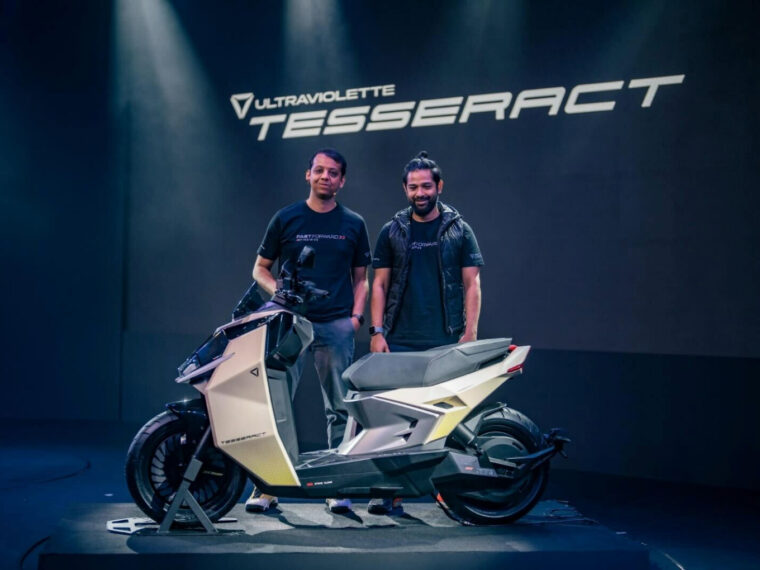
The development comes at a crucial stage for the company. Ultraviolette is simultaneously scaling up its product portfolio, preparing for higher-volume models such as the Tesseract electric scooter, and expanding manufacturing capacity to address what the company says is strong demand for its upcoming products.
Ultraviolette’s ₹373 Crore Fundraise
According to the exclusive report from Inc42, Ultraviolette has raised or is in the process of raising ₹373 crore through two Series E share allotments.
The reported allotments comprise:
- Series E3 CCPS: ₹197.5 crore
- Series E4 CCPS: ₹175.5 crore
- Total reported amount: ₹373 crore
Inc42 reported that the investments include participation from Yali Capital’s Yali Deeptech Fund I and TDK Ventures, with approximately ₹249.2 crore attributed to these investors.
The important point for readers is that the ₹373 crore should not be described as the cost of the BIGGA Factory. It is part of Ultraviolette’s ongoing fundraising activity, while the company has separately disclosed the ₹779 crore investment planned for the new manufacturing facility.
What Is the BIGGA Factory?
BIGGA stands for Big Global Ambition.
Ultraviolette is developing the new facility in Hosur, Tamil Nadu, where the company plans to invest ₹779 crore over the next five years.
The factory is being established to provide the manufacturing scale required for Ultraviolette’s next phase of growth.
According to the company, BIGGA will initially ramp up to an annual manufacturing capacity of 2.5 lakh vehicles in a phased manner. The infrastructure will be capable of supporting production of up to 5 lakh vehicles annually as demand increases.
The plant will operate alongside Ultraviolette’s existing manufacturing facility in Bengaluru.
Why Is Ultraviolette Building a New Factory?
Ultraviolette has historically been positioned around premium and performance-oriented electric motorcycles. Its product portfolio, however, is expanding.
The company has introduced the Tesseract electric scooter and has also unveiled the Shockwave electric motorcycle, giving it an opportunity to address a much broader portion of India’s electric two-wheeler market.
The new Hosur factory is therefore less about simply producing more of the existing F77 and more about creating the manufacturing infrastructure required for a broader product portfolio.
Ultraviolette CEO and co-founder Narayan Subramaniam told Reuters that demand for the company’s existing and upcoming products is significantly higher than what its current manufacturing facility can cater to.
Tesseract Is Central to the Expansion
The Tesseract is expected to be one of the important products driving Ultraviolette’s volume ambitions.
This is significant because scooters represent a much larger mass-market opportunity than premium electric motorcycles.
Ultraviolette has positioned the Tesseract as its entry into the electric scooter segment, while the Shockwave gives the company another product aimed at a wider customer base.
Reuters reported that Ultraviolette expects underlying domestic demand for its scooters to reach at least 10,000 units per month.
That level of potential demand helps explain why the company is planning manufacturing capacity far beyond the output of its existing facility.
You May Also Like To Read:
- Theater Raises ₹75 Crore to Expand Offline Presence
- Swish Raises $24 Million to Expand Its 10 Minute Food Delivery Network Across Bengaluru and NCR
- QNu Labs Raises ₹200 Cr to Scale Quantum Cybersecurity R&D
- D2C Pet Food Startup Lickicious Raises ₹19 Crore to Expand Manufacturing and Distribution
- Pixxel Raises $100 Million: India’s Biggest-Ever Spacetech Funding Round, Explained
- Nua Raises $50 Million in Series C
BIGGA’s 2.5 Lakh-Unit Capacity
The planned capacity is one of the biggest numbers associated with the project.
BIGGA is expected to ramp up to:
2.5 lakh vehicles annually in the initial planned phase.
The infrastructure can subsequently be expanded to:
5 lakh vehicles annually.
However, this does not mean Ultraviolette will immediately produce 5 lakh vehicles a year.
The company has said the facility will ramp up in phases and that the next stage of capacity expansion will depend on market demand.
That distinction is important because installed or planned capacity is not the same as actual production or sales.
Bengaluru Factory Will Continue
The Hosur facility is not replacing Ultraviolette’s Bengaluru manufacturing operation.
The two facilities will operate alongside each other.
Reuters reports that the existing Bengaluru plant can produce up to 50,000 units annually, while BIGGA will provide the substantially larger manufacturing platform required for future growth.
This gives Ultraviolette the option of retaining its existing production infrastructure while adding a much larger facility for the next stage of its business.
Why Hosur?
Hosur has become an important automobile and manufacturing hub in South India.
For Ultraviolette, the location has several advantages.
The company has cited the area’s established automotive ecosystem, supply-chain advantages and its proximity to the company’s Bengaluru research and development operations and existing supplier network.
The location also allows Ultraviolette to remain close to its engineering base while gaining access to a broader automotive manufacturing ecosystem.
The Factory Is About More Than Capacity
The BIGGA project is also intended to support Ultraviolette’s manufacturing technology and future product development.
The company has described the facility as a platform for its next stage of manufacturing and international expansion.
Rather than immediately activating the full planned capacity, Ultraviolette intends to scale production progressively.
This is commercially important.
A large factory creates substantial fixed costs. Producing vehicles only makes economic sense if there is sufficient demand to utilise the capacity.
By expanding in phases, Ultraviolette can potentially match manufacturing investment more closely with actual sales growth.
Ultraviolette’s Global Ambitions
The company’s manufacturing expansion is also linked to its international plans.
Ultraviolette has already started exporting its electric motorcycles to overseas markets, particularly in Europe.
Reuters reported that exports to Europe and Latin America currently account for approximately 15% of sales, with the company targeting an increase to around 25% within five years.
That makes BIGGA strategically important beyond India.
If international sales increase as planned, the additional manufacturing capacity could provide Ultraviolette with the scale required to serve both domestic and overseas markets.
Ultraviolette Has Already Raised Significant Capital
The ₹373 crore fundraising is not the company’s first major capital infusion.
Ultraviolette has attracted funding from investors including TVS Motor, Zoho Corporation, Qualcomm Ventures, Lingotto, TDK Ventures and other investors.
In December 2025, Inc42 reported that Ultraviolette raised an additional $45 million, or approximately ₹404.7 crore at the time, in its ongoing Series E round from Zoho and Lingotto.
Before that, the company raised $21 million in an August 2025 round led by TDK Ventures.
The company is therefore entering its manufacturing expansion phase after several rounds of institutional funding.
But Ultraviolette Is Still in a Loss-Making Phase
The expansion should not be interpreted as evidence that Ultraviolette is already profitable.
Its latest reported FY25 financials show that the company remained loss-making.
According to Inc42’s analysis of the company’s financials:
- FY25 operating revenue: ₹32.3 crore
- FY25 net loss: ₹116.3 crore
- FY24 operating revenue: ₹15.1 crore
- FY24 net loss: ₹61.6 crore
- FY25 total expenditure: ₹188.7 crore
Revenue increased sharply, but expenses also remained high, resulting in a larger net loss.
This makes the BIGGA investment an important long-term growth bet rather than simply an expansion funded by current operating profits.
The Real Test: Can Ultraviolette Fill the Factory?
The biggest question surrounding BIGGA is not whether Ultraviolette can build manufacturing capacity.
It is whether the company can generate enough demand to utilise that capacity efficiently.
The planned 2.5 lakh-unit annual capacity is substantially larger than Ultraviolette’s current production scale.
The company will therefore need its upcoming products to perform well.
The Tesseract will be particularly important because it takes Ultraviolette into the electric scooter market, where volumes are significantly higher than in the premium electric motorcycle category.
The Shockwave and other upcoming models will also need to contribute to overall volumes.
What the ₹373 Crore Fundraise Means
The latest fundraising gives Ultraviolette additional financial backing as it moves into a capital-intensive period.
The company needs capital for multiple areas, including product development, manufacturing, technology, market expansion and international operations.
But readers should keep the two figures separate:
₹373 crore = reported current fundraising
₹779 crore = planned investment in the BIGGA manufacturing facility
The two figures represent different aspects of Ultraviolette’s expansion and should not be combined or presented as though the ₹373 crore is the cost of the factory.
What Investors and EV Buyers Should Watch
Several developments will determine whether Ultraviolette’s strategy succeeds.
1. Tesseract sales
The scooter is expected to be one of the company’s biggest opportunities to increase volumes.
2. Shockwave and future products
A broader portfolio can reduce Ultraviolette’s dependence on premium motorcycles.
3. Factory utilisation
The planned 2.5 lakh capacity will only become financially meaningful if actual production and sales eventually move towards those levels.
4. International sales
Increasing the export contribution from approximately 15% toward the company’s five-year target of 25% could provide another source of demand.
5. Cash requirements
Because Ultraviolette remains loss-making, investors will need to watch future funding requirements, operating cash flow and the pace at which revenue scales.
The Bottom Line
Ultraviolette’s latest ₹373 crore fundraising comes at a significant turning point for the company.
The startup is moving from a relatively specialised premium electric motorcycle business toward a broader electric two-wheeler strategy.
At the centre of that strategy is the ₹779 crore BIGGA Factory in Hosur, which is planned to reach 2.5 lakh vehicles of annual capacity, with infrastructure that can eventually support 5 lakh units a year.
The company is betting on products such as the Tesseract and Shockwave to create the volumes required to support this expansion, while international markets could provide another growth channel.
But the numbers also show why the next few years will be critical.
Ultraviolette is investing ahead of demand while still operating at a loss. The success of BIGGA will therefore depend not simply on how quickly the factory is built, but on whether the company can turn its product technology, new models and growing manufacturing capacity into sustainable sales and eventually stronger financial performance.
For India’s EV industry, BIGGA is another sign that the competition is moving into its next phase — from building interesting electric vehicles to building them at scale and finding enough customers to make that scale economically viable.
Frequently Asked Questions
What is Ultraviolette’s ₹373 crore fundraise?
The ₹373 crore figure relates to reported Series E3 and Series E4 compulsorily convertible preference share allotments as part of Ultraviolette’s ongoing fundraising.
Is the ₹373 crore the cost of the BIGGA Factory?
No. The ₹373 crore fundraising and the ₹779 crore BIGGA Factory investment are separate figures.
How much is Ultraviolette investing in BIGGA?
Ultraviolette plans to invest ₹779 crore over five years in the new manufacturing facility in Hosur, Tamil Nadu.
What is the capacity of the BIGGA Factory?
The factory is planned to ramp up to 2.5 lakh vehicles annually, with infrastructure capable of scaling to 5 lakh vehicles per year as demand grows.
Where is the BIGGA Factory located?
The facility is being developed in Hosur, Tamil Nadu, in the state’s automotive manufacturing ecosystem.
Will Ultraviolette close its Bengaluru factory?
No. The BIGGA Factory will operate alongside the existing Bengaluru facility, which Reuters reports can produce up to 50,000 units annually.
Which Ultraviolette products are expected to drive growth?
The Tesseract electric scooter and Shockwave electric motorcycle, along with future products, are expected to broaden the company’s addressable market.
Is Ultraviolette profitable?
No. Based on its FY25 reported financials, the company recorded an operating revenue of ₹32.3 crore and a net loss of ₹116.3 crore.
Disclaimer: This article is for informational purposes only and does not constitute investment advice. Funding figures, manufacturing plans, production capacity, product timelines and company targets can change. Readers should independently verify financial information before making investment decisions.

Shuchi founded Finance Checks after spending 16+ years working in corporate, managing operations and distribution. She managed her own finances, learned and read regularly and helped people make sense of their savings, loans, insurance, and investments.
She started this site to offer the kind of clear, honest financial guidance she wished was more available when she was learning to manage her own money. Every article is researched personally, checked against official sources such as the Reserve Bank of India, SEBI, or the Income Tax Department, and revisited whenever regulations or figures change. She is upfront about how the site earns money through ads and select affiliate partnerships, and she does not let either influence what she actually recommends to readers.



[…] Ultraviolette to Raise ₹373 Crore as BIGGA Factory Takes Shape […]