

Turning 35? Here Is Why Life Insurance Just Became Non Negotiable For You

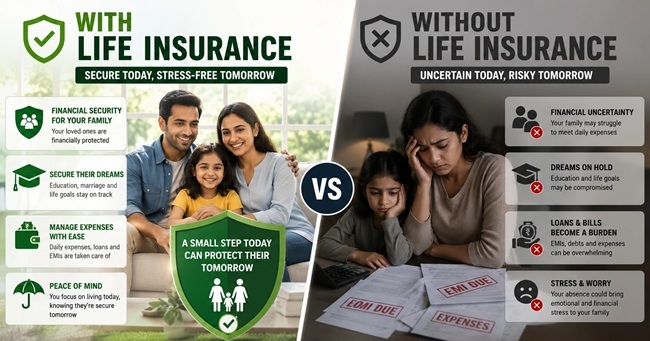
There is a strange thing that happens somewhere around your mid thirties. Your salary looks better on paper than it ever has, your responsibilities have quietly multiplied, and yet your financial safety net has probably not kept pace with either. You have a home loan, maybe a child in school, aging parents who depend on you a little more each year, and a lifestyle that has grown comfortable. If something were to happen to you tomorrow, would the people who depend on your income be financially secure, or would they be forced to make painful compromises?
That single question is the entire case for life insurance. Not the sales pitch version where an agent corners you at a family wedding, but the honest, numbers driven version that every financially aware Indian in their thirties needs to sit with for a few minutes.
This guide walks you through why age 35 is such a pivotal point for buying life insurance, what the different types actually mean in plain language, how much cover you realistically need, and how to avoid the common traps that leave families underinsured or overpaying for the wrong product.
Why 35 Specifically Is Such A Turning Point
Insurance premiums are calculated primarily on the basis of age and health, and both of these work against you the longer you wait. In your twenties, term insurance is almost embarrassingly cheap because insurers are betting on a long, healthy life ahead of you. By your mid thirties, that math starts shifting. Premiums creep up every year you delay, and health issues that are common by this age, whether it is early signs of high blood pressure, thyroid imbalance, or weight related concerns, can either raise your premium further or in some cases affect your eligibility altogether.
There is also a life stage argument that matters just as much as the actuarial one. This is usually the decade when financial responsibility peaks. You might be paying EMIs on a home loan that will run for another fifteen or twenty years. You might have young children whose education costs are only going to rise. Your parents may be entering a phase where medical expenses become more frequent. Every one of these responsibilities is tied to your continued income, and life insurance exists to make sure that income does not simply vanish if you do.
Put simply, 35 is the age where the cost of buying insurance is still reasonable, but the cost of not having it has become genuinely serious.
What Life Insurance Actually Does For Your Financial Plan
A lot of people think of life insurance as a gloomy, almost superstitious topic, something you avoid discussing because talking about death feels unlucky. It helps to reframe it entirely. Life insurance is not really about death. It is about income replacement and continuity.
Think of your own earning capacity as the single biggest financial asset your family has, bigger than your house, your car, or your investments. A term insurance policy is essentially insuring that asset. If your income stops because you are no longer around, the payout steps in to do the job your salary was doing, covering the home loan, funding your children’s education, and giving your family time to adjust without a financial cliff appearing overnight.
This is very different from an investment product. Life insurance is not meant to grow your wealth. It is meant to protect the wealth building journey your family has already started, so that a personal tragedy does not also become a financial one.
The Main Types Of Life Insurance Available In India
Indian insurers offer several structurally different products, and a lot of confusion happens simply because people do not realise how different these categories actually are.
| Type of Policy | What It Really Is | Best Suited For | Typical Premium Level |
|---|---|---|---|
| Term Insurance | Pure protection, no maturity payout if you survive the term | Anyone whose primary goal is income replacement for dependents | Lowest, most cost effective |
| Endowment Plan | Insurance combined with guaranteed savings | Conservative savers who want a lump sum on maturity along with cover | Moderate to high |
| ULIP | Insurance combined with market linked investment | Investors comfortable with market risk who want cover plus growth | Moderate to high, plus market risk |
| Whole Life Policy | Cover extending up to a very old age, sometimes for life | People who want lifelong cover, often for estate or legacy planning | High |
| Money Back Policy | Periodic payouts during the policy term along with cover | Those who want liquidity at intervals along with insurance | High |
If your goal is walking away from this article with one clear takeaway, it is this. For most people in their thirties with dependents, term insurance is the product that does the actual job of protection most efficiently. Everything else on that table blends insurance with investment, and blending the two usually means you pay more for less cover, because a portion of your premium is going toward savings or market exposure rather than pure protection.
How Much Cover Do You Actually Need
This is where most people either guess randomly or copy a number they heard from a colleague, and both approaches are risky. A more sensible method is to work backward from your family’s actual financial obligations.
Start with your outstanding liabilities, meaning your home loan balance, any personal loans, and other debts that would otherwise fall on your family. Add the future cost of your children’s education, factoring in the fact that education inflation in India has consistently outpaced general inflation. Add a reasonable estimate for your family’s ongoing living expenses for the years until your youngest child becomes financially independent, or until your spouse’s own income can comfortably sustain the household. Finally, subtract whatever existing savings, investments, and insurance cover you already have.
A commonly used rule of thumb suggests cover worth ten to fifteen times your annual income, but treat this as a starting point rather than a final answer. Someone with a large home loan and two young children will need considerably more than someone who is debt free with a working spouse and no dependents. The honest answer is that your cover amount should be personal to your situation, not borrowed from a general formula.
Don’t miss the regular Financial Tips and Updates, Follow us on Instagram and Youtube
Term Plan, Endowment, Or ULIP: Making The Actual Choice
People often ask which of these three is the right one, as though there is a universal answer. There is not, but there is a reasonably clear way to think through it.
If your primary concern is that your family should not suffer financially in your absence, term insurance is almost always the more rational choice. It gives you the maximum cover for the lowest premium, which means you can insure adequately without straining your monthly budget. The common objection is that you get nothing back if you outlive the policy, but that is precisely the point. You are not buying it to get money back. You are buying it the same way you buy fire insurance for your house, hoping you never need to use it.
Endowment and ULIP plans appeal to people who feel uncomfortable paying a premium every year without any visible return. This psychological pull is understandable, but it usually comes at a real financial cost. Because a portion of your premium in these plans goes toward savings or investment rather than pure risk cover, the actual insurance protection you get per rupee is significantly lower than a term plan. Financial planners in India frequently recommend a cleaner approach instead, which is to buy a pure term plan for protection and separately invest in instruments like mutual funds or the Public Provident Fund for wealth creation, since that combination tends to be both cheaper and more transparent than a bundled product.
Whole life and money back policies serve narrower purposes, such as legacy planning or the need for periodic liquidity, and they are worth considering only after your core protection need through term insurance has already been addressed.
A Practical Example To Make This Concrete
Consider someone who is 35 years old, earning a steady income, with a home loan running for another fifteen years and two children whose education costs are still ahead. A term plan offering a substantial cover amount for this person would typically come at a premium that is a small fraction of what an endowment plan with a similar face value would charge, because the endowment plan is also asked to build a savings corpus alongside providing cover.
The more efficient path for most families in this situation is to buy adequate term cover to protect against the worst case scenario, and then direct the remaining money that would have gone into a more expensive endowment premium toward a separate, more transparent investment. Over the long run, this combination tends to leave the family both better protected and better positioned for wealth creation than a single bundled product would.
Common Mistakes People Make With Life Insurance
One frequent mistake is buying cover that is far too low simply because it keeps the premium comfortable, without actually calculating whether that amount would sustain the family for a meaningful period. Another is delaying the purchase, assuming there will always be a better time, when in reality every year of delay increases the premium and adds health related uncertainty. A third common error is confusing insurance with investment and ending up with an expensive, underperforming bundled policy instead of adequate protection.
It is also worth being careful about disclosure. Life insurance claims can be delayed or even rejected if health conditions or lifestyle habits were not disclosed honestly at the time of purchase, so accuracy at the application stage matters far more than people tend to realise.
About This Guide
This article was researched and written to help readers make informed, practical decisions about life insurance as part of a broader personal finance strategy, without pushing any specific insurer or product. The information here reflects generally accepted principles in Indian personal finance planning and is intended for educational purposes. For decisions specific to your income, liabilities, and family situation, it is advisable to consult a licensed insurance advisor or a certified financial planner.
Frequently Asked Questions
Is 35 too late to buy life insurance? Not at all. While premiums are lower if you buy in your twenties, 35 is still a very reasonable age to buy adequate cover, and the premiums remain manageable for most income levels. What matters far more than the exact age is not delaying any further, since every additional year tends to increase the cost.
How much life insurance cover should a 35 year old have? A common starting point is ten to fifteen times your annual income, adjusted upward if you have significant liabilities like a large home loan, or dependents such as young children and aging parents who rely on your income.
Is term insurance better than an endowment plan? For pure protection at the lowest cost, term insurance is generally more efficient because your entire premium goes toward risk cover rather than being split between cover and savings. Endowment plans can suit people who specifically want a guaranteed return along with insurance, but they typically offer far less cover for the same premium.
Can I buy multiple life insurance policies? Yes, there is no restriction on holding more than one policy, and many people combine a large term plan with smaller endowment or ULIP policies depending on their goals. What matters is that your total cover across all policies is adequate for your family’s needs.
Do I need life insurance if I am unmarried with no children? If you have no dependents and no significant debt, your immediate need may be lower, though it is still worth considering, especially if you support parents financially or if you want to lock in a low premium while you are young and healthy for future cover needs.
What happens if I stop paying my life insurance premium? For term plans, missing premium payments beyond the grace period typically results in the policy lapsing, which means your cover ends. For plans with a savings component, there may be options like a paid up value depending on how many years of premiums have already been paid, so it is important to check your specific policy terms.
Is the payout from a life insurance policy taxable? The death benefit paid to your nominee is fully tax free, and this holds true regardless of how much premium you were paying or when the policy was bought. Maturity or survival payouts work a little differently. They stay tax free only if your annual premium is within a certain percentage of the sum assured, and for policies bought after April 2023, there is also a premium ceiling of five lakh rupees a year for regular policies and two and a half lakh rupees a year for ULIPs, beyond which the maturity proceeds can become taxable. Since these rules have changed a few times over the years and were recently restructured under the new Income Tax Act, it is worth checking your specific policy terms or speaking with a tax advisor rather than assuming.
Disclaimer
This article is intended for general informational and educational purposes only and should not be construed as financial, investment, insurance, or tax advice. While every effort has been made to ensure accuracy at the time of writing, insurance products, premiums, tax provisions, and regulations are subject to change, and readers should verify current details directly with insurers or a qualified financial advisor before making any decisions. FinanceChecks.com does not endorse any specific insurance provider or product, and readers are encouraged to conduct their own research or consult a licensed professional based on their individual financial situation before purchasing any life insurance policy.

Shuchi founded Finance Checks after spending 16+ years working in corporate, managing operations and distribution. She managed her own finances, learned and read regularly and helped people make sense of their savings, loans, insurance, and investments.
She started this site to offer the kind of clear, honest financial guidance she wished was more available when she was learning to manage her own money. Every article is researched personally, checked against official sources such as the Reserve Bank of India, SEBI, or the Income Tax Department, and revisited whenever regulations or figures change. She is upfront about how the site earns money through ads and select affiliate partnerships, and she does not let either influence what she actually recommends to readers.