

The Hidden Costs of Owning a Home Nobody Warns You About

A few months after my friend Rohit closed on his first apartment, he called me sounding a little rattled. Not about the EMI, he had budgeted carefully for that. What caught him off guard was everything else. The society maintenance bill that showed up higher than expected. The home insurance renewal he had completely forgotten about. The plumber he had to call twice in the first year for issues the builder should have caught. None of it was individually huge, but added together it felt like a second EMI he never planned for.
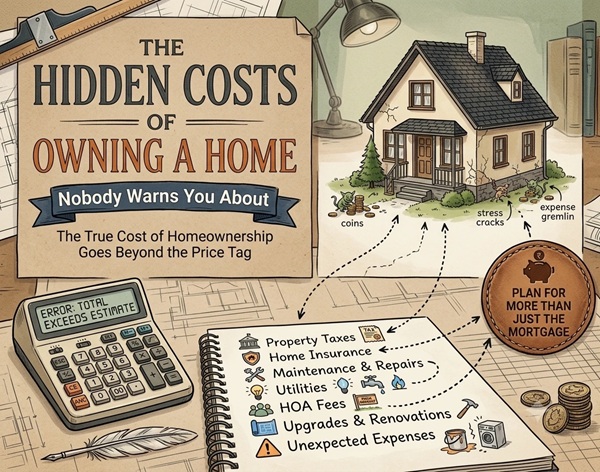
This happens to almost everyone who buys a home for the first time, and I do not think it is because people are careless. It is because most of the buying vs renting conversation, including the one we covered in our last post, focuses on the big visible numbers like down payment and EMI. The smaller costs get mentioned in passing, if at all. This post is dedicated entirely to those smaller costs, because they add up to something that genuinely changes the math of homeownership.
Why These Costs Stay Hidden in the First Place
Real estate agents and builders have little incentive to walk you through every recurring cost of ownership. Their job is to get the sale done, not to prepare you for the fifth year of owning the property. Home loan calculators available online almost always show you EMI and nothing else, which creates a false sense that the EMI is the whole picture. It never is.
The other reason these costs stay hidden is that they are irregular. Property tax comes once a year. A major repair might not show up for three or four years. Insurance renewal happens annually and is easy to forget between cycles. Because none of these costs hit your account every single month like an EMI does, they never quite register as part of the real cost of owning a home, even though collectively they can add up to a meaningful percentage of your annual housing budget.
Property Tax: The Recurring Bill Most First Time Buyers Forget
Every homeowner is required to pay an annual property tax to their local municipal authority, calculated based on factors like the size of the property, its location, and its assessed value. This is not a one time cost, it repeats every single year for as long as you own the home, and rates can increase over time as municipalities revise valuations.
Renters never think about this because it is baked into what the landlord charges, if it is passed on at all. Owners need to actively budget for it, track due dates, and stay on top of any exemptions or rebates they might be eligible for. Missing payments can lead to penalties, so this is not a cost you can simply forget about after year one.
Society Maintenance and Association Charges
If you buy an apartment in a housing society or a gated community, you are almost certainly signing up for a monthly or quarterly maintenance charge. This covers common area upkeep, security staff, lift maintenance, water supply, and general facility management. What surprises a lot of first time buyers is how much these charges can climb over the years, especially as buildings age and require more frequent repairs to lifts, plumbing, and shared infrastructure.
Independent houses are not immune either. Even without a formal society, you are still responsible for the upkeep of shared boundary walls, drainage, and any local area association fees that might apply in gated layouts or planned communities.
Home Insurance: The Coverage People Skip and Later Regret
Many first time buyers either skip home insurance entirely or buy the bare minimum coverage just to satisfy a loan requirement, without really understanding what it protects against. A proper home insurance policy covers structural damage from fire, natural disasters, and sometimes burglary, and separately, contents insurance can cover the value of everything inside the home.
Skipping adequate coverage might save a small amount every year, but a single major incident, whether it is fire damage or a natural disaster common to your region, can wipe out years of savings if the home is underinsured. This is one of those costs where being penny wise can turn out to be extremely expensive later.
Repairs and Maintenance: The Cost That Grows With the Building’s Age
This is probably the single most underestimated cost of homeownership. In the first two or three years, most homes need very little beyond routine upkeep, which creates a false sense of security. Somewhere around year five to seven, bigger ticket items start needing attention: waterproofing, repainting, plumbing overhauls, electrical rewiring in older properties, and appliance replacements.
A commonly used rule of thumb among real estate professionals is to set aside roughly one percent of the home’s value every year specifically for maintenance and repairs. Very few new buyers actually do this, which is why repair costs feel like a sudden shock rather than a predictable, budgetable expense when they eventually show up.
You May Also Like To Read:
- LIC vs SIP: Which Is the Better Investment Option in 2026?
- SIP vs SWP: Which Mutual Fund Strategy Is Right for You? (Complete Guide 2026)
- The 50-30-20 Rule for Indian Salaries: Does It Actually Work in 2026?
- New HRA Rules 2026: Bengaluru, Pune, Hyderabad and Ahmedabad Finally Get the 50 Percent Exemption
Registration, Stamp Duty, and Other One Time Charges That Still Sting
While these are not recurring costs, they deserve a mention because they are so frequently underestimated at the time of purchase. Stamp duty and registration charges can add a significant percentage on top of the property price itself, and this amount varies significantly depending on your state and whether the property is registered in a woman’s name, which often carries a discounted rate in several regions. On top of this, brokerage fees, legal and documentation charges, and home loan processing fees all chip away at the budget before you have even moved in.
Interest Cost Over the Life of the Loan
This is less a hidden cost and more a cost that is hidden in plain sight. Because EMIs are structured so that interest forms a larger portion of the payment in the early years of the loan, most buyers do not fully register just how much they end up paying in interest alone over a fifteen or twenty year term. Running the full amortization schedule for your specific loan amount, tenure, and interest rate is worth doing before you sign, simply so there are no surprises about the true total cost of the home once the loan is fully paid off.
Opportunity Cost: The Cost That Never Shows Up on Any Bill
The down payment and every EMI payment represents money that is not being invested elsewhere. If that same capital had gone into other investment avenues, it could have grown at a different rate depending on market conditions. This does not mean buying a home is a bad financial decision, homes offer utility, stability, and often reasonable long term appreciation. But it is worth acknowledging that the money tied up in a home is not compounding in other places, and that trade off is part of the real cost of ownership even though no one sends you a bill for it.
A Simple Way to Budget for These Costs Before You Buy
Before finalizing any home purchase, try building out a full annual cost sheet rather than just an EMI number. Add up the expected property tax, society or association charges, an estimated insurance premium, and a maintenance reserve based on that one percent rule mentioned earlier. Divide this annual figure by twelve and add it on top of your EMI to get a realistic picture of your true monthly cost of ownership. Most people are surprised by how much higher this number is compared to the EMI figure alone, and it is a far more honest number to base your affordability decision on.
Follow us on Instagram and Youtube for the Regular Updates
A Personal Note on This One
I think the reason these costs catch people off guard is that nobody wants to be the one bringing up bad news during an exciting time like buying your first home. Brokers want to close the deal, family members are celebrating with you, and calculators online are designed to make the number look as approachable as possible. But going in with a full and honest picture of these costs does not take away from how exciting or worthwhile owning a home can be. If anything, it makes the decision more solid, because you are not blindsided five years in by a bill you never planned for.
Frequently Asked Questions
How much should I budget every year for home maintenance and repairs?
A widely used benchmark is around one percent of the home’s current value per year, though older properties or homes in regions with harsh weather may need a higher reserve.
Does home insurance cover natural disasters like floods or earthquakes?
It depends entirely on the specific policy. Standard fire and structure policies often exclude certain natural disasters unless you add specific riders, so always check the exact coverage rather than assuming it is included.
Can property tax increase after I buy the home?
Yes. Municipal authorities periodically revise property valuations and tax rates, so the amount you pay in year one is not guaranteed to stay the same for the life of your ownership.
Are society maintenance charges negotiable?
Generally no, since they are usually set collectively by the resident welfare association based on actual operating costs, though you can participate in association meetings to understand and sometimes influence how funds are allocated.
Is it worth paying extra for a woman’s name on property registration for the stamp duty discount?
In many states, yes, since the discount can be meaningful, but this depends on local regulations and should be confirmed with a local property registrar or legal advisor before assuming eligibility.
What is the biggest hidden cost people regret ignoring?
Most homeowners point to underestimating repair and maintenance costs as the one that catches them most off guard, simply because it feels invisible for the first several years before showing up all at once.
Disclaimer
This article is intended for general informational and educational purposes only and does not constitute financial, legal, tax, or insurance advice. Costs such as property tax rates, stamp duty percentages, insurance requirements, and maintenance charges vary significantly by region, property type, and local regulation, and may change over time. The one percent maintenance rule and other benchmarks mentioned in this article are general industry heuristics and may not apply to your specific property or location. Before making any decisions related to home purchase, insurance, or budgeting, please consult a qualified financial advisor, insurance professional, or legal expert familiar with your local regulations. The author and publisher of this content are not liable for any financial decisions made based on the information provided in this article.

Shuchi founded Finance Checks after spending 16+ years working in corporate, managing operations and distribution. She managed her own finances, learned and read regularly and helped people make sense of their savings, loans, insurance, and investments.
She started this site to offer the kind of clear, honest financial guidance she wished was more available when she was learning to manage her own money. Every article is researched personally, checked against official sources such as the Reserve Bank of India, SEBI, or the Income Tax Department, and revisited whenever regulations or figures change. She is upfront about how the site earns money through ads and select affiliate partnerships, and she does not let either influence what she actually recommends to readers.