
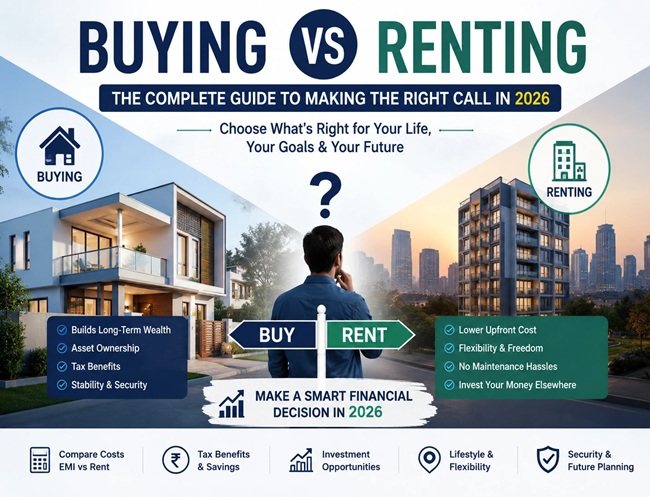
Buying vs Renting: The Complete Guide to Making the Right Call in 2026

There is a conversation happening in almost every home right now, and it usually starts the same way. Someone brings up a house they saw online, or a car that just went out of warranty, or a washing machine that finally gave up after eight years of service, and the question comes up almost on reflex: should I buy this outright, or is renting the smarter move?
I have had this exact conversation more times than I can count, with friends staring down a home loan application, with my cousin who leases his car every three years like clockwork, and with my own household when our old refrigerator started making that rattling noise that no repair technician could quite fix. Every single time, the answer was different, because the honest truth is that buying vs renting is not a one size fits all decision. It depends on your income stability, your timeline, your city, your lifestyle, and sometimes just your personal comfort with owning things versus staying flexible.
This guide is my attempt to lay out the whole picture, not just for real estate, which is where this debate usually starts, but for cars, and for the newer category that barely existed a decade ago, renting everyday home appliances and household items. By the end, you should have a framework you can actually use, not just another article that tells you it depends and leaves you there.
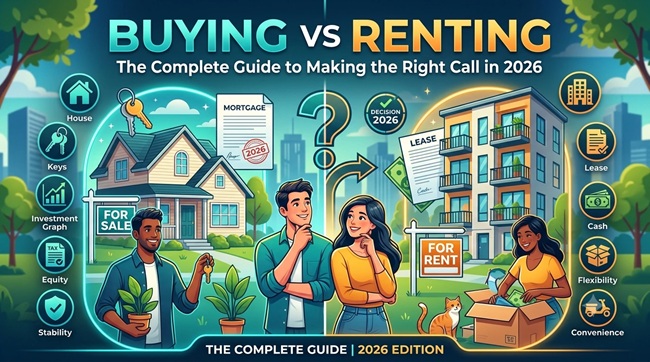
Buying vs Renting : Quick Comparison at a Glance
| Category | Buy If | Rent If |
|---|---|---|
| Home | Staying 7+ years, stable income, city has healthy price to rent ratio | Career may require relocation, city is expensive to buy in, want liquidity |
| Car | High annual mileage, want to keep it long term, enjoy owning the asset | Drive less, want a newer model every few years, prefer predictable costs |
| Appliances | Own your home long term, plan to use the item for years | Short term stay, fast changing technology, seasonal use |
Why the Buying vs Renting Debate Refuses to Go Away
Every generation seems to relitigate this question, and for good reason. Property prices in most major cities have climbed faster than wages for years. Car ownership costs keep rising with insurance, fuel, and maintenance eating into monthly budgets. And now, subscription and rental models have expanded into furniture, electronics, and appliances, giving people a genuinely new option that simply did not exist for our parents.
At the same time, owning an asset still carries an emotional and financial weight that renting cannot replicate. There is a certain peace of mind in knowing the house you live in is yours, or that the car in your driveway does not need to be handed back at the end of a lease term. So this is not really a debate with a winner. It is a set of trade offs, and the right side of the trade depends entirely on your own situation.
Buying vs Renting a Home: The Big One
Let us start with the decision that carries the most weight, both financially and emotionally.
| Factor | Buying a Home | Renting a Home |
|---|---|---|
| Upfront cost | Large down payment plus stamp duty and registration | Security deposit, usually a few months rent |
| Monthly outflow | EMI, often higher than equivalent rent | Fixed rent, generally lower than EMI in expensive cities |
| Maintenance | Your responsibility and cost | Usually the landlord’s responsibility |
| Equity built | Yes, grows with every payment | None |
| Flexibility to relocate | Low, selling takes time and money | High, just give notice and move |
| Best suited for | Staying put 7+ years, stable income | Uncertain timelines, early career, expensive cities |
The financial math of buying a home
When you buy a home, you are usually putting down a significant chunk of savings as a down payment, then committing to a home loan that could run fifteen to thirty years. On top of the EMI, you are on the hook for property taxes, maintenance charges, repairs, insurance, and often a hefty amount in registration and stamp duty right at the start. What you get in return is equity. Every EMI payment builds ownership in an asset that, historically, tends to appreciate over the long run, though never in a straight line and never guaranteed.
Renting, on the other hand, keeps your monthly outflow predictable and usually lower than an equivalent EMI, especially in expensive cities where property prices have outpaced rental yields. You are not responsible for major repairs, property tax, or the anxiety of a market downturn eating into your net worth. But at the end of every year, that rent money is gone. You built no equity, and you have nothing to show for it beyond a roof over your head for that period.
The rule of thumb that still holds up
A commonly used benchmark in personal finance circles is the price to rent ratio. Divide the price of a home by the annual rent of a similar property. If that number is under 15, buying tends to make more financial sense. If it is above 20, renting is usually the better financial move, and the gap gets invested elsewhere instead. Most large Indian metros and several global cities currently sit well above that 20 mark in prime areas, which is part of why so many financially savvy people still choose to rent in expensive city centers while owning property in smaller towns or on the outskirts.
When buying a home makes sense
Buying tends to make sense when you plan to stay in one place for at least seven to ten years, when your income is stable enough to comfortably absorb an EMI along with an emergency fund, when you value the psychological security of ownership, and when the local property market has healthy long term fundamentals rather than being in a speculative bubble.
When renting a home makes sense
Renting makes more sense when your career could require relocation, when you are early in your working life and still building savings, when the price to rent ratio in your city is stretched, or when you would rather keep your capital liquid and invested in markets that have historically outperformed real estate over long horizons.
There is no universal winner here. I know people who bought their first home in their late twenties and have zero regrets, and I know equally successful people who rented for fifteen years, invested the difference, and ended up wealthier than if they had bought early. Both paths work if you walk into them with your eyes open.
Read About Best Credit Cards in India
Buying vs Renting a Car: A Different Kind of Math
Cars behave nothing like real estate financially, and that is the first thing people miss when they carry over their home buying logic to vehicles.
| Factor | Buying a Car | Leasing or Renting a Car |
|---|---|---|
| Upfront cost | Down payment plus registration and insurance | Small or no down payment |
| Depreciation risk | Carried entirely by you | Carried by the leasing company |
| Monthly cost | Loan EMI, usually higher | Lease payment, usually lower |
| End of term | You own the car outright | You return the car or renew |
| Customization | Full freedom to modify | Usually restricted by lease terms |
| Best suited for | High mileage drivers, long term keepers | City driving, frequent upgraders |
The depreciation problem
A car starts losing value the moment it leaves the showroom. Unlike a house, it is not an appreciating asset, it is a depreciating one, often losing a significant chunk of its value within the first three years. Buying a car outright or on a loan means you absorb that entire depreciation curve yourself, along with insurance, maintenance, fuel, and eventual resale hassle.
Leasing or renting a car flips that risk onto the leasing company. You pay a monthly amount, often lower than an equivalent loan EMI, drive a relatively new vehicle, and hand it back at the end of the term without worrying about resale value or major repair costs once the warranty period is over.
Who benefits from buying a car
If you drive a lot of kilometers every year, if you like to keep a vehicle for eight to ten years or more, or if you want the freedom to modify or sell the car whenever you want, buying usually works out cheaper over the long run despite the higher upfront cost.
Who benefits from leasing or renting a car
City dwellers who drive less, professionals who like switching to a newer model every two to three years, and people who want predictable monthly costs without a large down payment tend to come out ahead with leasing. It is also a smart move for someone who is not yet sure how long they will stay in a particular city, since there is no asset to sell before relocating.
A quick reality check on total cost of ownership
Buyers often underestimate the true cost of car ownership because insurance, servicing, tyre replacement, and depreciation rarely show up as one single number. When people actually sit down and calculate total cost of ownership over five years, the gap between buying and leasing is usually smaller than it first appears. This is the calculation worth doing before committing either way.
The New Frontier: Renting Home Appliances and Household Items
This is the part of the debate that has changed the most in the last few years, and it deserves far more attention than it usually gets.
| Factor | Buying Appliances | Renting Appliances |
|---|---|---|
| Upfront cost | Full retail price per item | Small setup fee, sometimes none |
| Monthly cost | None after purchase | Ongoing rental fee per item |
| Repairs | Out of pocket after warranty ends | Usually included in the rental plan |
| Moving cities | Costly and inconvenient to transport or resell | Return the item, no hassle |
| Best for short stays (1 to 2 years) | Rarely worth it | Usually the smarter choice |
| Best for long term homeowners | Usually the cheaper option over time | Costs add up and exceed purchase price |
Why appliance and furniture rental exploded in popularity
A growing number of people, especially young professionals moving cities for work, students, and anyone in a short term living situation, have discovered that renting refrigerators, washing machines, air conditioners, televisions, and even full furniture sets solves a very specific problem: the need for a fully functional home without the upfront cost or the burden of moving heavy appliances every time you relocate.
The math for short stays
If you know you are only going to be in a city or a home for one to two years, buying a full set of appliances rarely makes financial sense. You pay full retail price, deal with installation, and then face the headache of selling half used appliances at a steep loss when you move. Renting these items instead means a manageable monthly fee, free maintenance and repair in most rental agreements, and the ability to simply return the item and walk away when your lease ends.
The math for long term homeowners
If you own your home and plan to live there for many years, buying almost always wins for big ticket appliances like refrigerators and washing machines. The monthly rental cost for these items, spread over several years, typically ends up costing noticeably more than an outright purchase, even after factoring in occasional repairs. Ownership also means you are not restricted by the terms and conditions of a rental agreement, and you can choose exactly the model and features you want rather than whatever is available in a rental catalog.
Smaller items and the case for flexibility
For items with fast moving technology or seasonal use, like air conditioners in cities with short summers, or high end electronics that get outdated quickly, renting can genuinely make more sense even for long term residents. You avoid being stuck with outdated technology and you are not carrying dead weight during months when you do not even need the item.
A simple way to decide on appliance rental
Ask yourself three questions before renting or buying any household item. First, how long will I actually use this item regularly. Second, does the item depreciate or become outdated quickly. Third, is the total rental cost over my expected usage period higher or lower than the purchase price plus expected resale value. If the numbers favor buying and you are staying put, buy. If flexibility and low upfront cost matter more, rent.
You May Also Like To Read:
Building Your Own Buy vs Rent Framework
After going through property, vehicles, and household items, a pattern becomes clear. The buy vs rent decision almost always comes down to the same handful of factors, no matter what asset you are looking at.
Time horizon matters more than anything else
The longer you plan to keep or use something, the more buying tends to make financial sense, because ownership costs get spread over a longer period and depreciation or opportunity cost matters less.
Liquidity needs matter just as much
If tying up a large amount of cash in a down payment would leave you financially stretched or without an emergency cushion, renting is almost always the safer choice regardless of what the long term math says.
Maintenance appetite is often underestimated
Owning anything, whether it is a house, a car, or a washing machine, comes with the responsibility of repairs and upkeep. Some people genuinely enjoy this and see it as part of ownership. Others would rather pay a bit more every month to never think about it.
Market conditions deserve real research
Market conditions in your specific city and category deserve real research rather than assumptions carried over from what worked for your parents or friends in a different city. A price to rent ratio that favors buying in one city can look completely different one state over.
Personal comfort has real value too
Financial spreadsheets rarely capture the peace of mind that comes from owning your own home, or the freedom that comes from not being tied down to an asset. Both of those feelings have real value, even if they do not show up in a calculator.
A Personal Note Before You Decide
I will be honest, when I first started thinking seriously about this topic, I assumed buying would always come out ahead if you just gave it enough time. That is not actually true, and the pattern across property, cars, and appliances backs that up. What I have come to believe instead is that the right decision is the one that matches your actual life circumstances, not the one that looks best in a generic online calculator. If you are not sure which side you fall on, sit down and run the real numbers for your specific city, your specific job stability, and your specific timeline before committing either way. That one afternoon of honest number crunching will save you years of second guessing.
Follow Us On Instagram and Youtube to get the regular updates
Frequently Asked Questions
Is it always better to buy a home than to rent one?
No. It depends heavily on the price to rent ratio in your specific city, how long you plan to stay, and whether you would rather have your capital tied up in property or invested elsewhere. In cities where property prices have far outpaced rents, renting and investing the difference has historically outperformed buying over certain time periods.
How many years should I plan to stay before buying a home makes sense?
A commonly used benchmark is at least seven years, since that is roughly how long it takes for the upfront costs of buying, such as stamp duty, registration, and brokerage, to be offset by the equity you build and the rent you would have otherwise paid.
Is leasing a car actually cheaper than buying one?
It depends on your usage. Leasing usually has a lower monthly cost and no large down payment, but if you plan to keep a vehicle for many years and drive it heavily, buying typically works out cheaper once you account for the total cost over the vehicle’s full life.
Does renting a car or home appliance include maintenance?
In most rental and leasing agreements, yes, routine maintenance and repairs are covered by the company you are renting from. Always confirm this in writing before signing, since terms vary between providers.
Are appliance rental services worth it for someone who owns their home long term?
Generally no, for major appliances like refrigerators and washing machines, since the cumulative rental cost over several years tends to exceed the purchase price. Renting makes more sense for short term living situations, frequently upgraded electronics, or seasonal items.
What is the single biggest mistake people make in the buy vs rent decision?
Ignoring their own time horizon. People buy homes, cars, and appliances they are only going to use for a short period, then absorb the depreciation and transaction costs of an asset meant for long term ownership. Matching the decision to how long you will actually use the item solves most of the confusion.
Should I always run my own numbers instead of following general advice?
Yes. General rules of thumb, including the ones in this article, are meant as starting points, not final answers. Local property markets, interest rates, insurance costs, and rental prices change often enough that a fresh calculation for your specific situation will always beat a generic recommendation.
Disclaimer
This article is intended for general informational and educational purposes only and does not constitute financial, legal, tax, or investment advice. The examples, rules of thumb, and ratios mentioned, including the price to rent ratio and general timelines for buying versus renting, are widely used industry heuristics and may not accurately reflect conditions in your specific city, market, or personal financial situation. Real estate, automobile, and appliance markets vary significantly by region and change over time, so figures and trends referenced here should not be treated as current data for any specific location. Before making any major financial decision related to buying or renting property, vehicles, or household items, please consult a qualified financial advisor, real estate professional, or legal expert who can assess your individual circumstances. The author and publisher of this content are not liable for any financial decisions made based on the information provided in this article.

Shuchi founded Finance Checks after spending 16+ years working in corporate, managing operations and distribution. She managed her own finances, learned and read regularly and helped people make sense of their savings, loans, insurance, and investments.
She started this site to offer the kind of clear, honest financial guidance she wished was more available when she was learning to manage her own money. Every article is researched personally, checked against official sources such as the Reserve Bank of India, SEBI, or the Income Tax Department, and revisited whenever regulations or figures change. She is upfront about how the site earns money through ads and select affiliate partnerships, and she does not let either influence what she actually recommends to readers.



[…] Read About Buying vs Renting in 2026? […]
[…] for the first time, and I do not think it is because people are careless. It is because most of the buying vs renting conversation, including the one we covered in our last post, focuses on the big visible numbers […]