
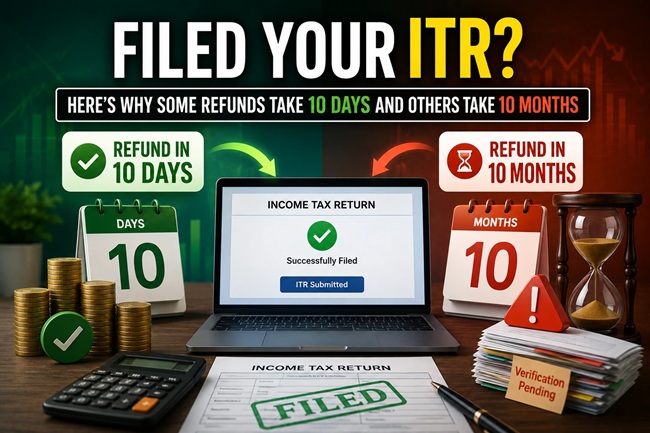
Filed Your ITR? Here’s Why Some Refunds Take 10 Days and Others Take 10 Months

A colleague filed her ITR the first week of July, e-verified it the same day, and had her refund sitting in her account twelve days later. Her brother, who filed around the same time with a nearly identical salary structure, is still waiting, and it’s been well past two months. Same tax department, same filing season, wildly different experience.
This isn’t random luck the way it might feel. There’s usually a specific, identifiable reason one refund flies through and another gets stuck, and understanding what actually happens behind the scenes after you file can tell you which category you’re likely in, and what to actually do if yours is the one that’s stuck.
How the Refund Process Actually Starts
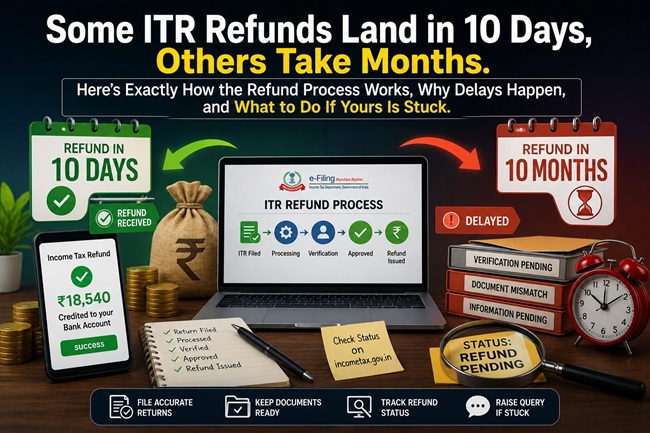
Here’s the part most people don’t realize. Filing your ITR isn’t what triggers your refund process, verifying it is. Once you submit your return, you have 30 days to e-verify it, typically through Aadhaar OTP, net banking, or a few other methods available on the portal. Until that verification is complete, your return sits unprocessed, no matter how early you filed. If you filed on the first day of the season but forgot to verify for three weeks, your refund clock effectively hasn’t even started yet.
Once verified, your return moves into processing, where the department cross-checks your declared income and deductions against the data already on file, primarily your Form 26AS and the Annual Information Statement, which capture TDS deducted by employers, banks and other payers throughout the year.
What the Income Tax Department Actually Promises
According to the Income Tax Department’s own guidance, refunds typically take about 4 to 5 weeks to be credited to your account after everything checks out. This has genuinely improved a lot over the years. Average ITR processing time dropped to around 10 days in a recent assessment year, down from 82 days just a few years before that, largely due to increased automation in how returns are matched and cleared.
So for a clean, straightforward return, salary income, standard deductions, no mismatches, refunds landing within 2 to 5 weeks of e-verification is genuinely common now, not an exception.
Why Some Refunds Get Stuck for Months
The gap between a 10 day refund and a 10 month wait almost always comes down to one of these.
A mismatch with Form 26AS or the Annual Information Statement: If the income or TDS you’ve declared doesn’t match what’s reflected in these department records, your return gets flagged for review rather than processed automatically. This is consistently one of the most common reasons for a stuck refund.
Bank account validation issues: Your refund can only be credited to a bank account that’s pre-validated on the income tax portal, with your PAN linked correctly. An unvalidated account, a closed account, or a name mismatch between your PAN and bank records can hold up disbursement even after your return itself has been processed.
Compliance and scrutiny flags: Certain returns get pulled for closer review under the department’s routine compliance checks. This isn’t necessarily a sign you’ve done anything wrong, but it does mean manual review, which takes considerably longer than automated processing.
High overall filing volume during peak season: In the current assessment year, parliamentary data has shown a meaningful backlog, with lakhs of returns still pending processing beyond 90 days out of the crores filed. The department has extended timelines to work through this volume, and being caught in a high volume period can simply mean a longer wait through no fault in your specific return.
Not verifying within the 30 day window: If verification is delayed or missed entirely, your return isn’t considered validly filed for processing purposes, which resets your effective starting point.
How to Actually Check Your Refund Status
Log into the income tax e-filing portal using your user ID and password.
Go to the “e-File” menu, then “Income Tax Returns,” then “View Filed Returns.”
Select the relevant assessment year and click “View Details” to see the complete lifecycle of your return, including whether it’s been verified, processed, and whether a refund has been issued or is pending.
Cross-check against your Form 26AS if the status seems stuck, since a mismatch here is the most common cause of a delay and something you can often spot yourself before even contacting the department.
What to Do If Your Refund Is Genuinely Delayed
Confirm verification actually went through: Sometimes people believe they’ve verified their return when the process didn’t complete successfully. Double check this first, it’s the most basic and most overlooked step.
Check your registered email for any department notification: If there’s a discrepancy or a request for clarification, it usually comes through email or shows as a notice on the portal, and ignoring it will keep your refund on hold indefinitely.
Verify your bank account is pre-validated correctly on the portal: Go to the profile section of the e-filing portal and confirm your bank account status shows as validated, not pending or failed.
If it’s been more than 90 days with no update, you can raise a formal grievance through the e-filing portal’s grievance section, which creates a documented, trackable escalation rather than relying on phone support alone.
Know that you’re entitled to interest on a delayed refund: Under Section 244A of the Income Tax Act, if your refund is delayed beyond the normal processing period, you’re entitled to interest, generally at 0.5 percent per month, calculated from the start of the assessment year or your filing date, depending on your specific situation. This is usually added automatically when your refund is eventually processed, but it’s worth knowing you’re not simply losing that time value of money.
You May Also Like To Read:
- ITR Filing for Senior Citizens and Pensioners: The Refund Thousands of Families Are Quietly Leaving Unclaimed
- Filed a Wrong ITR? Here’s Exactly What Happens Next — and How to Fix It, Step by Step Guide
- Old Tax Regime vs New Tax Regime in 2026: The Calculator Question Everyone’s Still Getting Wrong
- Filing ITR After Selling Shares, Gold or Property? Here’s Exactly What to Check on Your Capital Gains
- NPS Explained: The Retirement Scheme That Could Save You ₹15,000 in Tax This Year
Common Mistakes That Delay Refunds
Forgetting to e-verify after filing: This is the single most avoidable delay. Set a reminder to verify within a day or two of filing rather than assuming submission alone is enough.
Not updating a changed bank account on the portal: If you closed your old salary account and the portal still has it listed as your primary validated account, your refund can fail to process even though everything else is correct.
Declaring income that doesn’t match Form 26AS without explanation: If you have income sources beyond your Form 16, like freelance income or interest income, make sure these are accurately reflected and reconciled against your AIS before filing, not after a mismatch notice arrives.
Assuming a delay means something is wrong: A slower refund doesn’t automatically mean an error on your part. High filing volumes and routine compliance checks are common, ordinary reasons, and panicking or repeatedly filing fresh complaints can sometimes slow things down further rather than help.
Ignoring portal notifications for weeks: If the department has flagged something and is waiting on your response, the clock on your refund doesn’t move until you respond. Checking your portal and email regularly during refund season matters.
Frequently Asked Questions
1. How long does it normally take to get an income tax refund in India? The Income Tax Department states refunds typically take about 4 to 5 weeks after successful e-verification, though many clean, straightforward returns are now processed considerably faster due to improved automation.
2. Does filing my ITR early guarantee a faster refund? Not by itself. What actually starts the clock is e-verification, not the filing date. Filing early and verifying immediately gives you the best chance of an early refund, but filing early and delaying verification doesn’t help.
3. Why is my refund status still showing “under processing” after two months? This can happen due to high filing volumes during peak season, a data mismatch with Form 26AS, or your return being selected for a routine compliance check. Check the portal for any specific notice first before assuming it’s simply stuck.
4. Can I get interest if my refund is delayed? Yes. Under Section 244A of the Income Tax Act, you’re entitled to interest on a delayed refund, generally around 0.5 percent per month, which is usually added automatically once your refund is finally processed.
5. What happens if I don’t e-verify my ITR within 30 days? Your return is treated as not validly filed for processing purposes if it isn’t verified within the window, which can delay or entirely halt your refund process until you complete verification, sometimes requiring a fresh filing depending on how much time has passed.
6. Why did my refund amount come out lower than expected? This can happen if the department made an adjustment based on a discrepancy between your claimed deductions and their records, or if there are outstanding tax dues from a previous year being adjusted against your current refund. Check your refund intimation notice for the specific reason.
7. My bank account details look correct, so why is my refund failing? Even with correct details, your account needs to be specifically pre-validated on the income tax portal, with your PAN correctly linked. A technically correct account that hasn’t completed this validation step can still cause a refund credit to fail.
8. Is there a way to speed up a delayed refund? Beyond confirming verification, checking for portal notices, and validating your bank account, there isn’t a way to force faster processing. If it’s been beyond 90 days, raising a formal grievance through the portal is the most effective next step available to you.
9. Does a delayed refund mean I’m being audited? Not necessarily. Many delays are simply due to volume or routine compliance checks rather than a full audit. A genuine audit or detailed scrutiny would typically come with a specific formal notice, not just a delayed refund status.
10. Can I track my refund without logging into the income tax portal? The most reliable and complete status is available only through the official e-filing portal. Some third party financial apps offer refund tracking too, but always cross-verify anything you see there against the official portal directly, since it’s the authoritative source.
About This Guide
This article is based on the Income Tax Department’s published refund processing guidance and publicly reported data trends for the 2026 assessment year. Actual processing times vary based on individual return complexity, verification status and department workload during peak filing season. FinanceChecks.com is an independent personal finance resource and is not affiliated with the Income Tax Department.
Disclaimer
This article is for educational and informational purposes only and should not be considered tax or legal advice. Refund timelines, interest rates under Section 244A and processing procedures are subject to change by the Income Tax Department. Please refer to the official income tax e-filing portal or consult a qualified tax professional for guidance specific to your situation. FinanceChecks.com does not accept responsibility for financial decisions made based on this article.

Shuchi founded Finance Checks after spending 16+ years working in corporate, managing operations and distribution. She managed her own finances, learned and read regularly and helped people make sense of their savings, loans, insurance, and investments.
She started this site to offer the kind of clear, honest financial guidance she wished was more available when she was learning to manage her own money. Every article is researched personally, checked against official sources such as the Reserve Bank of India, SEBI, or the Income Tax Department, and revisited whenever regulations or figures change. She is upfront about how the site earns money through ads and select affiliate partnerships, and she does not let either influence what she actually recommends to readers.



[…] Filed Your ITR? Here’s Why Some Refunds Take 10 Days and Others Take 10 Months […]
[…] exemption under Section 54, the only problem was, house hunting takes time, and by the time her ITR filing deadline of July 31 rolled around, she hadn’t finalized a purchase yet. Her CA’s […]