

FinanceChecks.com | Updated 16 November 2026
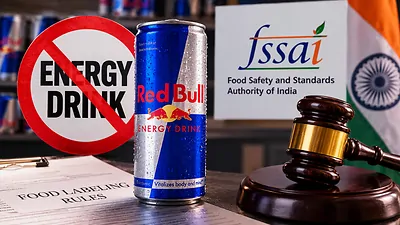
Quick Answer: FSSAI has given Red Bull seven days to justify its “energy drink” label because of its sugar content. The notice cites 11 g of sugar per 100 ml, which works out to about 27.5 g in a 250 ml can (our calculation, so check your pack size). That is above the 25 g a day the World Health Organization gives as an ideal limit for adults. Below is the quick check to run on any drink, with Red Bull as the worked example.
What FSSAI told Red Bull
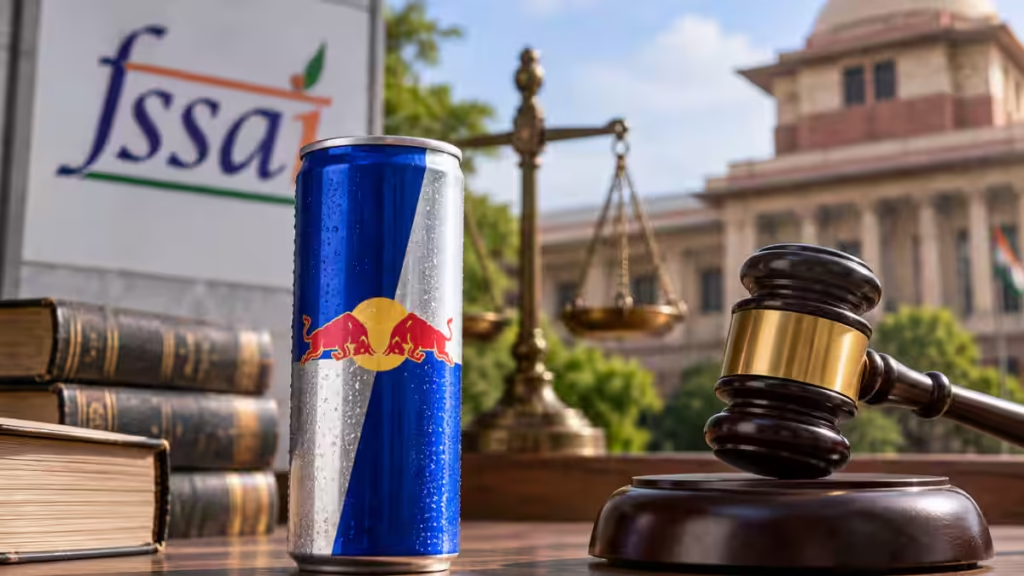
On 16 November 2026, FSSAI sent Red Bull a notice asking it to justify calling its product an “energy drink”. The regulator says a significant share of the drink’s declared energy comes from added sugar, and it has given Red Bull seven days to explain why the label should not be withdrawn. The notice cites 11 g of sugar per 100 ml, so a 500 ml serving would give about 55 g, above the generally recommended daily limit of 50 g.
Red Bull had not publicly responded when Reuters reported the story, and it still has interim relief from the Delhi High Court that lets it keep using the label. FSSAI’s challenge to that relief is due to be heard in January. Until then, the question you can answer yourself is how much sugar is in the can in your hand, so we use Red Bull as the worked example in every step below.
Step 1: Find the nutrition table and its unit
Indian labelling rules require nutrition information per 100 g or 100 ml, or per serve. Look at the column heading before you read any number. A figure “per serve” can look small if the serve size is small, and a figure “per 100 ml” is easier to compare across brands.
Step 2: Check the pack size and number of servings
A 250 ml can and a 600 ml bottle with the same sugar per 100 ml carry very different amounts of sugar. Check the net quantity on the pack, and see whether the label treats the whole pack as one serve or as two or three.
Step 3: Work out the sugar in a can of Red Bull
Sugar in the pack = (sugar per 100 ml x pack size in ml) / 100.
Here is how much sugar Red Bull would contain at the 11 g per 100 ml that FSSAI cites. These numbers are our own calculation, not figures from a Red Bull label, and one level teaspoon is roughly 4 g of sugar. Check the pack size you actually buy.
| Pack size | Sugar (at 11 g per 100 ml) | Roughly in teaspoons |
|---|---|---|
| 250 ml | 27.5 g | 7 |
| 350 ml | 38.5 g | 9 to 10 |
| 500 ml | 55 g | 13 to 14 |
For context, the World Health Organization advises keeping free sugars below 10% of daily energy, and ideally below 5%, which is about 25 g for an adult eating 2,000 kcal a day. FSSAI’s notice referred to a generally recommended limit of 50 g. By either measure, one 250 ml can of a drink at 11 g per 100 ml already uses up a big part of the day’s allowance.
You May Also Like To Read About:
- Everest Cumin Powder Found ‘Unsafe’ in FSSAI Test: What Happened, and What You Should Do If You Have It at Home
- Nestle Low Fat Dairy Whitener Sale Banned: Why FSSAI Called It ‘Unsafe, Substandard’
- FSSAI’s Paneer Update: What Can Legally Be Called “Paneer” and What Cannot
- FSSAI Penalises Amazon, Flipkart and Instamart: What Every Online Shopper in India Needs to Know
Step 4: Look for added sugar, not just total sugar
Total sugar includes sugar that occurs naturally, for example in milk or whole fruit. Added sugar is what is put in during manufacture. Indian rules call for added sugar to be declared where it has been added, so look for that line in the table. For a soft drink or energy drink, nearly all the sugar is usually added.
Step 5: Read the % RDA column
Many labels show how much of a recommended daily allowance one serve provides. Since 2024, FSSAI has asked manufacturers to show the % contribution for total sugar, saturated fat and sodium in bold and larger type, so it is easier to spot. A single serve that gives 50% or more of the daily sugar allowance is a clear signal.
Step 6: Scan the ingredients list
Ingredients are listed in descending order by weight, so anything near the top is a main ingredient. Sugar can appear under many names, including sucrose, glucose, fructose, glucose syrup, invert sugar, honey and fruit juice concentrate. If you see two or three of them, the total sugar is likely higher than any one name suggests.
Step 7: Do not trust front-of-pack words
Terms like “energy”, “natural”, “fruit” or “with vitamins” are marketing, and they do not tell you how much sugar is in the drink. Always check the nutrition table. This is exactly the question FSSAI is now asking about the term “energy drink”.
What may change soon
FSSAI has proposed red hexagon warning symbols on the front of packaged foods that are high in added sugar, fat or salt. Under the proposal, a beverage with more than 2 g of added sugar per 100 ml would count as high and carry a warning. At 11 g per 100 ml, a drink would be more than five times that threshold. This is still a proposal and not a final rule, so do not expect to see these symbols on shelves yet.
Common mistakes
The most common mistake is reading the per 100 ml figure and assuming it is the whole bottle. The second is trusting a “no added sugar” or “diet” claim without reading the table, since such drinks may use sweeteners and other additives you want to know about. The third is counting only the first drink of the day. Tea, coffee, packaged juice and flavoured yogurt all add to the same daily sugar total.
My Take
I do not think anyone needs to avoid every sweet drink forever. But a habit of checking per 100 ml, multiplying by the pack size, and looking at the added sugar line takes under a minute and makes the choice an informed one. If a regulator is questioning how a drink describes itself, the least a buyer can do is read the back of the can.
Frequently Asked Questions
1. How much sugar is too much in a day? The World Health Organization advises less than 10% of daily energy from free sugars, ideally under 5%, which is about 25 g on a 2,000 kcal diet. FSSAI’s notice to Red Bull referred to a generally recommended limit of 50 g.
2. What is the difference between total sugar and added sugar? Total sugar includes naturally occurring sugars as well as sugar added during manufacture. Added sugar is only the second part.
3. How do I work out sugar for the whole bottle? Multiply the sugar per 100 ml by the bottle size in ml, then divide by 100.
4. How many teaspoons is 25 g of sugar? About 6 level teaspoons, using the common estimate of 4 g per teaspoon.
5. Has FSSAI banned the term energy drink? No. FSSAI issued an order in June restricting the term, but Red Bull and other companies challenged it in the Delhi High Court, and Red Bull has interim relief. FSSAI’s new notice only asks Red Bull to justify the label within seven days.
6. Will warning labels appear on drinks soon? FSSAI has proposed red warning symbols for foods and drinks high in added sugar, fat or salt, but the rule is not final yet.
Disclaimer: This article is general information, not medical or nutritional advice. Speak to a doctor or registered dietitian about your own diet, especially if you have diabetes or another health condition.
Sources
- Deccan Herald, FSSAI notice to Red Bull:
- https://www.deccanherald.com/india/fssai-sends-notice-to-red-bull-over-its-energy-drink-label-saying-it-derives-energy-from-high-sugar-levels-4219998/
- ChiniMandi, Red Bull gets seven days:
- https://www.chinimandi.com/red-bull-gets-seven-days-to-justify-energy-drink-label-as-fssai-flags-55-grams-of-sugar-in-500-ml-serving/
- FSSAI Labelling and Display Guidance Note:
- https://mail.fssai.gov.in/upload/uploadfiles/files/Guidance_Note_Labelling_23_02_2022.pdf
- NutraIngredients, bolder label fonts for sugar, salt and saturated fat:
- https://www.nutraingredients.com/Article/2024/10/01/india-food-firms-to-bump-up-font-sizes-on-product-labels-to-ensure-clarity/
- Outlook India, FSSAI red hexagon warning proposal:
- https://www.outlookindia.com/national/fssai-proposes-red-hexagon-warning-labels-for-foods-high-in-sugar-salt-and-fat
- World Health Organization guideline on sugars intake for adults and children (2015)

Shuchi founded Finance Checks after spending 16+ years working in corporate, managing operations and distribution. She managed her own finances, learned and read regularly and helped people make sense of their savings, loans, insurance, and investments.
She started this site to offer the kind of clear, honest financial guidance she wished was more available when she was learning to manage her own money. Every article is researched personally, checked against official sources such as the Reserve Bank of India, SEBI, or the Income Tax Department, and revisited whenever regulations or figures change. She is upfront about how the site earns money through ads and select affiliate partnerships, and she does not let either influence what she actually recommends to readers.