
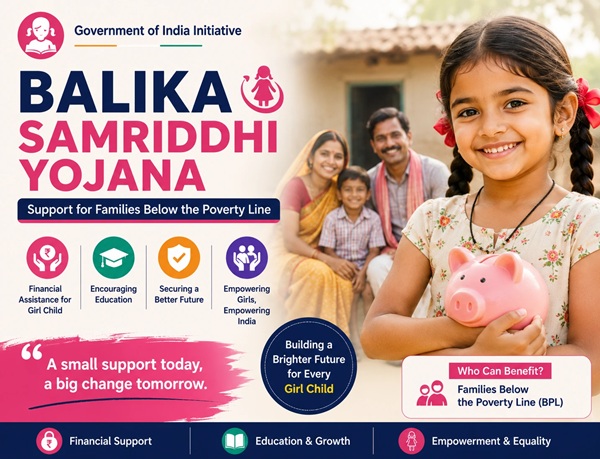
Balika Samriddhi Yojana: Support for Families Below the Poverty Line

Written by the Financechecks.com Editorial Team, Personal Finance Researchers Last updated: July 2026
A few months ago, an Anganwadi worker in a small town near Lucknow told me something that stuck with me. She said most young mothers she meets today have heard of Sukanya Samriddhi Yojana because it gets talked about everywhere, on the news, in bank branches, on social media. But almost none of them had heard of a scheme that came nearly two decades earlier and was built specifically for families like theirs, families living below the poverty line, with far less access to banks, smartphones, or financial advisors. That scheme is Balika Samriddhi Yojana, and it deserves to be talked about just as much.
If Sukanya Samriddhi Yojana is the scheme most middle class parents reach for today, Balika Samriddhi Yojana was the one that came first, built for a very different set of families who needed support the most and had the least access to it. It is smaller in scale, older, and less flashy, but for the families it was designed for, it can genuinely make a difference at the two moments that matter most, the birth of a daughter and her years in school.
This guide walks through what Balika Samriddhi Yojana actually offers, who qualifies, how to apply, and what to realistically expect from it in 2026, including some honest notes on where the scheme stands today and where it fits alongside newer options.
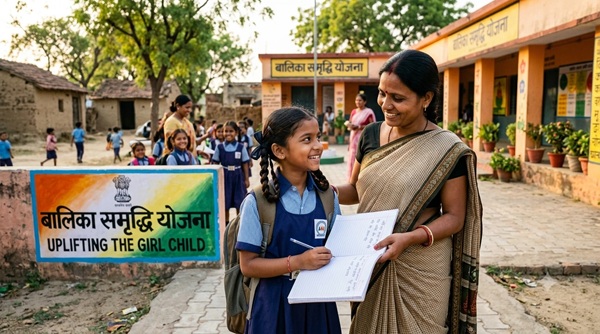
What Exactly Is Balika Samriddhi Yojana
Balika Samriddhi Yojana, commonly shortened to BSY, was launched by the Government of India on the 2nd of October 1997, under the Ministry of Women and Child Development. The scheme was designed with one clear purpose, to change how families and communities in economically weaker sections treated the birth of a daughter, and to keep that daughter in school for as long as possible instead of pulling her out early.
Unlike SSY, which is a savings and investment scheme open to any family that wants to open an account for a daughter, BSY is targeted specifically at households that are classified as Below Poverty Line, or BPL, in rural areas, and at economically weaker families living in urban slums or working informal jobs such as rag picking, street vending, or daily wage labour in cities. It is not something every parent can walk in and open. It exists for families who genuinely need the push.
At its core, BSY does two things. It gives a small cash grant to the mother when a daughter is born, and it gives annual scholarships to that daughter every year she stays enrolled in school, from Class 1 all the way through Class 10.
Why This Scheme Still Matters for the Families It Was Built For
It is easy to look at the numbers involved in BSY, a few hundred rupees here, a few hundred there, and wonder how much difference it can really make. But for a family living below the poverty line, where every rupee is already accounted for before it arrives, even a small guaranteed amount tied to a daughter’s birth and her school attendance sends a message that goes beyond the money itself.
The scheme was designed around a real and well documented problem. In many communities, the birth of a daughter was, and in some pockets still is, treated as a financial burden rather than an occasion to celebrate, largely because of the future cost of her marriage and the perception that a son would earn for the family while a daughter would not. BSY tried to directly counter that by putting money in the mother’s hands the moment a daughter was born, and by rewarding the family every year the daughter stayed in school rather than being married off early or pulled out to work.
It also nudges families toward opening a bank or post office account in the girl’s name for the first time, which for many BPL households is their very first entry point into the formal banking system.
Who Is Eligible for Balika Samriddhi Yojana
Eligibility for BSY has two layers, and both need to be satisfied.
The first is about the girl child herself. She must have been born on or after the 15th of August 1997. This date has stayed fixed since the scheme’s launch and applies uniformly across the country. A family can claim BSY benefits for a maximum of two girl children, regardless of how many children they have in total.
The second layer is about the family’s economic status. In rural areas, the family needs to be identified as Below Poverty Line according to the criteria laid out under the Swarnajayanti Gram Swarozgar Yojana framework, which is the same BPL identification system used for several other rural welfare schemes. In urban areas, the coverage is broader and more practical, extending to any family living in a recognised urban slum, regardless of whether they hold a formal BPL card, along with families working in informal occupations such as rag picking, vegetable and fruit vending, or daily wage and payment vendor work.
If your family does not fall under either of these categories, BSY is simply not the right scheme, and that is worth knowing early rather than going through the application process only to be turned away. In that case, a scheme like Sukanya Samriddhi Yojana, which has no income restriction, is likely a better fit, and our detailed walkthrough of SSY on Financechecks.com covers exactly how that scheme works for families who do not fall under the BPL bracket.
What the Scheme Actually Gives You
BSY’s benefit structure is straightforward once you break it down into two distinct parts.
The first is the post birth grant. When an eligible girl child is born into a BPL family, the mother receives a one time cash grant of five hundred rupees. This is meant to be an immediate, no conditions attached acknowledgment at the moment of birth, deposited into an account opened in the girl’s name.
The second is the annual scholarship, which is where the scheme really tries to keep a daughter in school. From Class 1 through Class 10, the girl receives a yearly scholarship as long as she remains enrolled and attends school. These amounts are modest by design, typically ranging from around three hundred rupees in the early primary years up to around one thousand rupees by the time she reaches the higher classes closer to Class 10, though exact figures can vary slightly by state since implementation happens through state departments and the ICDS network.
Both the post birth grant and the accumulated scholarship amounts are meant to sit in an interest bearing account opened in the girl’s name, typically through a post office or a nationalised bank, so the money is not just handed over and spent immediately but allowed to grow quietly in the background until she turns eighteen.
The Rules Around Withdrawal and Marriage
This is a part of the scheme that genuinely surprises a lot of people, so it is worth explaining clearly.
The full accumulated amount, meaning the post birth grant plus all the scholarship money plus the interest earned over the years, becomes available to the girl once she turns eighteen, provided she is unmarried at that point. To actually withdraw the money, she needs a certificate from the local Gram Panchayat or Municipality confirming her unmarried status on that date.
If, however, she gets married before turning eighteen, the scheme’s design becomes intentionally strict. She forfeits the annual scholarship amounts and any interest that had accumulated on them. What she is still entitled to is the original five hundred rupee post birth grant along with whatever interest had built up specifically on that portion. This is not a punitive design so much as a deliberate incentive structure, the scheme wants to reward families for keeping their daughters unmarried and in school through their teenage years, and the withdrawal rules are built to reinforce exactly that behaviour.
Families are also permitted to use a portion of the accumulated scholarship funds for practical school related needs along the way, such as buying textbooks or uniforms, or even to pay premiums toward a linked insurance product under the Bhagyashri Balika Kalyan Bima Yojana, rather than waiting until the girl turns eighteen to touch any of it.
How to Apply for Balika Samriddhi Yojana
Unlike SSY, which you can walk into practically any bank branch to open, BSY works through a more community based application route, and the process differs slightly depending on whether you are in a rural or urban area.
If you live in a rural area, the application process runs through your local Anganwadi centre, the same community health and childcare centres run under the Integrated Child Development Services network that most rural families already interact with for immunisation and nutrition support. You will need to ask the Anganwadi worker for the BSY application form, fill in the girl child’s details, the family’s BPL identification, and the number of girl children already covered under the scheme in that family, then submit it along with the required documents directly at the centre.
If you live in an urban area, particularly in a recognised slum, the application goes through the municipal health department or the urban Women and Child Development office in your city instead of an Anganwadi centre. The documentation and verification process is broadly similar, just routed through a different local office.
A handful of states have started allowing partial online tracking of BSY applications through their own state welfare portals, but as of now the actual application itself is still largely an offline, in person process across most of the country. If your state has a specific portal, it is worth checking with your local Anganwadi worker or municipal office directly, since implementation and digitisation vary meaningfully from one state to another.
Documents You Will Typically Need
The paperwork for BSY leans on documents most BPL families already have or can obtain locally without much difficulty. You will generally need the girl child’s birth certificate issued by the hospital or the local municipal authority, proof of the family’s address such as a ration card, voter ID, or a utility bill, and identity proof for the parent or guardian, which can be a voter ID, ration card, or any other government issued document. In rural areas, you will also need documentation confirming the family’s BPL status under the relevant state list, and in urban areas, proof of residence in a recognised slum area or documentation of informal occupation where applicable.
Because verification of BPL status is central to the scheme, this step tends to take longer than the paperwork itself. It is worth following up with the Anganwadi centre or municipal office periodically after submission rather than assuming the process is moving automatically in the background.
Where BSY Stands Today, Honestly
We think it is important to be upfront about something most articles on this topic gloss over. BSY was launched in 1997, and while it remains a valid, active scheme implemented under the broader umbrella of central government welfare policy for the girl child, it does not get the same visibility, promotion, or digital push that newer schemes like Sukanya Samriddhi Yojana receive. Implementation happens through state governments and the ICDS network, which means awareness, processing speed, and even the exact scholarship figures can genuinely vary from one state to another.
If you believe your family qualifies, the most reliable next step is a direct conversation with your local Anganwadi worker or municipal Women and Child Development office, since they will have the most accurate, current picture of how the scheme is being implemented in your specific state and district right now. Several states have also introduced their own state level variants or supplementary schemes for the girl child alongside BSY, so it is worth asking specifically what is available in your state, not just about BSY by name.
Read About CBSE Udaan Scheme For Girl Child
How BSY Compares to Other Girl Child Schemes
Families sometimes ask us whether they should choose between BSY and Sukanya Samriddhi Yojana, and the honest answer is that for most eligible families, this is not really an either or decision.
BSY is not an investment scheme in the way SSY is. There is no monthly deposit you make, no interest rate you are chasing, and no large maturity corpus you are building toward. It is a targeted welfare benefit, a small grant at birth and modest yearly support through school, aimed specifically at removing some of the financial pressure that leads BPL families to under invest in a daughter’s schooling or marry her off early.
SSY, on the other hand, is open to any family regardless of income, requires active yearly deposits from the parent, and is built to generate a meaningfully large, tax free corpus by the time the daughter turns twenty one. If your family qualifies as BPL and can also set aside even a small monthly amount, there is genuinely no conflict in applying for BSY’s grant and scholarship benefits while also opening an SSY account for the same daughter to build a larger long term fund. Our detailed guide to Sukanya Samriddhi Yojana on Financechecks.com walks through exactly how much a small monthly deposit can grow into by the time she reaches adulthood, which is worth reading alongside this one if you are trying to plan both together.
A Note on Trust and Transparency
We want to be upfront here too. This article exists to help you understand what Balika Samriddhi Yojana actually offers and whether your family is likely to qualify, not to sell you anything. Financechecks.com is not affiliated with the Ministry of Women and Child Development, any state government, or any Anganwadi or ICDS office, and we do not process applications on anyone’s behalf. The details in this article, including eligibility criteria, benefit amounts, and the application process, are drawn from official state government welfare department pages and established scheme documentation, cross checked across multiple sources at the time of writing. Because BSY is implemented at the state level and figures can vary by state, we strongly recommend confirming exact scholarship amounts and current application procedures with your local Anganwadi centre or municipal welfare office before relying on any figure quoted here.
Frequently Asked Questions
What is Balika Samriddhi Yojana and who launched it?
Balika Samriddhi Yojana is a central government welfare scheme launched on the 2nd of October 1997 by the Ministry of Women and Child Development, aimed at supporting the birth and education of girl children in families below the poverty line.
Who is eligible for Balika Samriddhi Yojana?
A girl child born on or after the 15th of August 1997, into a family classified as Below Poverty Line in a rural area, or into an economically weaker family in an urban slum or informal occupation, is eligible. A maximum of two girl children per family can be covered.
How much money does Balika Samriddhi Yojana actually provide?
The scheme gives a one time post birth grant of five hundred rupees to the mother, followed by annual scholarships from Class 1 through Class 10, generally ranging from around three hundred rupees in the early years to around one thousand rupees closer to Class 10, though exact figures can vary by state.
Can a family earning above the poverty line apply for BSY?
No. BSY is specifically restricted to families identified as Below Poverty Line in rural areas or economically weaker families in urban slums and informal occupations. Families outside these categories are not eligible and should look at income independent schemes like Sukanya Samriddhi Yojana instead.
What happens to the BSY benefits if the girl gets married before eighteen?
She forfeits the accumulated annual scholarship amounts and the interest earned on them. She remains entitled only to the original five hundred rupee post birth grant along with the interest that had specifically accumulated on that portion.
How do I apply for Balika Samriddhi Yojana?
In rural areas, you apply through your local Anganwadi centre by requesting the BSY application form from the Anganwadi worker. In urban areas, particularly in recognised slums, you apply through the municipal health department or the urban Women and Child Development office in your city.
Is Balika Samriddhi Yojana still active in 2026?
Yes, the scheme remains active and is implemented through state governments and the ICDS network as part of the broader central government commitment to girl child welfare, though visibility and exact implementation can vary by state. It is advisable to confirm current status with your local Anganwadi or municipal office.
Can a family use both Balika Samriddhi Yojana and Sukanya Samriddhi Yojana for the same daughter?
Yes. BSY is a welfare grant and scholarship scheme with no monthly deposit requirement, while SSY is a savings scheme requiring active deposits. There is no restriction preventing an eligible BPL family from receiving BSY benefits while also opening an SSY account for the same daughter to build a larger long term fund.
What documents are needed to apply for BSY?
You will typically need the girl child’s birth certificate, proof of the family’s address, identity proof of the parent or guardian, and documentation confirming the family’s BPL status or residence in a recognised urban slum area.
At what age can the girl child withdraw the accumulated BSY funds?
At eighteen years of age, provided she is unmarried at that time and can produce a certificate from the local Gram Panchayat or Municipality confirming her unmarried status.
Disclaimer
This article is intended for general informational and educational purposes only and does not constitute financial, legal, or welfare eligibility advice. Balika Samriddhi Yojana is implemented through state governments and local ICDS and municipal offices, and specific benefit amounts, eligibility verification processes, and application procedures may vary by state and may have changed since this article was last updated. While every effort has been made to ensure the information presented here is accurate as of the date of publication, readers are strongly encouraged to verify current details directly with their local Anganwadi centre, municipal Women and Child Development office, or state welfare department before relying on any specific figure or procedure described above. Financechecks.com is not affiliated with the Government of India, any state government, or any Anganwadi or ICDS office, and does not process applications or earn any commission related to this scheme. Please consult your local welfare office or a qualified advisor for guidance specific to your family’s situation.

Shuchi founded Finance Checks after spending 16+ years working in corporate, managing operations and distribution. She managed her own finances, learned and read regularly and helped people make sense of their savings, loans, insurance, and investments.
She started this site to offer the kind of clear, honest financial guidance she wished was more available when she was learning to manage her own money. Every article is researched personally, checked against official sources such as the Reserve Bank of India, SEBI, or the Income Tax Department, and revisited whenever regulations or figures change. She is upfront about how the site earns money through ads and select affiliate partnerships, and she does not let either influence what she actually recommends to readers.


[…] in 1997, well before BBBP existed, Balika Samridhi Yojana, or BSY, was designed specifically to support girl children from families living below the poverty […]
[…] Balika Samriddhi Yojana: Support for Families Below the Poverty Line […]