
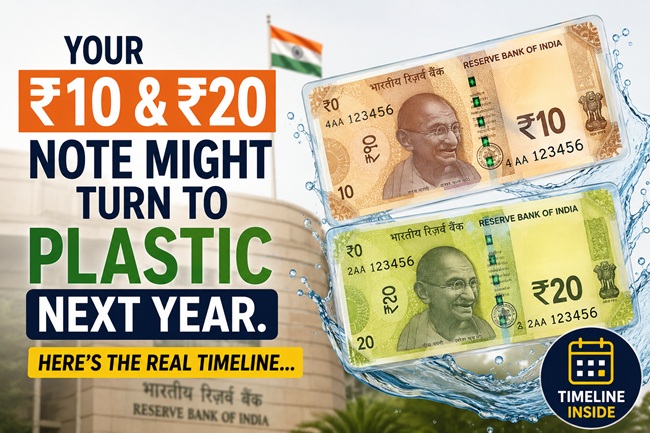
Your Rs 10 and 20 Note Might Turn to Plastic Next Year. Here’s the Real Timeline

Every few years, a message does the rounds on family WhatsApp groups claiming paper currency is about to be scrapped, or that some note is being “banned” from a specific date. This week’s actual RBI news around plastic currency notes is real, but it’s already getting tangled up with exactly this kind of confused messaging, so it’s worth separating what’s genuinely confirmed from what’s still just an expectation.
Here’s what RBI Governor Sanjay Malhotra actually said, what’s already been officially set in motion, and what your paper notes’ status actually is right now, because it isn’t what some of the forwards are claiming.
What the RBI Governor Actually Said
Speaking after the Monetary Policy Committee meeting this week, RBI Governor Sanjay Malhotra said the central bank is targeting the beginning of the next financial year, meaning around April 2027, for plastic, or polymer, currency notes to enter circulation, specifically starting with the Rs 10 and Rs 20 denominations. He was clear that this is subject to the successful completion of field trials currently being planned, not a locked-in launch date.
This follows government approval for the RBI to actually conduct these field trials, reviving a proposal that was first floated more than a decade ago but never made it past the testing stage back then.
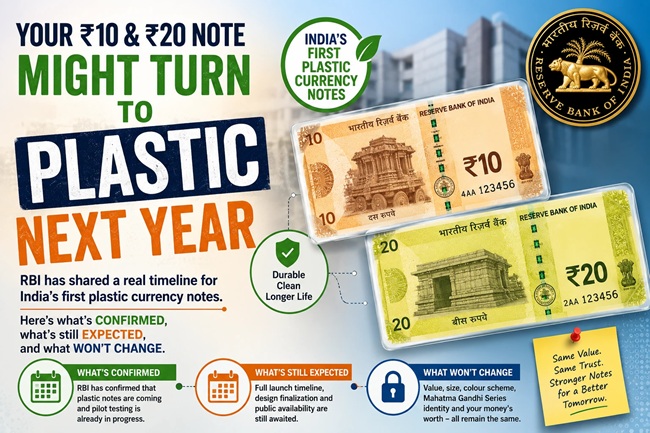
What’s Actually Confirmed vs What’s Still an Expectation
This distinction matters a lot with a story like this, since a lot of circulating coverage blurs the two.
Confirmed and officially announced: The RBI’s currency printing arm, Bharatiya Reserve Bank Note Mudran Private Limited, floated a global tender on July 17, 2026, inviting suppliers to bid on polymer banknote substrate material for field trials. Bids close on August 18, 2026. The tender requires strict security specifications, and suppliers must confirm their material doesn’t contain animal tallow or DNA, addressing a sensitivity that’s come up in other countries introducing polymer currency.
Reported and widely expected, but not officially locked in: The specific denominations being trialed, Rs 10 and Rs 20, are what’s being consistently reported by multiple outlets, though the tender document itself doesn’t officially name them. Similarly, the April 2027 circulation target is what Governor Malhotra described as the RBI’s aim this week, which is a genuine, official statement, but it remains explicitly conditional on field trials succeeding first.
Not true, and worth debunking directly: Rumours claiming paper currency has been or will be banned from a specific date, or that particular denominations are being scrapped, have circulated around this news and have been officially addressed as false. Your existing paper notes remain completely valid legal tender, and polymer notes, if and when they roll out, are planned to coexist alongside paper currency, not replace it.
Why This Isn’t India’s First Attempt
This is genuinely a second attempt at something India tried before. More than a decade ago, the RBI announced plans to field test Rs 10 plastic notes across five climatically different cities, Kochi, Mysore, Jaipur, Bhubaneswar and Shimla, specifically to see how the material would hold up against India’s range of heat, humidity and dust conditions. That earlier attempt ran into procurement and testing difficulties and never scaled beyond the trial stage.
This time around, the process appears more structured, with a clearer global tender process and an explicit goal of building domestic manufacturing capability for the material, rather than relying entirely on imported polymer substrate.
Why the RBI Wants to Do This At All
Lower denomination notes like the Rs 10 and Rs 20 change hands far more frequently than higher value notes, which means they wear out, tear and get soiled much faster, requiring more frequent replacement. Polymer notes are significantly more durable than paper in this specific regard, they resist tearing, moisture and general wear far better, which could meaningfully reduce how often these lower denominations need reprinting.
There’s also a security angle. Polymer substrates can support certain advanced security features that are harder to replicate than traditional paper-based ones, which is a meaningful consideration given ongoing concerns about counterfeit currency.
Paper Notes vs Polymer Notes: What Actually Changes
| Factor | Paper Currency | Polymer Currency |
|---|---|---|
| Durability | Wears out faster, especially low denominations | Significantly more durable, resists tearing and moisture |
| Feel and appearance | Familiar texture most Indians have used their whole lives | Slightly different texture, often described as more plastic-like and slightly smaller in some countries that use it |
| Security features | Standard watermarks and security threads | Can support additional transparent windows and advanced features |
| Legal tender status if introduced | Remains fully valid | Would coexist with paper, not replace it, during and after trials |
| Manufacturing cost | Lower upfront cost per note | Higher upfront cost per note, but potentially lower cost over the note’s longer lifespan |
What This Means for You Right Now
Practically speaking, nothing changes for you today. Your paper notes work exactly as they always have, and that won’t change even once trials begin, since this is explicitly a limited trial phase for two specific low denominations, not a currency overhaul. If field trials succeed and the RBI does move toward wider circulation starting around April 2027, you’d likely start seeing Rs 10 and Rs 20 polymer notes gradually enter circulation alongside your existing paper notes, similar to how new note designs or governor signature changes have rolled out gradually in the past without any disruption to existing currency.
Common Misconceptions Worth Clearing Up
- “Paper currency is being banned”: False. This has been specifically addressed and denied. There is no demonetisation event tied to this, no deadline for paper currency, and no plan to withdraw paper notes.
- “This is happening immediately”: Not accurate. The current stage is a supplier tender for trial material, with bids closing in mid-August 2026. Actual field trials, testing, evaluation and a final decision on wider rollout all still need to happen before any polymer note reaches general circulation.
- “All denominations are switching to plastic”: No. The trial specifically targets the Rs 10 and Rs 20 notes, the lowest, most frequently used denominations, not the entire currency system.
- “The 2027 date is a guaranteed launch”: It’s the RBI’s stated target, explicitly conditional on successful field trials. Treat it as a genuine aim, not a locked commitment, until official confirmation follows the trial phase.
Frequently Asked Questions
1. Is India actually going to have plastic currency notes? It’s a strong possibility but not yet finalized. The RBI is currently in the tender and trial preparation stage, with field trials planned before any decision on wider circulation. Governor Malhotra has stated an aim of introducing them starting around April 2027, subject to those trials succeeding.
2. Which notes will be made of plastic first? Reports consistently point to the Rs 10 and Rs 20 denominations as the likely candidates for the initial trial, though the official tender document itself doesn’t name specific denominations.
3. Will my existing paper notes stop being valid? No. Your paper currency remains completely valid legal tender, both now and even if polymer notes are eventually introduced. The plan is for polymer and paper notes to coexist, not for one to replace the other.
4. When will I actually see a plastic note in my wallet? There’s no confirmed date yet for general public circulation. The current process involves a supplier tender closing August 18, 2026, followed by material testing and field trials. If those succeed, the RBI has stated an aim of beginning circulation around April 2027.
5. Why is the RBI trying this again after it didn’t work over a decade ago? The earlier attempt ran into procurement and testing hurdles and never scaled up. This current effort follows a more structured global tender process and includes a specific goal of building domestic manufacturing capability, which wasn’t part of the original attempt.
6. Are plastic notes actually better than paper notes? They offer specific advantages, mainly greater durability against tearing and moisture, and support for certain advanced security features, which matters most for low denomination notes that change hands very frequently. They aren’t simply an upgrade in every respect, since manufacturing cost per note is typically higher upfront.
7. Is this related to any rumours about the Rs 500 note or ₹2,000 note being scrapped? No, this is a separate, unrelated development. Rumours about specific denominations being banned or scrapped tied to this news have been officially addressed as false.
8. Will polymer notes feel different to use? Based on how other countries’ polymer currencies work, yes, they typically have a noticeably different texture and can feel more plastic-like compared to paper notes, though exact specifications for India’s version will depend on the final trial outcomes.
9. Who is actually supplying the material for this trial? The RBI’s printing arm, BRBNMPL, invited global suppliers to bid through a tender floated in July 2026, with strict security and material specifications, including a requirement that the substrate not contain animal tallow or DNA. The specific winning supplier hadn’t been publicly confirmed as of this article’s writing.
10. Where can I get official updates on this as the trial progresses? The RBI’s official website and Press Information Bureau releases are the most reliable sources for confirmed developments. Given how much rumour tends to circulate around currency related news specifically, it’s worth checking these official channels directly rather than relying on forwarded messages or unofficial claims.
About This Guide
This article reflects official statements from RBI Governor Sanjay Malhotra and publicly reported details on the polymer currency note tender and trial process as of early August 2026. Timelines described as targets or aims remain conditional on successful field trials and are not confirmed launch commitments. FinanceChecks.com is an independent personal finance resource and is not affiliated with the Reserve Bank of India.
Disclaimer
This article is for informational purposes only and reflects publicly available information as of the date of publication. Details including denominations, timelines and rollout plans for polymer currency notes remain subject to change based on trial outcomes and official RBI decisions. Please refer to official RBI and Press Information Bureau communications for confirmed, binding information. FinanceChecks.com does not accept responsibility for decisions made based on this article.

Shuchi founded Finance Checks after spending 16+ years working in corporate, managing operations and distribution. She managed her own finances, learned and read regularly and helped people make sense of their savings, loans, insurance, and investments.
She started this site to offer the kind of clear, honest financial guidance she wished was more available when she was learning to manage her own money. Every article is researched personally, checked against official sources such as the Reserve Bank of India, SEBI, or the Income Tax Department, and revisited whenever regulations or figures change. She is upfront about how the site earns money through ads and select affiliate partnerships, and she does not let either influence what she actually recommends to readers.