
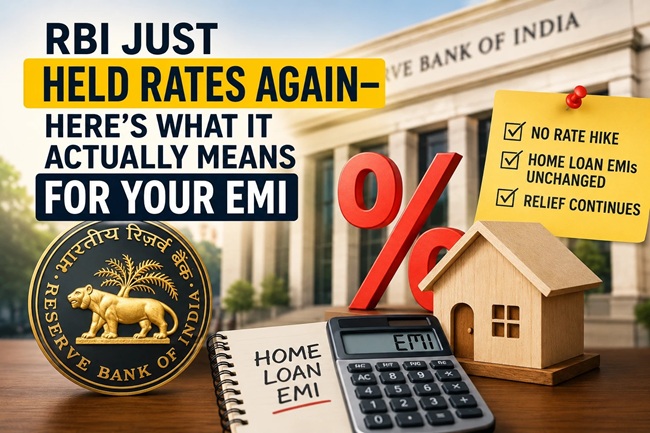
RBI Just Held Rates Again — Here’s What It Actually Means for Your EMI

Ramesh had his banking app open before the second cup of tea was even ready. It was Wednesday morning, August 5, and he’d read a WhatsApp forward the night before claiming the RBI was “definitely” going to cut rates this time. He has a home loan running since 2023, and every MPC announcement day turns into the same ritual: refresh the news, check if his EMI is about to drop, get mildly disappointed, close the app, move on with his day.
This time the answer came out around 10 am. The repo rate stayed exactly where it was. No cut, no hike. And if you’re one of the lakhs of Indians with a home loan, personal loan, or even a fixed deposit sitting in some bank, that one line of news actually tells you a lot, once you know how to read it.
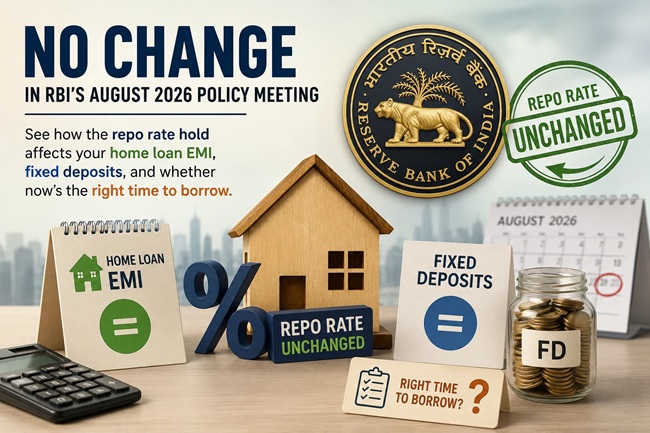
What Actually Happened at This MPC Meeting
The Reserve Bank of India’s Monetary Policy Committee met from August 3 to August 5 and decided, unanimously, to leave the repo rate unchanged at 5.25 percent. Governor Sanjay Malhotra explained that the committee wanted more clarity on where inflation is headed before making any move. Retail inflation has crept above the RBI’s 4 percent comfort zone recently, but the Governor was clear that this rise is being driven mostly by food and fuel prices rather than a broader, stickier kind of inflation spreading across the economy. The RBI expects inflation to peak sometime in the October to December quarter and ease after that.
The committee also flagged a few things it’s watching closely: the ongoing tension in West Asia and its effect on crude oil prices, an uneven southwest monsoon this year, and general uncertainty around global trade. None of these are new worries exactly, but they’re the reason the RBI chose to wait rather than act. Malhotra described the stance as neither dovish nor hawkish, which in plain English means the RBI isn’t leaning toward a cut or a hike right now. It’s watching and waiting.
The next MPC meeting is scheduled for October 5 to 7, 2026, so this “wait and watch” phase has a few months to play out before the next decision point.
So What Does This Mean for the Repo Rate Itself
If you’re new to this term, the repo rate is simply the interest rate at which the RBI lends money to commercial banks. It’s the anchor rate for the entire banking system. When the RBI cuts it, banks can borrow more cheaply, and that cheaper cost eventually flows down to you as a borrower. When the RBI holds it steady, as it just did, nothing changes on that front. Banks continue borrowing at the same cost they were already paying, which means there’s no fresh reason for them to change what they charge you either.
This is why an MPC “hold” often gets less media attention than a cut or a hike, but it still matters. It tells you the direction the RBI expects the economy to move in over the next few months, and that has knock-on effects for anyone planning a big loan or deposit decision.
What This Means for Your EMI, Practically
Here’s the part most readers actually care about.
If you have a floating rate home loan or personal loan linked to the External Benchmark Lending Rate, your EMI will not change because of this announcement. Banks link EBLR loans (External Benchmark Lending Rate) directly to the repo rate, and since the repo rate didn’t move, your interest rate and EMI stay exactly where they were. If your EMI amount goes up or down slightly around this time, it’s more likely due to your bank’s own spread adjustment or a scheduled reset date, not this MPC decision.
If you’re still on an older MCLR (Marginal Cost Link Rate) linked loan, the picture is a bit different. MCLR loans reset less frequently and depend partly on the bank’s own cost of funds, not purely the repo rate. So even a repo rate hold doesn’t guarantee your MCLR stays flat, though in a stable rate environment like this one, large MCLR jumps are unlikely.
If you’re planning to take a fresh home loan in the coming weeks, this hold is genuinely good news. It means the interest rate environment you’d be borrowing into today is roughly the same as it was two months ago, so you’re not walking into a sudden rate hike. It also gives you a stable base to run your EMI numbers against before you commit to a lender.
And if you’re someone who parks money in fixed deposits rather than borrowing, this hold means FD rates are also likely to stay in a similar range for now, at least until the next MPC meeting gives banks a reason to move.
Floating Rate vs Fixed Rate Loans: What Today’s Decision Changes
| Loan Type | Immediate Effect of This Hold | What You Should Watch |
|---|---|---|
| Floating rate home loan (EBLR-linked) | No change in EMI or interest rate | Your bank’s spread, and the October MPC outcome |
| Floating rate home loan (MCLR-linked) | Usually stable, but not guaranteed | Your bank’s internal cost of funds |
| Fixed rate home loan | No effect at all, rate was already locked | Only relevant if you’re comparing against floating for a new loan |
| New home loan applicants | Stable rate environment to borrow into | Processing fees and spreads vary more than the base rate right now |
| Fixed deposits | Rates likely to hold steady | Any signal of a cut in the October meeting |
| Personal and auto loans (floating) | No immediate change | Same triggers as home loans above |
About This Guide
This piece was put together after the RBI’s August 2026 Monetary Policy Committee announcement, cross-checked against the RBI’s official statements and reporting from established financial news sources. Interest rates and monetary policy decisions can shift with each bi-monthly MPC meeting, so treat the numbers here as accurate as of the August 2026 announcement and always check your bank’s latest communication or the RBI’s official website before making a loan or deposit decision. If you’re evaluating your own EMI, our EMI calculator further down this site can help you run the actual numbers for your loan amount and tenure.
Common Mistakes People Make After an MPC Announcement
A lot of readers assume that “repo rate unchanged” automatically means their EMI is fixed forever until the next cut. That’s not quite right. Banks can still revise their own spreads or processing charges independently of the RBI, so it’s worth glancing at your loan statement occasionally rather than assuming silence means nothing has changed.
Another common mistake is treating every MPC meeting as equally decisive. Not every meeting brings a rate change, and reacting to every announcement with a big financial decision, like rushing to prepay a loan or switching lenders, usually isn’t necessary. It’s more useful to track the trend across two or three meetings rather than reacting to a single one.
Some borrowers also confuse a repo rate hold with a guarantee that rates won’t rise later. The RBI’s own commentary this time flagged real risks around inflation, oil prices, and the monsoon. A hold today doesn’t rule out a hike down the line if those risks materialize. It simply means the RBI isn’t acting on them yet.
Lastly, people on MCLR-linked loans sometimes assume they get the same protection as EBLR borrowers during a hold. As explained above, that’s not guaranteed, and if you’ve been on an old MCLR loan for years, this might actually be a good time to ask your bank about switching to an EBLR-linked loan, since EBLR loans transmit rate changes, including future cuts, more transparently and quickly.
My Take
What stood out to me in this announcement wasn’t the hold itself, it was the reasoning behind it. The RBI is being fairly transparent that it wants more data before it moves in either direction, and that patience is probably the right call given how much global uncertainty is floating around right now, from oil prices to trade tensions. For borrowers, I’d read this as a signal to stop waiting around for a rate cut before making loan decisions. If your EMI math works today, at today’s rate, it’s reasonable to move ahead rather than betting on a cut that may or may not come in October. Rate speculation is a bit like trying to time the stock market. It rarely pays off as neatly as people expect.
Frequently Asked Questions
1. Did the RBI cut or hike interest rates in August 2026? Neither. The RBI’s Monetary Policy Committee held the repo rate unchanged at 5.25 percent in its August 3 to 5, 2026 meeting.
2. Will my home loan EMI increase or decrease after this announcement? If your loan is linked to the External Benchmark Lending Rate, your EMI stays the same since the repo rate didn’t change. MCLR-linked loans may see minor variation depending on your bank’s internal cost of funds.
3. What is the current repo rate in India as of August 2026? The repo rate stands at 5.25 percent following the August 2026 MPC decision.
4. When is the next RBI MPC meeting? The next Monetary Policy Committee meeting is scheduled for October 5 to 7, 2026.
5. Why did the RBI choose to hold rates instead of cutting them? The RBI wants more clarity on inflation, which has moved above its 4 percent target due to food and fuel prices. It’s also watching risks like the West Asia conflict, volatile crude oil prices, and an uneven monsoon.
6. Is this a good time to take a new home loan? A rate hold means a stable borrowing environment, which can make it a reasonable time to proceed if your finances are otherwise ready. It doesn’t guarantee rates will fall further, so don’t delay a loan purely in hopes of a future cut.
7. Should I switch from MCLR to EBLR after this announcement? It’s worth asking your bank about this if you’ve been on an older MCLR loan for a while. EBLR-linked loans generally reflect RBI rate changes, including future cuts, faster and more transparently.
8. Will fixed deposit interest rates change because of this hold? FD rates are likely to stay in a similar range for now, since banks typically adjust deposit rates in response to repo rate changes, and there wasn’t one this time.
9. What is the difference between the repo rate and my loan’s interest rate? The repo rate is what the RBI charges banks. Your loan’s interest rate is the repo rate plus your bank’s own spread, which covers its costs and margin. A repo rate hold means the base doesn’t change, though your bank’s spread theoretically could.
10. How does inflation affect future RBI rate decisions? Higher inflation generally makes the RBI more cautious about cutting rates, since cheaper borrowing can fuel further price rises. The RBI has said it expects inflation to peak in the October to December quarter, which will likely shape its next decision.
Disclaimer
This article is for informational and educational purposes only and does not constitute financial, investment, or lending advice. Interest rates, monetary policy decisions, and their impact on individual loans can vary based on your specific bank, loan type, and terms. Please consult your bank or a qualified financial advisor before making any borrowing, prepayment, or deposit decisions. FinanceChecks.com has made reasonable efforts to ensure the accuracy of the information at the time of publishing, but RBI policy and related figures are subject to change with each Monetary Policy Committee meeting.

Shuchi founded Finance Checks after spending 16+ years working in corporate, managing operations and distribution. She managed her own finances, learned and read regularly and helped people make sense of their savings, loans, insurance, and investments.
She started this site to offer the kind of clear, honest financial guidance she wished was more available when she was learning to manage her own money. Every article is researched personally, checked against official sources such as the Reserve Bank of India, SEBI, or the Income Tax Department, and revisited whenever regulations or figures change. She is upfront about how the site earns money through ads and select affiliate partnerships, and she does not let either influence what she actually recommends to readers.