Snapdeal Parent AceVector Sets Rs 30 to Rs 32 Price Band For Rs 420 Crore IPO: Everything You Need to Know

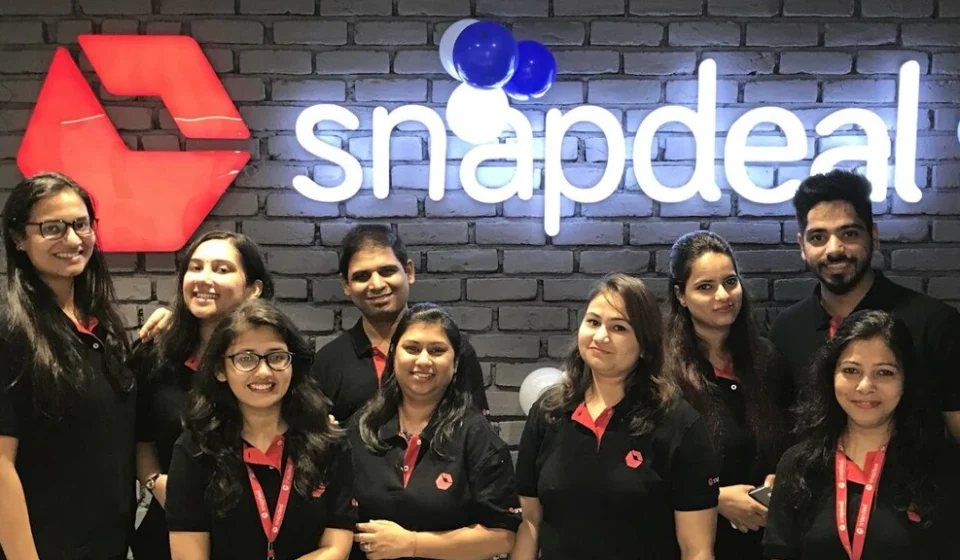
In December 2021, Snapdeal filed papers for an IPO during the biggest new-age tech listing wave India had ever seen. Seven months later, with market sentiment souring and investor appetite for loss-making internet companies evaporating almost overnight, the company quietly withdrew those papers. For a brand that was once valued at over a billion dollars and spoken about in the same breath as Flipkart and Amazon India, it was a strangely muted exit from a moment it had waited years for.
Four years on, Snapdeal is trying again, this time wrapped inside a larger corporate structure. AceVector, the parent company that now houses Snapdeal alongside two other businesses, has fixed a price band of Rs 30 to Rs 32 per share for its Rs 420 crore initial public offering, with the issue set to open for public subscription on September 25 and close on September 29. Whether this second attempt lands differently than the first one is a question the market will answer over the next couple of weeks, but the shape of this offer, smaller, more diversified, and arriving in a very different funding environment, tells its own story before a single share has even changed hands.
Here is everything worth knowing about the issue, the company behind it, and what to watch before this one hits your trading app.
Quick Answer
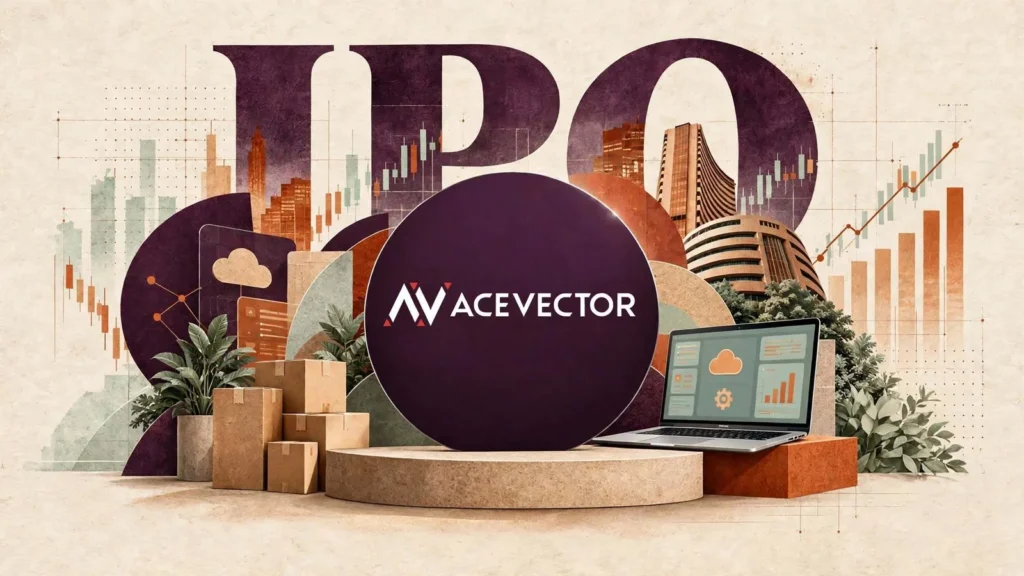
AceVector Ltd, the parent company of Snapdeal, has fixed its IPO price band at Rs 30 to Rs 32 per equity share, targeting a total issue size of up to Rs 420 crore. The offer comprises a fresh issue of shares worth up to Rs 287 crore and an offer for sale of shares worth Rs 133 crore by existing investors including SoftBank’s Starfish, Nexus Venture Partners and Foxconn. The issue opens for public subscription on September 25, 2026 and closes on September 29, 2026, with listing tentatively scheduled for October 5. At the upper end of the price band, AceVector is targeting a post-issue market capitalisation of approximately Rs 1,741.4 crore. Founders Kunal Bahl and Rohit Bansal, who together hold roughly 34 percent of the company, are not selling any shares in this offer.
About This Guide
This guide has been researched and written by the FinanceChecks editorial team, based on AceVector’s public IPO announcements, its filed offer documents, and reporting from multiple Indian financial and business news outlets covering the issue.
FinanceChecks is an independent Indian personal finance publication. We are not SEBI-registered investment advisers, and nothing in this article constitutes a recommendation to subscribe to, buy, or avoid this or any IPO. Please read the disclaimer at the end of this guide.
Last reviewed: September 2026
The IPO at a Glance
| Detail | Information |
|---|---|
| Company | AceVector Ltd (parent of Snapdeal, Unicommerce, Stellaro Brands) |
| Price band | Rs 30 to Rs 32 per equity share |
| Face value | Re 1 per equity share |
| Total issue size | Up to Rs 420 crore (at upper price band) |
| Fresh issue | Up to Rs 287 crore |
| Offer for sale (OFS) | Rs 133 crore (4.16 crore shares) |
| Anchor bidding date | September 24, 2026 |
| Subscription opens | September 25, 2026 |
| Subscription closes | September 29, 2026 |
| Tentative listing date | October 5, 2026 |
| Minimum lot size | 468 shares |
| Approximate minimum investment | Around Rs 14,976 at the upper price band |
| Post-issue market capitalisation (upper band) | Approximately Rs 1,741.4 crore |
| QIB reservation | 75% of the issue |
| Non-institutional investor reservation | 15% of the issue |
| Retail investor reservation | 10% of the issue |
Why This Issue Is Smaller Than What Was Originally Planned
AceVector has actually scaled down its public offering from what it originally filed for. The company’s earlier draft plans, filed confidentially with SEBI in mid-2025 and later updated in December that year, outlined a considerably larger fresh issue of Rs 300 crore alongside an offer for sale of 6.38 crore equity shares. The version now heading to market trims the fresh issue slightly to Rs 287 crore and meaningfully reduces the offer-for-sale component to 4.16 crore shares.
A shrinking issue size between the draft filing stage and the actual launch is not unusual in Indian IPO markets, and it often reflects a company and its bankers calibrating the offer to match realistic demand rather than simply raising the maximum amount regulators would permit. Given Snapdeal’s own history with a withdrawn IPO attempt in 2022, a more conservative, right-sized offer this time around reads as a deliberate choice rather than an accident.
You May Also Like To Read About:
- ADIA Sells Lenskart Shares Worth Rs 2,390.6 Crore: What Is Actually Going On With All These Early Investors Cashing Out
- Top 10 Business Terms Every Founder Should Know Before Starting a Company
- Apple Pay May Launch In India Next Month With Axis Bank Partnership: Report
- Namma Yatri Launches Namma Santhe: A Retail Platform Built to Save Its Drivers Money, Not Make Any
What Investors Are Actually Buying: The Three Businesses Inside AceVector
AceVector is not simply “the Snapdeal IPO,” even though that’s the name most likely to catch attention. The company operates what it describes as an asset-light digital commerce ecosystem spanning three distinct businesses.
| Business | What it does | Notable detail |
|---|---|---|
| Snapdeal | Value-focused lifestyle e-commerce marketplace | The original, most recognisable brand under the AceVector umbrella |
| Unicommerce | E-commerce enablement SaaS platform | Already separately listed on the stock exchanges since 2024; its own IPO was oversubscribed over 168 times |
| Stellaro Brands | Omnichannel consumer brands retailing business | The newest and least publicly known of the three segments |
The Unicommerce detail is worth sitting with for a moment, since it complicates a simple “Snapdeal is going public” narrative. Unicommerce, majority owned by AceVector, is already a separately listed, independently traded company, and its own 2024 listing was one of the most oversubscribed IPOs of that year. AceVector’s IPO is therefore not creating public market exposure to Unicommerce from scratch; it’s giving investors a stake in the broader parent structure that includes Snapdeal, Stellaro Brands, and AceVector’s residual economic interest in the already-listed Unicommerce.
The Company’s Financial Picture
AceVector’s numbers tell a story of a company narrowing its losses while growing revenue at a healthy clip, though it has not yet crossed into overall profitability.
| Metric | FY25 | FY26 | Change |
|---|---|---|---|
| Operating revenue | Rs 395.02 crore | Rs 510.38 crore | Up 29% year on year |
| Adjusted EBITDA loss | Rs 39.16 crore | Rs 15.94 crore | Loss narrowed by over 59% |
The direction of travel here, revenue growing nearly 30 percent while the adjusted EBITDA loss shrinks by more than half, is the kind of trajectory public market investors generally want to see from a company that isn’t yet profitable. It suggests the business is scaling in a way that’s translating into improving unit economics rather than simply growing its losses alongside its revenue, though it’s worth being clear that adjusted EBITDA is not the same as actual net profit, and a full picture of the company’s bottom line requires looking at its complete financial statements rather than this single adjusted metric alone.
Where the Fresh Issue Money Is Actually Going
Of the Rs 287 crore fresh issue, AceVector has laid out fairly specific plans for how the money will be deployed, rather than leaving it as a vague general corporate purposes bucket.
| Use of proceeds | Amount |
|---|---|
| Marketing and business promotion for the Snapdeal marketplace | Rs 132 crore |
| Technology infrastructure upgrades for the marketplace | Rs 50 crore |
| Inorganic growth through acquisitions and general corporate purposes | Remaining balance |
The heavy weighting toward marketing, nearly half the fresh issue proceeds, signals where AceVector sees its biggest opportunity and its biggest challenge simultaneously. Snapdeal operates in the value e-commerce segment, a genuinely competitive corner of Indian online retail that includes platforms like Meesho fighting hard for the same price-conscious shopper base. A significant marketing push suggests the company sees customer acquisition and brand visibility as the lever most likely to move growth, more so than platform infrastructure alone.
Notably, the company has also already raised Rs 13 crore in a pre-IPO round, with that amount being adjusted against the fresh issue component, a fairly standard structuring mechanism seen in Indian IPOs.
Who Is Selling, and Who Isn’t
The offer-for-sale portion of this IPO is being used by a specific set of existing investors to partially monetise their holdings, while the founders are notably sitting this one out entirely.
Existing shareholders selling shares through the OFS include SoftBank’s Starfish entity, Nexus Venture Partners, and Foxconn, among other investors. Together, this represents these investors trimming a portion of positions they’ve held for years, likely from well before AceVector’s various businesses reached their current scale, without necessarily representing a full exit from the company.
Founders Kunal Bahl and Rohit Bansal, by contrast, are not selling any shares in this offering. Together, directly and through their jointly owned entity B2 Professional Services LLP, they hold approximately 33.99 percent of AceVector. A founding team choosing not to sell any shares in an IPO, even a partial stake, is often read by the market as a signal of confidence in the company’s near-term prospects, since founders typically have the clearest internal view of how the business is actually performing heading into a public listing.
Snapdeal’s Long Road Back to the Public Markets
For anyone who followed Indian e-commerce through the 2010s, Snapdeal’s story carries genuine weight beyond this single transaction. The company was once among India’s most prominent e-commerce players, reaching unicorn status and briefly being the subject of a widely reported, ultimately unsuccessful merger discussion with Flipkart in 2017. The years since have been considerably quieter, with the company narrowing its focus toward value-conscious shoppers in smaller cities and towns rather than competing head-on with Amazon and Flipkart in the broader marketplace race.
The 2021 IPO filing, timed to catch India’s first major wave of new-age technology company listings, alongside names like Zomato, Nykaa and Paytm, represented an attempt to close that chapter with a public market debut. Its withdrawal in mid-2022, as investor sentiment toward loss-making internet companies cooled sharply following some of those very listings underperforming, was a quiet but significant setback.
This AceVector IPO represents Snapdeal’s second attempt at that same milestone, arriving through a restructured, diversified holding company rather than as a standalone Snapdeal listing, in a market environment that looks considerably different from either 2021’s exuberance or 2022’s caution.
What This Means If You’re Considering Subscribing
Understand what you’re actually valuing. AceVector’s Rs 1,741.4 crore target valuation reflects three businesses bundled together, not a pure bet on Snapdeal’s marketplace alone. Since Unicommerce is separately listed and already carries its own public market valuation, part of what you’re evaluating here is how the market chooses to value AceVector’s residual stake in that already-listed business alongside Snapdeal and Stellaro Brands directly.
Look past the headline revenue growth to the profitability trajectory. A 29 percent revenue increase paired with a more than halved EBITDA loss is a genuinely encouraging combination, but AceVector has not yet demonstrated full-year net profitability. Whether that narrowing loss trend continues predictably after listing, once quarterly results are subject to the scrutiny that comes with being publicly traded, is the real test ahead.
Weigh the founders not selling as one data point, not the whole picture. It’s a reasonable positive signal, but it shouldn’t substitute for evaluating the business itself, the competitive intensity in value e-commerce, and how effectively that Rs 132 crore marketing allocation actually translates into sustainable customer growth rather than short-term acquisition spikes that fade once the spending slows.
Remember Snapdeal’s own history here. A company that filed for an IPO once already and withdrew it isn’t a red flag by itself, plenty of companies delay listings for good reasons tied to market timing rather than business quality, but it’s a reasonable prompt to look closely at what’s actually changed in the underlying business between 2022 and now, rather than assuming the story is identical to what was on offer four years ago.
Common Mistakes IPO Investors Make With Issues Like This
Treating a well-known consumer brand name as a substitute for reading the actual financials. Snapdeal is a recognisable name to most Indian internet users, but recognisability isn’t the same as understanding whether the underlying business, and the specific entity you’d actually be buying shares in, is fundamentally sound.
Ignoring that this is a multi-business holding company, not a single-business bet. Evaluating AceVector purely as “the Snapdeal stock” misses the Unicommerce and Stellaro Brands components entirely, both of which affect the actual value proposition.
Overweighting grey market premium chatter in either direction. Unofficial grey market activity around any IPO, this one included, tends to be thin, speculative, and a poor predictor of actual listing-day or longer-term performance, particularly for an issue of this size.
Not distinguishing adjusted EBITDA loss from actual net profit or loss. A narrowing adjusted EBITDA loss is a genuinely positive trend, but it isn’t the complete profitability picture, and conflating the two can lead to an overly optimistic read on how close the company actually is to sustainable profitability.
Applying for an IPO purely out of nostalgia or brand familiarity. Snapdeal carries real brand recognition built over more than a decade, and it’s worth being honest about whether that familiarity is doing more work in an investment decision than the actual numbers warrant.
My Take
I think the most interesting thing about this IPO isn’t the price band or the issue size, it’s the sheer amount of restructuring and repositioning that happened between Snapdeal’s withdrawn 2022 attempt and this one. Wrapping the marketplace inside a larger holding company alongside an already-successfully-listed SaaS business and a newer consumer brands operation isn’t just a cosmetic change. It changes what an investor is actually being asked to evaluate, from a single, fairly narrow bet on a value e-commerce marketplace facing serious competition, to a more diversified position across three related but distinct businesses at different stages of maturity.
I find the founders’ decision not to sell any shares genuinely notable, particularly given this is technically Snapdeal’s second attempt at a public listing after one that didn’t happen. Founders who have already lived through one withdrawn IPO choosing to hold their full position rather than take even a small amount of money off the table this time reads as a reasonably strong, if not conclusive, signal about how they see the company’s next chapter playing out.
Where I’d want more clarity before forming a firm view is on how much of AceVector’s improving financial trajectory is genuinely structural versus how much reflects the kind of cost discipline companies often display in the run-up to a public listing specifically because they know investors will be watching those exact numbers closely. A 59 percent narrowing in adjusted EBITDA loss over one year is a meaningful improvement, and it’s worth seeing whether that trend holds steady across a few quarters as a publicly listed, publicly scrutinised company, rather than treating the pre-IPO numbers as the full and final word on the business’s trajectory.
Frequently Asked Questions
1. What is the price band for the AceVector IPO?
The price band has been set at Rs 30 to Rs 32 per equity share, with a face value of Re 1 per share.
2. What is the total size of the AceVector IPO?
At the upper end of the price band, the issue size is approximately Rs 420 crore, comprising a fresh issue of up to Rs 287 crore and an offer for sale worth Rs 133 crore.
3. When does the AceVector IPO open and close?
The issue opens for public subscription on September 25, 2026 and closes on September 29, 2026, with anchor investor bidding taking place on September 24. Listing is tentatively scheduled for October 5, 2026.
4. Is this the same as a Snapdeal IPO?
Not exactly. AceVector is the parent company that owns Snapdeal, along with the already separately listed SaaS platform Unicommerce and the consumer brands business Stellaro Brands. Investing in AceVector means gaining exposure to all three businesses, not Snapdeal alone.
5. What is the minimum investment required for this IPO?
The minimum lot size is 468 shares, working out to approximately Rs 14,976 at the upper end of the price band.
6. Are the founders selling shares in this IPO?
No. Founders Kunal Bahl and Rohit Bansal, who together hold roughly 33.99 percent of AceVector, are not selling any shares through this offering. The offer for sale portion is entirely from other existing investors.
7. Which investors are selling shares through the offer for sale?
Existing shareholders including SoftBank’s Starfish entity, Nexus Venture Partners, and Foxconn are selling a portion of their holdings through the offer for sale component of the issue.
8. What will AceVector do with the fresh issue proceeds?
Rs 132 crore is earmarked for marketing and business promotion for the Snapdeal marketplace, Rs 50 crore for technology infrastructure upgrades, and the remainder for potential acquisitions and general corporate purposes.
9. Is AceVector profitable?
Not yet on a full basis, though its financial trajectory is improving. In FY26, operating revenue grew 29 percent year on year to Rs 510.38 crore, while its adjusted EBITDA loss narrowed by more than 59 percent to Rs 15.94 crore from Rs 39.16 crore the previous year.
10. Did Snapdeal try to go public before this?
Yes. Snapdeal filed for an IPO in December 2021 during India’s major wave of new-age technology listings, but withdrew those plans in mid-2022 as investor sentiment toward loss-making internet companies cooled significantly. This AceVector IPO represents a second attempt at a public listing, now structured through a broader parent holding company.
Key Takeaways
- AceVector, the parent of Snapdeal, Unicommerce and Stellaro Brands, has set a price band of Rs 30 to Rs 32 per share for its Rs 420 crore IPO, opening September 25 and closing September 29, 2026.
- The issue combines a Rs 287 crore fresh issue with a Rs 133 crore offer for sale from existing investors including SoftBank’s Starfish, Nexus Venture Partners and Foxconn.
- Founders Kunal Bahl and Rohit Bansal, holding roughly 34 percent of the company, are not selling any shares in this offering.
- AceVector’s FY26 revenue grew 29 percent year on year to Rs 510.38 crore, while its adjusted EBITDA loss narrowed by over 59 percent to Rs 15.94 crore.
- This marks Snapdeal’s second attempt at a public listing, following a withdrawn IPO filing in 2022, now structured through a diversified parent holding company rather than a standalone marketplace listing.
- Investors evaluating this IPO are effectively evaluating three distinct businesses at different stages of maturity, not a single bet on the Snapdeal brand alone.
Disclaimer
The information provided in this article is for educational and informational purposes only and should not be construed as investment advice or a recommendation to subscribe to, buy, or sell any security.
FinanceChecks.com is not a SEBI-registered investment adviser or research analyst. IPO details including price band, issue size, dates and use of proceeds reflect information publicly available as of September 2026 and are subject to change through regulatory filings or company announcements before the issue closes or lists.
Mutual fund and equity investments, including IPO applications, are subject to market risks. Past performance of any company, sector, or founder’s prior ventures is not indicative of future results. Please read the complete offer document and consult a qualified financial adviser before making any investment decision related to this or any other IPO.
FinanceChecks.com and its authors accept no liability for any loss arising from reliance on the information presented in this article.

Shuchi founded Finance Checks after spending 16+ years working in corporate, managing operations and distribution. She managed her own finances, learned and read regularly and helped people make sense of their savings, loans, insurance, and investments.
She started this site to offer the kind of clear, honest financial guidance she wished was more available when she was learning to manage her own money. Every article is researched personally, checked against official sources such as the Reserve Bank of India, SEBI, or the Income Tax Department, and revisited whenever regulations or figures change. She is upfront about how the site earns money through ads and select affiliate partnerships, and she does not let either influence what she actually recommends to readers.