
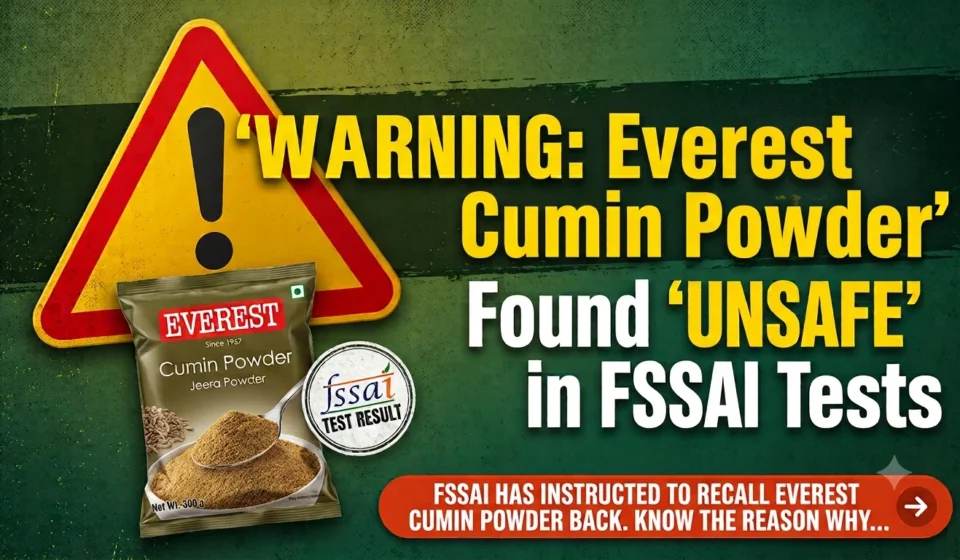
Everest Cumin Powder Found ‘Unsafe’ in FSSAI Test: What Happened, and What You Should Do If You Have It at Home

By the FinanceChecks.com Editorial Team | Published October 4, 2026 | Last reviewed October 4, 2026 | 7-minute read
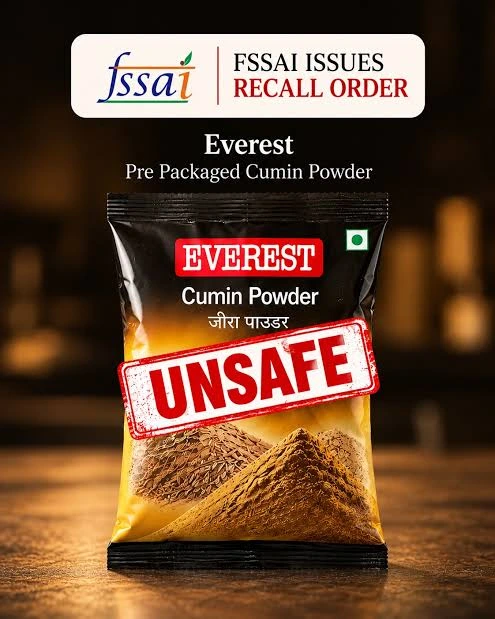
The Food Safety and Standards Authority of India has ordered Everest Food Products Private Limited to immediately recall a batch of its Pre-packed Cumin Powder after laboratory testing found pesticide residues exceeding the legally permitted limits. The order, issued on Sunday, October 4, 2026, is one of three separate enforcement actions FSSAI announced the same day, alongside the suspension of a West Bengal bakery’s license over hygiene violations and a day after its action against Nestle India’s Low Fat Dairy Whitener, underscoring a period of unusually active regulatory scrutiny of packaged food in India right now.
Here’s exactly what FSSAI found, where the sample came from, what the chemicals involved actually are, and what to check if you have Everest Cumin Powder in your kitchen.
What Actually Happened
A regulatory sample of Everest’s Pre-packed Cumin Powder was drawn from the premises of M/s Riverside Resorts & Holiday Homes Pvt. Ltd. in Goa. When tested, the food analyst’s laboratory report found residues of two pesticides, azoxystrobin and thiamethoxam, above the maximum limits prescribed under food safety regulations. Based on this finding, the sample was declared “unsafe” under the Food Safety and Standards Act, 2006.
Because a declaration of this severity has real consequences for a company, FSSAI’s process includes a referral check: the sample was sent to a Referral Food Laboratory for confirmation, and that lab upheld the original finding, confirming both pesticides remained above the prescribed limits. With the referral lab’s confirmation in hand, FSSAI directed Everest Food Products to immediately recall the entire implicated batch and to document the recall process to the regulator.
What Are Azoxystrobin and Thiamethoxam, and Why Do the Limits Matter?
These are both common agricultural chemicals, not unusual or exotic substances, which is part of why this finding is specifically about quantity rather than the mere presence of the chemicals.
Azoxystrobin is a widely used fungicide applied to crops to control fungal diseases. Thiamethoxam is an insecticide, part of the neonicotinoid class, used to protect crops from pest damage. Both are legally permitted for use in Indian agriculture within specific limits, and both are commonly used worldwide in spice and crop cultivation. The regulatory concern here isn’t that these chemicals were used at all, it’s that the residue levels detected in this specific batch of cumin powder exceeded the Maximum Residue Limits (MRLs) set by food safety regulations, the threshold meant to keep any lingering chemical residue in the food well within levels considered safe for consumption.
When residues cross that threshold, a product is classified as “unsafe” rather than simply non-compliant on a labelling or quality technicality, which is a more serious classification under the FSS Act and triggers a mandatory recall rather than a lesser corrective notice.
This Isn’t an Isolated Incident
To understand why this particular action is drawing attention, it helps to see it in the context of what else FSSAI did on the very same day, and in the days just before.
| Date | Company/Product | FSSAI Finding | Action Taken |
|---|---|---|---|
| October 4, 2026 | Everest Food Products – Pre-packed Cumin Powder | Azoxystrobin and thiamethoxam above permitted limits; declared “unsafe” | Immediate recall of the implicated batch ordered |
| October 4, 2026 | Creative Bakers and Confectioners Pvt. Ltd. (West Bengal) | Severe hygiene and sanitation lapses: dirt, pest infestation, rusted equipment, poor storage | FSSAI license suspended with immediate effect |
| Early October 2026 | Nestle India – Low Fat Dairy Whitener (sample from The Lalit, New Delhi) | Declared “unsafe” and “substandard” under the FSS Act | Immediate sale ban on the affected batch |
Taken together, these three actions in close succession point to a genuinely active enforcement period for India’s food regulator, not a single isolated finding against one brand. It also fits a broader pattern that has been building through 2026: FSSAI has reportedly been considering mandating that large spice manufacturers test every single batch of their product, a discussion that gained momentum after some Indian spice brands faced recalls in Hong Kong and Singapore over safety concerns in recent memory. A finding like this one, on a major, well-known Indian spice brand, is likely to add further weight to that conversation.
You May Also Like To Read About:
- Nestle Low Fat Dairy Whitener Sale Banned: Why FSSAI Called It ‘Unsafe, Substandard’
- FSSAI’s Paneer Update: What Can Legally Be Called “Paneer” and What Cannot
- FSSAI Penalises Amazon, Flipkart and Instamart: What Every Online Shopper in India Needs to Know
- FSSAI Bans Everest and LG Hing: What This Substandard Spice Recall Means For Your Grocery Budget
Is This a Nationwide Ban on Everest Cumin Powder?
Based on what FSSAI has stated, this action targets a specific implicated batch tested from the Goa sample, not a blanket, nationwide recall of every pack of Everest Cumin Powder currently on shelves. FSSAI’s order specifically directs the company to recall “the entire implicated batch,” language that refers to the batch number associated with the tested sample, rather than the brand’s full cumin powder product line across all batches and production runs.
That said, the practical implication for consumers is still worth taking seriously, since a pesticide residue finding like this one raises a reasonable question about the specific batch and production run involved, and checking your own pack against any batch number FSSAI or the company publishes is the only way to know for certain whether your specific product is part of the recall.
What to Do If You Have Everest Cumin Powder at Home
Check the batch number printed on your pack against the batch number named in FSSAI’s recall order once it’s published in full detail, since the order as currently reported references a specific batch rather than the entire product line. If you’re unable to confirm the batch number matches or doesn’t match, it’s reasonable to avoid using the product until you can verify it, particularly given how straightforward checking a packet’s printed batch code is.
Keep an eye on official FSSAI communications and Everest’s own statements for further detail, including the specific batch number, manufacturing date, and any additional guidance on returns or replacements, since these details typically follow in the days after an initial recall order like this one.
If you’ve already consumed the product and have no reason to believe you were affected, it’s worth noting that a residue level above a regulatory limit does not automatically mean every consumer who used the product experienced harm, MRLs are set with a substantial safety margin built in specifically to protect against exactly this kind of finding, but it’s still a legitimate reason the regulator acted, and following the recall guidance is the sensible response regardless.
Common Mistakes People Make When News Like This Breaks
A frequent mistake is assuming a single batch recall means the entire brand or product line is unsafe going forward, when FSSAI’s order as reported specifically targets the implicated batch from this particular sample, not every unit of Everest Cumin Powder ever produced. Another is panicking without checking the actual batch details, throwing out a product that may not even be from the affected production run, when a thirty-second check of the printed batch code would settle the question either way. People also sometimes conflate separate regulatory actions happening close together, treating the Everest, Nestle and bakery cases as one combined story, when each involves a different company, a different kind of violation, and a different regulatory classification, even though they happened within days of each other. Finally, some consumers assume a company disputing or appealing a finding means the issue has been resolved or dismissed, when a recall order stands and should be followed unless and until it’s formally withdrawn by the regulator.
My Take
What’s worth paying attention to here isn’t just this one batch of cumin powder, it’s the pace of FSSAI’s enforcement activity through the back half of 2026. Three significant actions in roughly a week, spanning a major spice brand, a major dairy and infant nutrition company, and a bakery operator, is a genuinely active stretch for India’s food regulator, and it follows a year that already saw over 150 notices issued to major food companies in August alone.
For consumers, the practical takeaway isn’t to distrust every packaged food product on the shelf, it’s to take batch-specific recall notices seriously when they’re issued, rather than either over-reacting to the brand name in a headline or dismissing the notice because the product has always seemed fine before. Checking a batch code takes a moment; acting on a confirmed recall is straightforward once you know whether it actually applies to what’s in your kitchen.
Frequently Asked Questions
1. Has all Everest Cumin Powder been banned in India? No. Based on current reporting, FSSAI’s order targets a specific implicated batch tested from a sample collected in Goa, not the brand’s entire cumin powder product line nationwide.
2. What exactly did FSSAI find in the Everest Cumin Powder sample? Residues of two pesticides, azoxystrobin (a fungicide) and thiamethoxam (an insecticide), were found above the maximum limits permitted under food safety regulations, leading to an “unsafe” classification.
3. Where was the tested sample collected from? From the premises of M/s Riverside Resorts & Holiday Homes Pvt. Ltd. in Goa.
4. Was the finding independently confirmed? Yes. A Referral Food Laboratory confirmed the original finding, upholding that both pesticide residues remained above the prescribed limits.
5. What should I do if I have Everest Cumin Powder at home? Check the batch number on your pack against the specific batch named in FSSAI’s recall order as further details are published, and avoid using the product if you cannot confirm it’s unaffected.
6. Is this related to the recent Nestle India food safety action? It’s a separate action involving a different company and a different type of violation, but it was announced within days of FSSAI’s action against Nestle India’s Low Fat Dairy Whitener, as part of a broader period of active enforcement.
7. What are azoxystrobin and thiamethoxam? Azoxystrobin is a commonly used agricultural fungicide, and thiamethoxam is an insecticide. Both are legally used in farming within specific residue limits, and the concern here is that the levels detected exceeded those permitted limits, not that the chemicals were present at all.
8. What happens to the recalled batch? FSSAI has directed Everest Food Products to immediately recall the entire implicated batch and document the recall process to the regulator.
Disclaimer
This article is for general informational purposes only and does not constitute health, legal or investment advice. Details reflect publicly available FSSAI statements and news reporting as of October 4, 2026, and may be updated as further batch-specific information or company statements become available. Readers with specific product safety concerns should refer to official FSSAI notices or contact Everest Food Products directly. FinanceChecks.com is not affiliated with FSSAI or Everest Food Products.
Last reviewed and fact-checked on October 4, 2026 by the FinanceChecks.com Editorial Team.

Shuchi founded Finance Checks after spending 16+ years working in corporate, managing operations and distribution. She managed her own finances, learned and read regularly and helped people make sense of their savings, loans, insurance, and investments.
She started this site to offer the kind of clear, honest financial guidance she wished was more available when she was learning to manage her own money. Every article is researched personally, checked against official sources such as the Reserve Bank of India, SEBI, or the Income Tax Department, and revisited whenever regulations or figures change. She is upfront about how the site earns money through ads and select affiliate partnerships, and she does not let either influence what she actually recommends to readers.